Marketplace accounts for Amritsar sellers
Our marketplace account management in Amritsar runs the seller panels for phulkari, jutti and shawl sellers on Myntra, Ajio, Amazon, Flipkart and Meesho. We work remotely from Gandhi Nagar, New Delhi, and plan each account around Lohri, Baisakhi and the wedding months.

What an Amritsar seller panel has to carry
- Marketplaces we run
- Myntra, Ajio, Amazon, Flipkart and Meesho
- Categories
- Phulkari dupattas and suits, juttis, shawls
- Dates to plan
- Lohri, Baisakhi, Karva Chauth, Diwali, weddings
- Claims to file
- Worn wedding returns, swapped pairs, transit damage
- Your access
- User permissions; you keep the owner login
- Run from
- Gandhi Nagar, New Delhi, without visits
In short
- Marketplace account management in Amritsar means a shop’s seller panels are run weekly while its counter, stock and dispatch stay in Amritsar.
- Jutti listings need every size as a variation with its own stock, because a missing size stops a design selling and drives exchanges.
- Myntra and Ajio approve brands before listing, so a phulkari label needs its catalogue, size charts and imagery ready before applying.
- Lohri and Baisakhi stock should be live and rated weeks ahead, with delivery promises stopped once a parcel can no longer arrive in time.
- We run Amritsar sellers’ accounts remotely from Gandhi Nagar, New Delhi, through user permissions; the owner login stays with the seller.
Our marketplace account management in Amritsar is for shops and labels selling phulkari, juttis and shawls whose seller panels compete with the counter. We run Myntra, Ajio, Amazon, Flipkart and Meesho accounts weekly from Gandhi Nagar, New Delhi; the shop keeps its stock and dispatch.
Because we run brands of our own as well, a claim left to lapse or a payout left unchecked feels like our own money. The city’s trades are on our page about ecommerce services in Amritsar; this page is the panel work.
Why Amritsar shops hand over their seller panels
An Amritsar shop usually opens its seller accounts beside a busy counter, and the panels lose whenever the two compete. Before Lohri, Baisakhi and the wedding months, when both are busiest, claims lapse, size stock drifts and orders wait for acceptance.
The signs are easy to spot: a jutti design showing sizes that sold out last week, a phulkari dupatta suppressed for a missing attribute, a worn wedding return never claimed, and payouts nobody has matched to orders.
The split we work to is simple. Designs, stock, the counter and the floor price of each piece stay with you; listings, offers above the floor, claims, settlements and account health move to us.
Which Amritsar products suit which marketplace?
Start each product where its buyers already search and where its margin survives fees and exchanges. For Amritsar’s range that usually means Myntra and Ajio for a label’s suits and dupattas, Amazon and Flipkart for juttis and shawls, and Meesho for value pieces.
| Product | Where it usually starts | What the account watches |
|---|---|---|
| Hand-embroidered phulkari | Myntra, Ajio | Method in the attributes; worn returns |
| Machine-embroidered dupattas and suits | Meesho, Flipkart | Colour returns; thin margins |
| Juttis | Amazon, Flipkart, Myntra | Size runs; exchanges; BIS documents |
| Woollen shawls and lois | Amazon, Flipkart | Fibre claims; weight; winter stock |
| Gift sets for Lohri and weddings | Amazon, Flipkart | Gift packing shown; delivery promises |
A product can sit on more than one marketplace, but each extra panel splits the stock and adds work. We add a marketplace when the first ones run cleanly, and say so if one is wrong for a product before you list it there.
Getting a phulkari label onto Myntra and Ajio
Myntra and Ajio approve brands before anything is listed, then hold sellers to strict catalogue standards. For a phulkari label, that means the catalogue is built before the application, not after it.
- Style codes and colour names for every suit, dupatta and pair, used the same way across the range.
- Size charts for stitched suits by garment measurement, and for juttis by foot length.
- Styled or on-model photographs to each marketplace’s image rules, with the embroidery shown close up.
- Method stated: hand-embroidered or machine-embroidered, in the attributes as well as the title.
Both run more than one selling model, and the model decides who holds stock and who handles returns, so we settle it with you before applying.
Our page on Myntra seller account management covers the approval in depth.
Keeping jutti size runs whole
Each jutti size is a variation with its own stock, and a design that runs out of its middle sizes stops selling long before it is gone. We check stock by size weekly and flag sizes to remake or reorder before the festival rush.
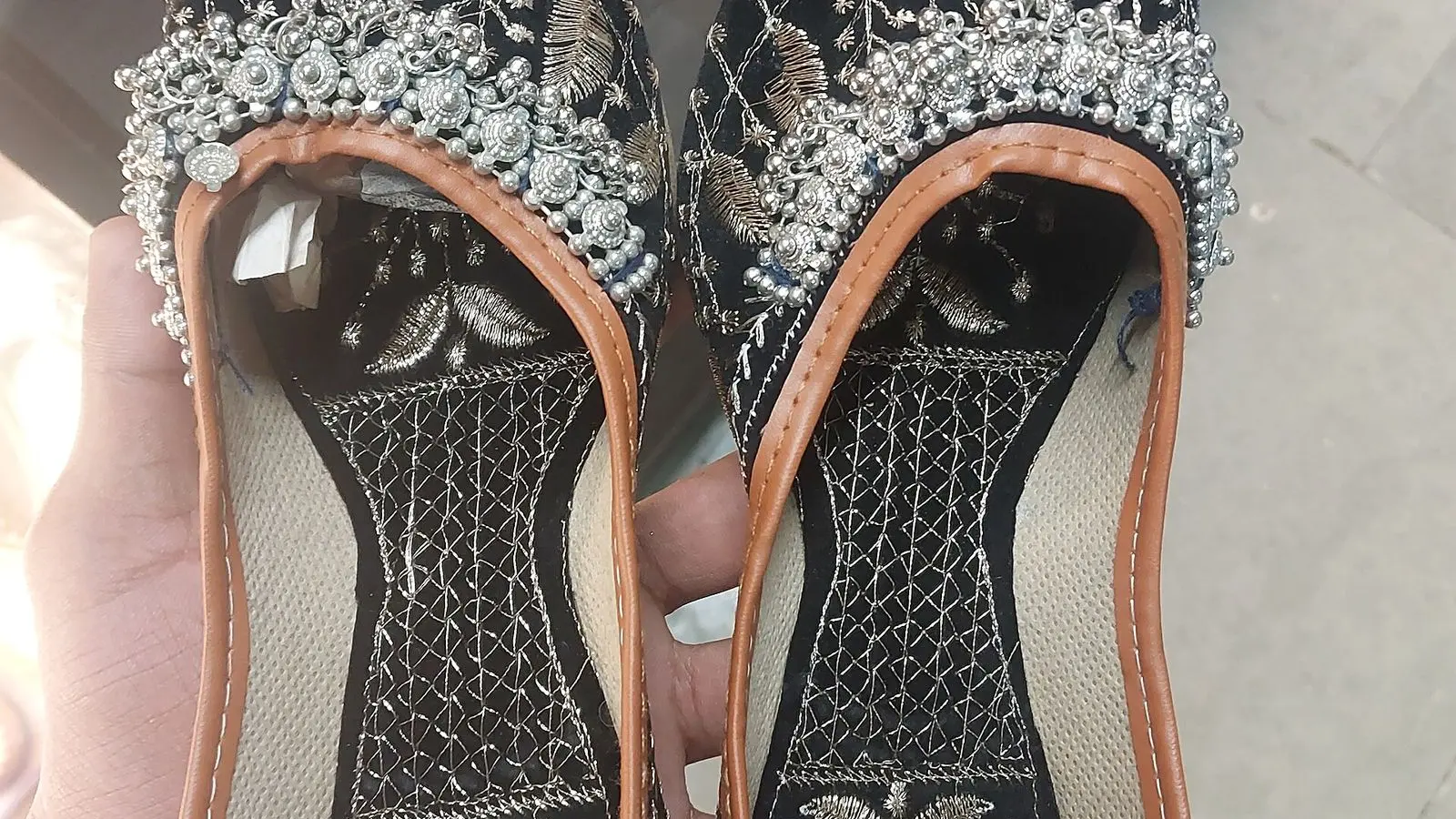
- Exchanges, not refunds, where the marketplace allows them, tracked by the size asked for and the size sent back.
- Size charts corrected when the same swap repeats, so fewer exchanges follow.
- A typical pair photographed: handmade pairs vary, so the images should match what the batch looks like.
- BIS documents ready where a quality control order covers your juttis, because a marketplace can ask for them.
Our page on selling footwear online in India covers size charts and footwear returns across the category.
Listing fixes that cut returns
Many returns on an Amritsar account trace back to a listing that left something out. We read the reasons every week and fix the listing that caused them, rather than treating each return as bad luck.
- “Colour different” on a dupatta goes back to daylight photographs, checked against the cloth.
- “Too heavy” or “not as expected” on a bagh goes back to the stated weight and the method.
- “Uncomfortable” on a jutti goes back to the break-in note and the line on left and right.
- “Smaller than expected” on a shawl goes back to the dimensions, given in centimetres and inches.
Packaged pieces also carry Legal Metrology declarations on the pack, and the listing shows the same declarations apart from the month and year. Our product listing services fix the record once, so the next upload carries the fix.
Phulkari claims and complaints on the account
Phulkari is a registered geographical indication, so a listing that claims it is a promise the account must be able to keep. We write method and origin from your maker’s documents, and machine embroidery is listed as machine embroidery.
When a complaint arrives, about a GI claim, a material or a design, we answer it with the documents, correct the listing at source, and record what changed, so the same problem does not come back with the next upload.
Account health is watched daily: complaints, cancellations, late dispatch and policy notices. A warning answered in a day stays a warning; one left for a week before Lohri can cost listings in the season’s busiest weeks.
Lohri, Baisakhi and weddings on the panels
Each Punjabi festival needs its stock live and rated before buyers arrive, and its delivery promises honest as the date approaches. We plan the panels to the calendar you sell to.
| Date | On the panels | What we need from you |
|---|---|---|
| Autumn sale events | Deals chosen by margin; Diwali and Karva Chauth stock live | Stock by size, floor prices |
| Wedding months | Wedding sets and juttis in depth; worn-return claims filed | Packing photographs, tag numbers |
| Lohri, mid-January | Shawls and gifts live by December; January deals checked | Gift packing photographs |
| Baisakhi, mid-April | Bright suits and phulkari live by March | New designs and sizes |
As each date nears, handling times are checked so the promised delivery lands before it. Once a parcel can no longer arrive in time, festival listings are paused or their promise changed, rather than collecting orders that come back.
Shawls and winter stock on the panels
Shawls and lois sell in the north’s short winter, so their listings need stock, weights and ratings before the first chill, and a clearance plan before Lohri turns the season. We watch stock by colour weekly through December and January.
Fibre claims need extra care on these listings. Wool, a wool blend or acrylic is written as the label states it, and premium names such as pashmina stay off any piece without yarn documents, because a fibre complaint can stay on a listing all season.
When the cold breaks, the plan decides what happens next: shawls that store well are kept for next winter, the rest go into the January sale events at a floor price you set, and ads stop on anything you will carry forward.
Sponsored ads around the festivals
Sponsored ads inside the marketplaces suit a design that has stock in every size, ratings and margin after exchanges. We raise bids before Lohri, Baisakhi and the wedding months, and pause them on any design whose middle sizes are running out.
- Keywords buyers type, such as Punjabi jutti for women, phulkari dupatta or embroidered shawl, matched to what is in stock.
- Budgets by festival, set before each date and stopped when the delivery promise can no longer be kept.
- Results read on kept orders, after exchanges and returns, not on orders placed.
If you also run Google and Meta campaigns, our Google Ads and Meta Ads management keeps them in step with the same stock and margin figures.
Settlements, TCS and the accountant
Every payout is matched to its orders, exchanges, refunds and fees, and anything short is raised as a ticket with the marketplace. Footwear and textiles can carry different fees, so each line is checked against the current schedule for its category.

Your accountant receives a monthly summary by marketplace, including the TCS collected under GST from your payouts, so the credit can be claimed against your GST. We do not file returns or advise on tax; the summary gives the person who does reconciled figures.
The first month on an Amritsar account
Month one is spent reading the panels and agreeing the rules, by call and shared sheet. Nothing changes on your accounts until you approve the plan, and the whole handover is done without travel.
- Access. You add us as a user on each panel; we list suppressed listings, broken size runs, open claims and unmatched payouts.
- Rules. Floor prices, who approves deals, how exchanges are handled, and who at the shop records returns.
- Backlog. Claims still inside their limits first, then size runs before the next festival, then listing fixes.
- Routine. Daily checks, a weekly report and call, and a monthly review against the next Punjabi date.
From you we need the access, a sheet with cost and floor price for every design and size, stock by size, tag numbers and photographs at packing, and one person who decides prices and offers. Our fee carries GST at 18% on its own line.
Our marketplace account management service sets out the full scope, and our page for Ludhiana sellers covers Punjab’s winterwear accounts. To start, send us your marketplaces and your next festival date.
Account work for Amritsar’s craft sellers
Myntra seller accounts
Brand approval, style codes, colour names and size charts for phulkari suits and dupattas, kept current.
Ajio seller accounts
Catalogue templates, image standards and returns for ethnic labels with a defined look.
Jutti size runs
Every size as a variation with its own stock, exchanges tracked and size charts corrected from return reasons.
Returns and claims
Worn wedding pieces and swapped pairs claimed with your evidence, inside each marketplace’s time limit.
Amritsar’s wider plan
Listings, storefront and Punjabi ads for the city’s sellers, set out on our Amritsar page.
Questions Amritsar sellers ask about accounts
How much does marketplace account management cost for an Amritsar shop?
Can I sell juttis on Myntra and Ajio?
How do I handle jutti exchanges on marketplaces?
What can I do when a phulkari dupatta comes back worn after a wedding?
Should I enter Lohri designs in marketplace deals?
Can you list phulkari as hand-embroidered on our accounts?
Can you run just our Myntra account?
Can you manage our accounts without visiting Amritsar?
The same service in other cities
- Delhi NCR
- Mumbai
- Bengaluru
- Hyderabad
- Chennai
- Kolkata
- Pune
- Ahmedabad
- Panipat
- Karur
- Solapur
- Varanasi
- Bhadohi
- Moradabad
- Firozabad
- Saharanpur
- Jodhpur
- Agra
- Kanpur
- Kolhapur
- Meerut
- Jalandhar
- Channapatna
- Sivakasi
- Kannauj
- Mysuru
- Srinagar
- Surat
- Tiruppur
- Kochi
- Coimbatore
- Jaipur
- Lucknow
- Ludhiana
- Indore
- Marketplace accounts across India
Tell us which Amritsar accounts need help.
List your marketplaces, your designs and sizes, and the festival you are planning for. We read the panels and send a written scope with the backlog we found.