Ecommerce services in Karur
Our ecommerce services in Karur help export home textile units sell kitchen, table and bed linen and curtains to buyers in India under their own name. We run the accounts, listings and ads remotely from Gandhi Nagar, New Delhi; the looms, stock and dispatch stay in Karur.
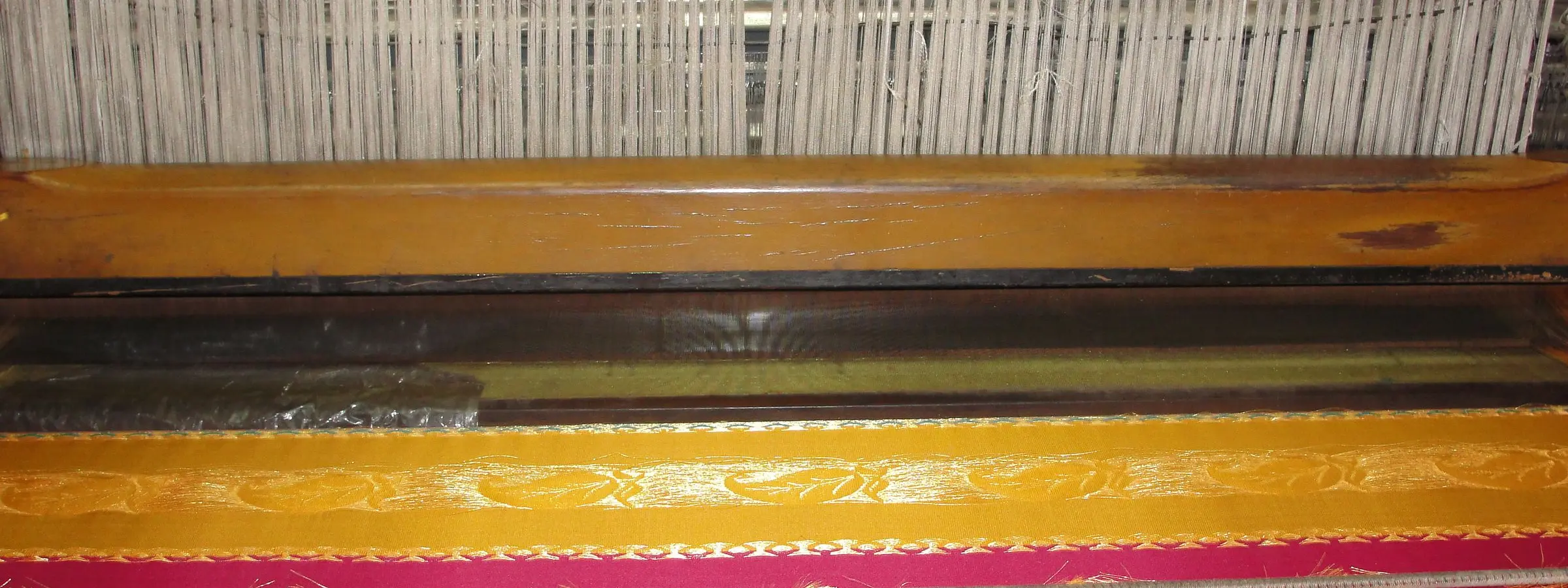
Karur’s linen trade, as it meets ecommerce
- Known for
- Home textiles woven largely for export
- Main lines
- Kitchen, table and bed linen; curtains
- Looms
- Handlooms and powerlooms, mostly cotton
- Demand dates
- Pongal, Aadi, Deepavali, weddings, housewarmings
- Language to test
- Tamil creative for buyers who read it
- How we work
- Remotely, from Gandhi Nagar, New Delhi
Local trades are described in general terms; your own buyers’ sizes, shades and dates matter more than any calendar.
From export spec sheet to Indian listing
Marketplace accounts, run weekly
Amazon, Flipkart and Meesho run week to week: set listings, prices, stock by size, returns, claims and settlement checks.
Linen specs turned into listings
Weave, GSM, washed sizes, set contents and care written for Indian shoppers, with shot lists for your photographer.
A storefront for your label
A Shopify or WooCommerce store for full collections, kitchen and table sets, gifting and buyers who come back.
Ads for Pongal and weddings
Google, Meta and marketplace ads planned around Tamil Nadu’s dates and judged on orders kept after returns.
Tracking you can check
GA4, Meta Pixel and Conversions API on your storefront, so ad results match the orders you actually took.
In short
- Ecommerce services in Karur help export linen units sell kitchen, table and bed linen and curtains to Indian shoppers, one order at a time.
- Linen woven to an overseas buyer’s specification needs Indian sizes, set counts, MRP labels and plain-word care before it sells on Indian marketplaces.
- Amazon and Flipkart suit searched-for linen sets, Meesho suits value kitchen towels and table covers, and a storefront suits full collections and returning buyers.
- A listing may call linen handloom only if it came off a handloom; thread count and organic claims need documents behind them.
- Karur units can work with us remotely from Gandhi Nagar, New Delhi, while weaving, packing and dispatch stay with the unit.
Our ecommerce services in Karur are for the town’s home textile units, the makers of kitchen, table and bed linen and curtains who have long woven for buyers abroad and now want to sell under their own name in India.
Karur is known for home textiles woven largely for export, on handlooms and powerlooms and mostly in cotton. An export order arrives with its sizes, labels, care symbols and packing already decided; selling at home hands every one of those decisions back to you.
The town is also known for bus body building and mosquito nets. This page stays with its linen: how a kitchen towel set, a table cover or a curtain pair woven in Karur finds an Indian buyer, and what selling it costs.
We are an operator, not an agency: we run brands of our own as well. For Karur units, commissions, return freight and ad costs decide what an online order earns. We work with Karur units remotely from our only office, in Gandhi Nagar, New Delhi.
What changes when Karur linen sells in India?
Nearly everything after the weaving changes. An export buyer sets the sizes, writes the care label, picks the colours and takes the whole order in one shipment; an Indian shopper buys one set, judges it against a phone screen and can send it back.
- Sizes. Export table linen and curtains are cut for tables, beds and windows abroad. Indian buyers shop by the bed they own, the table they seat and the door or window they cover, so every size needs checking against what sells here.
- Labels. Care symbols and a buyer’s brand label do not meet Indian packing rules. Packs sold in India carry MRP and the Legal Metrology declarations, on your own label or a sticker.
- Set counts. A pack counted the way an overseas buyer wanted may not match how Indian shoppers compare sets, so the piece count goes in the title and on the pack.
- Colour. Export ranges follow a buyer’s season palette, and what sells in a kitchen abroad may not be what sells here. Let your first listings show which shades move before you weave deep.
- Order size. One shipment becomes hundreds of single parcels, each packed to arrive clean and each one a possible return.
A Karur unit’s strengths carry over: control of the yarn, the weave and the finish, and the ability to repeat a quality exactly. What has to be built is the selling side, one listing and one parcel at a time.
Which marketplaces suit Karur’s kitchen and table linen?
Amazon and Flipkart carry most searches for kitchen towels, table covers, bed linen and curtains; Meesho suits value-priced sets bought on the first image; Myntra suits design-led home ranges under a label. Your own storefront comes later, for full collections and returning buyers.
| Channel | Karur lines that suit it | What to watch |
|---|---|---|
| Amazon | Kitchen towel sets, table covers, bed linen sets, curtain pairs | Variation rules for size and colour; set counts in titles |
| Flipkart | Value and mid-priced linen, festive buying | Sale-event pricing and stock depth by size |
| Meesho | Kitchen towels, table and fridge covers, single curtains | Per-order fees and return losses on low prices |
| Myntra | Design-led bed and table linen under a label | Brand approval and styled photography |
| Own storefront | Full collections, gift sets, made-to-measure curtains | Paid traffic, COD rules, your own checkout |
Kitchen and table linen is light to ship but often low-priced, so the fee charged on every order can weigh more than the commission. Sets of three or six usually carry those fees better than single pieces; your margin sheet decides which.
Myntra approves brands before they list and expects consistent photography, so it suits a Karur unit with a label and a look rather than a run of export lines. Our marketplace account management in Karur covers the weekly running of each account.
What should a kitchen linen listing say?
A kitchen linen listing should say what the cloth is, how big each piece is, how many pieces come in the set, how it washes and whether the colour holds. Shoppers judge absorbency and feel from words and close-ups, since they cannot handle the cloth.
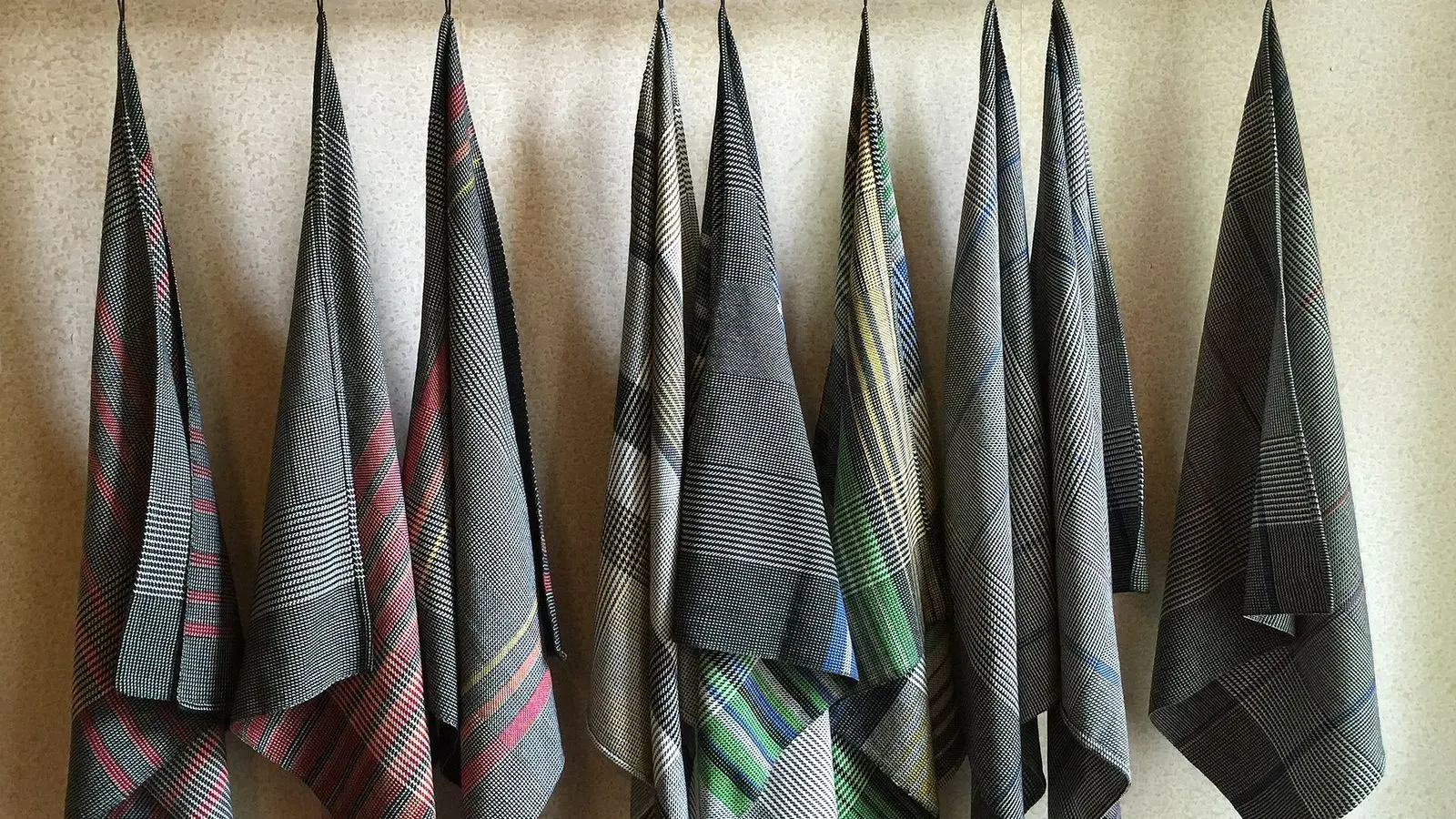
- Fibre and weave. Cotton or a blend, as the yarn supplier states it; waffle, terry, plain weave or twill; woven checks or a print.
- Size of each piece. In centimetres and inches, measured after a wash, because cotton shrinks and a towel listed at its loom size arrives smaller.
- Set contents. Every piece named and counted, four kitchen towels, two pot holders and an apron, rather than a vague “kitchen set”.
- Use and lint. Say whether the cloth is for drying dishes, wiping counters or holding hot handles, and warn that new terry or waffle cloth can shed lint at first.
- Colour and washing. Woven checks and prints behave differently in a hot wash; state the wash your tests support, and whether dark colours go in separately.
Aprons, oven gloves and pot holders sell on fit and protection. Give the apron’s length and strap type, and claim heat resistance only where a test supports it. Gloves woven for buyers abroad also suit Indian homes with an oven or OTG.
Photographs carry the texture: the weave close up in daylight, the set laid out with every piece in view, and one piece in use on a counter. Our guide to selling kitchenware online covers how the wider kitchen category is searched and returned.
How do table covers sell to Indian homes?
Table covers sell by the table they fit. Shoppers look for a cover by the number of seats, four, six or eight, and by shape, so give the cover’s measurements alongside the table it suits, and list round tables separately.
A cover used every day needs a finish that copes with spills, so wipe-clean and water-resistant covers sell beside woven cotton ones. Claim water resistance only where the fabric has been treated and tested for it, and say how the finish behaves after washing.
Napkins, placemats and runners sell in sets and as gifts. Show the set on a laid table in daylight, give each piece’s size and the count, and say which cover in the range it matches, so a buyer can order both.
Ranges made for export dinner tables often include more pieces than Indian buyers use. Test smaller sets, such as a cover with four napkins, before committing a whole colour range to the larger export count.
How should Karur curtains be listed online?
List curtains by the opening they cover. Indian shoppers buy a curtain for a window or a door, so state the finished length and width of each panel, name the opening it suits, and say whether the listing is for one panel or a pair.
- Heading. Eyelets, rings, tabs or a rod pocket, with the eyelet’s inner size, so the buyer knows whether it fits the rod already on the wall.
- Light. Sheer, semi-sheer or room-darkening, described in plain words. Call a curtain blackout only if a lined or coated fabric has been tested to block light.
- Fall and weight. A heavier cotton hangs straight; a light one moves under a ceiling fan. Say which, and whether the curtain is lined.
- Colour in daylight. Photograph each curtain hanging in a window, so the colour shows as it will in a room, with light coming through it.
Length mistakes are a common reason curtains come back: a door curtain bought for a window, or a panel that stops short of the floor. A measuring guide in the images, showing where to measure from the rod, prevents more returns than any discount.
Made-to-measure curtains suit a storefront rather than a marketplace, because each order needs a measurement and a confirmation before cutting. Our page on selling home furnishings online covers made-to-measure orders and prepaid checkout in full.
Handloom or powerloom: what can the listing claim?
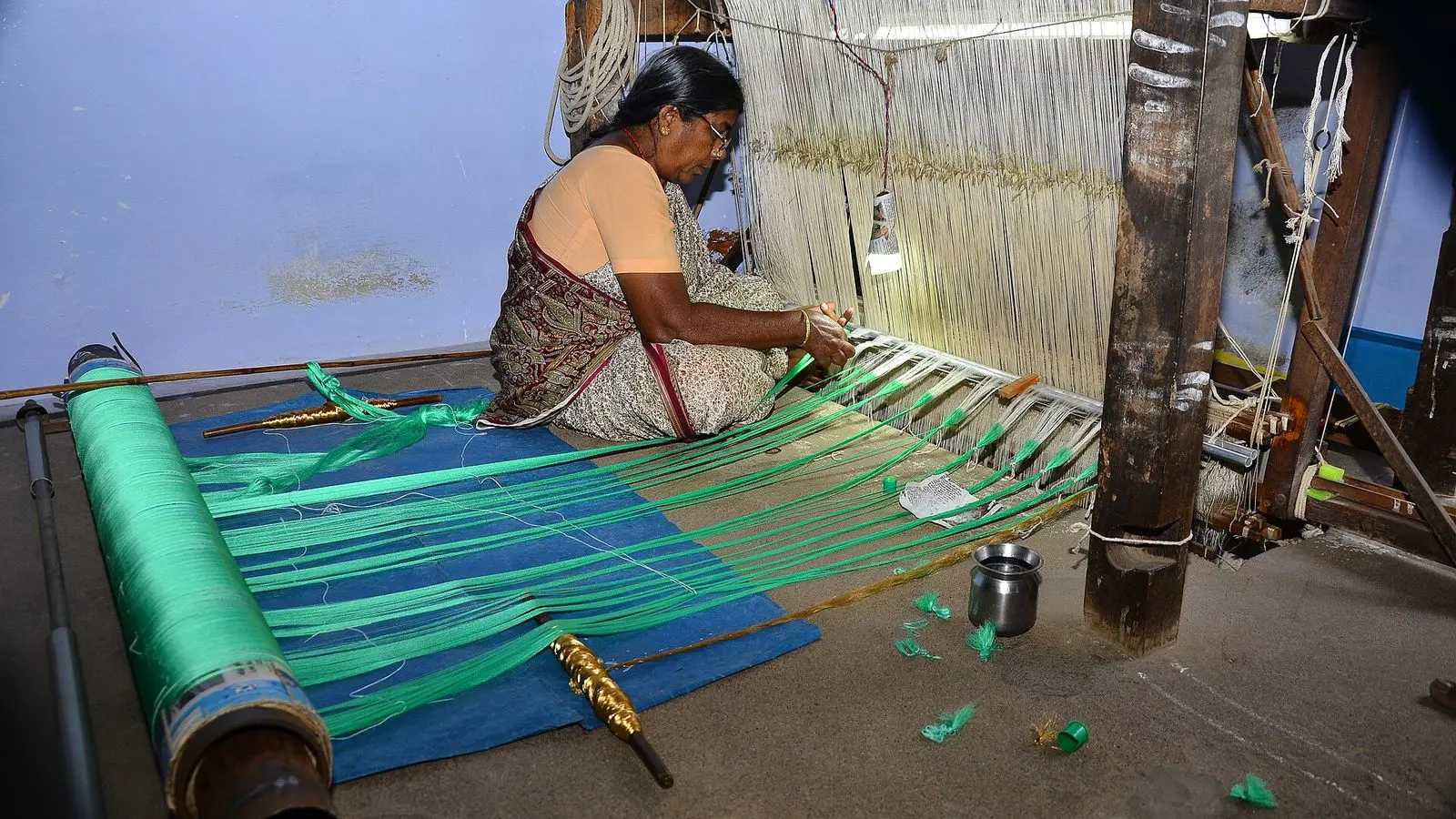
Say how the cloth was woven, and claim no more. Handloom is a description shoppers pay for, so linen woven on a powerloom is described by its weave, fibre and finish, and the word handloom is kept for cloth that came off a handloom.
- Thread count appears only where the weaving specification, or a test report, supports the number.
- Organic cotton appears only where a certificate covers that product, which marketplaces may ask to see.
- GSM, the cloth’s weight in grams per square metre, is measured on the finished piece rather than copied from the loom plan.
- Pure cotton is for pure cotton alone; a blend’s proportions are given as the yarn supplier states them.
Marketplaces can act on listings whose claims do not match the product, and a review that says “not handloom” or “thinner than described” stays on the listing for good. Plain claims cost less than the returns that follow inflated ones.
What do Karur bed linen listings need?
Export bed linen is often cut for mattress sizes used abroad, which rarely match Indian beds. Before listing a sheet made for a foreign buyer, measure it against the mattresses Indian shoppers own, and name it by its measurements rather than a borrowed size name.
Indian mattresses and pillows vary from maker to maker. Give the sheet’s size in centimetres and inches, the mattress depth a fitted sheet reaches, and each pillow cover’s size and closure: envelope, zip or buttons.
A bedsheet with two pillow covers is three pieces, and the pack declares that count as its net quantity. Our page on how to sell home textiles online covers bed and bath listings, sets and returns across India.
Two other textile towns meet Karur’s buyers online. Solapur weaves jacquard chaddars and terry towels, covered on our page for Solapur sellers; Panipat, in Haryana, is known for blankets, rugs and furnishings, on our page for Panipat sellers.
When do Indian buyers want Karur’s linen?
Linen sells all year but peaks when households refresh their homes or give gifts: Pongal in January, Deepavali in the autumn, the wedding months and housewarmings. The marketplaces’ festive sale events fall before Deepavali, and Tamil Nadu adds its Aadi sales in July and August.
| When | What moves | What to have ready |
|---|---|---|
| Pongal, mid-January | Kitchen and table sets, new bed linen, gift sets | Listings and stock by December; Tamil creative tested |
| Aadi, July to August | Discounted linen and curtains | Clearance prices worked out from margin |
| Before Deepavali | Curtains, bed linen, table covers for guests | Sale-event deals entered before the cut-off |
| Wedding months | Bed linen and kitchen sets given with the bride’s household goods | Gift-ready sets and titles |
| Housewarmings | Curtains and complete sets for a new home | Bundles by room |
Tamil weddings often include seer varisai, the household goods a bride’s family gives, from vessels to bedding. Linen bought for it must look complete and arrive pressed, so our packing guidance keeps such sets flat in a box, not folded into a bag.
Weddings are traditionally not held in Aadi, and shops across Tamil Nadu use the month for discount sales; Aadi Perukku is celebrated along the Kaveri, which flows through Karur district. Price Aadi offers from your margin, and keep festive stock back for Deepavali.
The production calendar matters as much as the selling one. Export orders and Indian peaks compete for the same looms, so book the weaving for Pongal and Deepavali stock early, and list from finished stock rather than from a weaving plan.
What does a linen order cost to sell?
Beyond the set’s landed cost, an order carries commission and fees, packing, freight out and back, the discount you fund in sale events, advertising, and TCS, the tax collected at source under GST, held from each payout until you claim it.
- The per-order fee. On a low-priced kitchen towel set it can matter more than the commission, which is why packs of several pieces often earn more than singles.
- Freight by size. Shipping is charged on volumetric weight where it exceeds the actual weight, so a curtain pair folded loosely costs more to send than it needs to. Our volumetric weight calculator shows what a tighter pack saves.
- Returns. Colour, size and feel that differ from the listing; each return costs freight both ways and often a piece that cannot be resold.
- Damage. Linen rarely breaks, but it arrives creased, soiled or damp if the pack fails, so every piece goes into a sealed inner bag.
Before any set is priced or advertised, we work out its margin on each channel: the landed cost, the fees, freight both ways, an allowance for returns drawn from your own history, and what is left over.
Sets that only pay at full price stay out of sale events, and sets with thin margins stay out of ads. The weekly report shows both lists, so you can see why a set is not being pushed.
How should Karur linen be advertised?
Advertise where shoppers are already looking for linen, judge every campaign on orders kept after returns, and save visual campaigns for ranges with a look worth showing. Kitchen and table linen sells on colour and texture, which short videos show better than stills.
- Marketplace ads on searches such as “cotton kitchen towels set” or “six-seater table cover”, with bids paused on any set short of stock or margin.
- Google Shopping for a storefront, with size, set count, fibre and colour in the product feed rather than only in the title.
- Meta for design-led prints and gift sets, with creative showing the set in use on a laid table or a working kitchen counter.
If your buyers read Tamil, test Tamil creative for Pongal and Deepavali against English, and Hindi for buyers in the north. Google matches Search ads to the language they are written in, while Meta lets you choose the language a person uses in the app.
ROAS, return on ad spend, measures revenue at the moment of the order. Linen returns arrive later, so we report ROAS beside revenue after returns and the margin left once ads are paid, through our Google Ads and Meta Ads management.
When does a Karur label need a store?
A Karur label needs its own store once the range is deep enough to browse, buyers return for matching pieces, and a budget exists to bring visitors. Until then, marketplaces find the buyers; after it, the store keeps them.
- Collections by room: kitchen, dining, bedroom and windows, so a buyer can match a table cover to its napkins and runner.
- Sets the buyer builds, such as kitchen towels in a chosen mix of colours, counted against single-piece stock.
- Made-to-measure curtains, priced by size, with a measuring guide and a confirmation step before cutting.
- Enquiries from shops that want to buy by the dozen, taken through a form rather than the retail checkout.
Our page on ecommerce website development in Karur covers the build itself: platform, checkout, GST invoices and prices for shops buying in quantity.
How we work with Karur units from Delhi
The work runs remotely from Gandhi Nagar, New Delhi. You add us as a user on your seller and ad accounts with the permissions you choose; we send one weekly report, discuss it on a call, and log every change we make.
- Read. Your export catalogue, cost sheets and any listings you already run, with the margin on each set worked out channel by channel.
- Rebuild. Sizes checked against Indian beds, tables and windows; set counts, care and claims rewritten; shot lists for your photographer.
- Launch. A short range on one or two marketplaces, with Indian labels on every pack before the first order goes out.
- Run. Pricing, stock by size and colour, returns, claims, settlements and ads, reported weekly on kept orders and margin.
From you we need account access, specification sheets, measurements from washed pieces, cost sheets, and one person who decides prices and stock. If a cloth check needs a swatch or finished set in hand, ask us to confirm the sample arrangements before posting it.
If you are comparing ecommerce agencies for a Karur unit, ask each one how it would price a single kitchen towel against a set of six, and who files the claim when a curtain pair comes back soiled.
Mistakes Karur exporters make selling at home
The costly mistakes are export habits carried into retail: sizes nobody here owns, labels without Indian declarations, prices set without the fees, and colour ranges woven deep before the listings have shown what sells.
- Export sizes listed unchanged, so sheets miss Indian beds and covers miss Indian tables.
- Care symbols with no words, where shoppers expect plain washing instructions.
- Loom measurements in the listing instead of washed, finished sizes.
- Handloom claimed for powerloom cloth, or a thread count no document supports.
- Single towels priced on commission alone, before the fee on every order is counted.
- A separate listing for each colourway, splitting the reviews one variation listing would keep together.
- Festive sets listed late, after the sale events have begun.
- No claims filed for linen that comes back used, stained or swapped.
Send us your range, the sizes you weave and where you sell now through our contact page, and we will come back with questions first and a written scope after.
Where Karur’s linen sits on our site
Questions Karur linen units ask us
How can a Karur home textile exporter start selling online in India?
Is Meesho good for selling kitchen towels and table covers?
Can I call powerloom linen handloom in my listing?
What sizes should curtains have for Indian buyers?
When should Karur sellers list linen for Pongal?
How much do ecommerce services cost for a Karur textile unit?
Do Karur linen sets need Legal Metrology labels to sell online?
Can a Delhi company run our Karur seller accounts?
Other cities we work with
- Delhi NCR
- Mumbai
- Bengaluru
- Hyderabad
- Chennai
- Kolkata
- Pune
- Ahmedabad
- Surat
- Tiruppur
- Ludhiana
- Jaipur
- Lucknow
- Indore
- Chandigarh
- Kochi
- Coimbatore
- Panipat
- Solapur
- Varanasi
- Bhadohi
- Moradabad
- Firozabad
- Saharanpur
- Jodhpur
- Agra
- Kanpur
- Kolhapur
- Meerut
- Jalandhar
- Channapatna
- Sivakasi
- Kannauj
- Mysuru
- Srinagar
- Amritsar
Tell us what your Karur unit weaves.
Send your range, the sizes you make and the channels you sell on now. We come back with questions first, then a written scope and a quotation.