Garments · 16 Oct 2026
Buying wholesale in Gandhi Nagar
A buyer’s checklist for readymade garments bought wholesale in Gandhi Nagar: lot spec, size ratios, fabric checks, samples, invoices and handover.
In short
Your first private label order is decided long before the lot is made: in the tech pack, the labels and the sample you sign. This is the sequence from first sample to first reorder, and what to check at each step.
It is an order for garments made to your specification and finished with your brand’s labels and tags. Unlike ready stock, it is produced for you, so every decision about fabric, fit and finish is yours to make and approve.
That brings more steps than buying ready stock: a tech pack, samples, label artwork and approvals. Each step exists to stop a costly surprise in bulk, and each is cheaper to get right than to correct once the lot is cut and sewn.
The terms are used loosely. Here, private label means garments made to your specification; putting your label on ready stock is a simpler job, often called white label.
We produce private label through partner units: we handle the sampling, sourcing and approvals with you, and the units make the garments. The steps below apply whoever makes yours, and our private label clothing page sets out how we run them.
Your price, your channel and your range, because each shapes the sample. A unit can make almost anything; the useful question is what can be made, labelled and packed at a cost that leaves you a margin at your selling price.
Write these down with the first enquiry. They let the unit propose fabrics and trims that fit the cost, rather than sampling something you then cannot afford to make.
If the brand itself is still taking shape, with no name, channel or price point settled, start with our guide on how to start a clothing brand in India.
A tech pack is the written specification a garment is made from: drawings, measurements, materials and finishing instructions. For a first order, a short, complete tech pack serves you better than a long one with gaps.
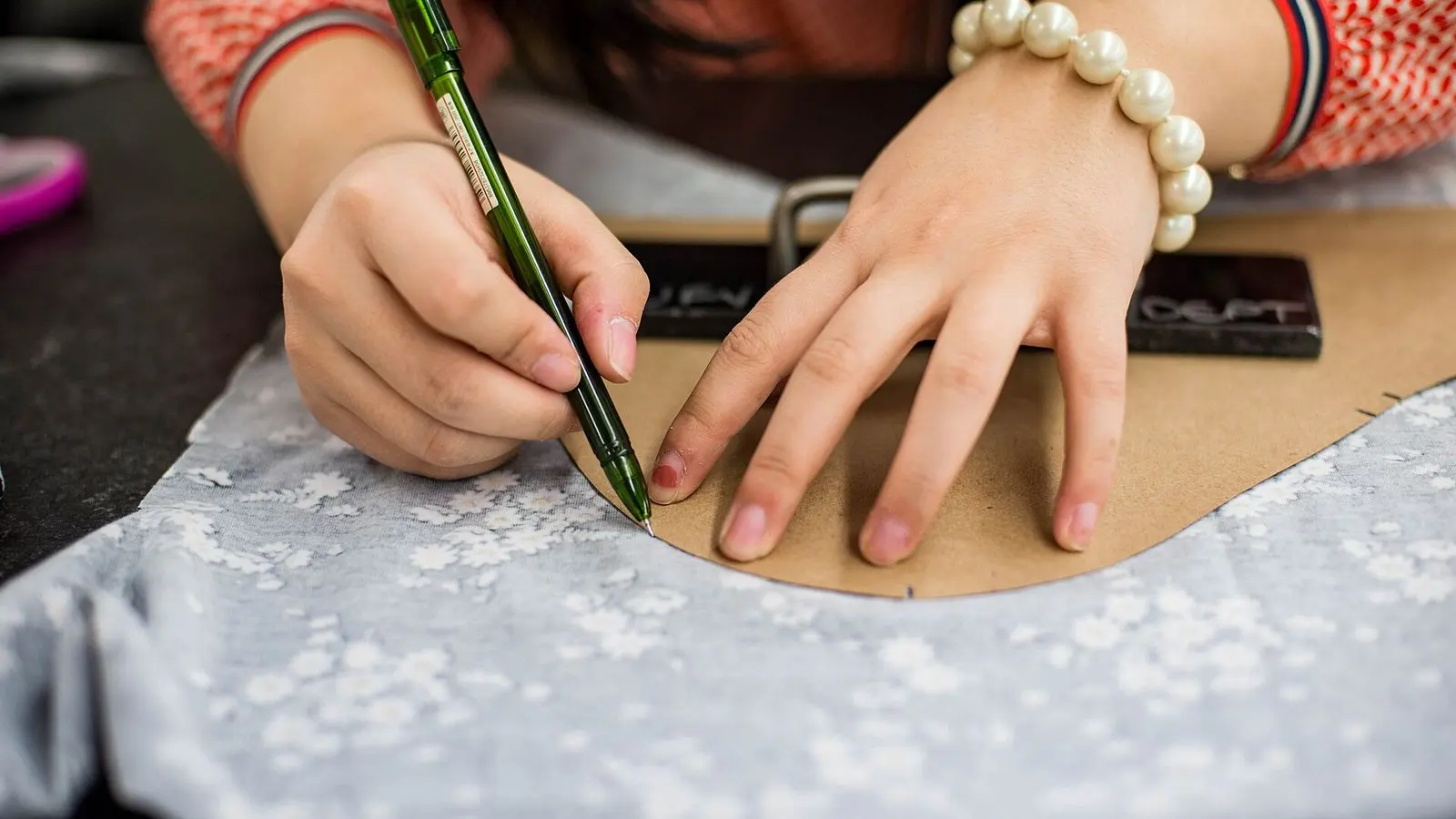
If you have no patterns yet, a garment whose fit you like is a fair starting point: it can be measured to begin the chart. Number and date every version of the tech pack, so everyone works from the same one.
The measurement chart matters most. Fabric and colour are visible at a glance; a sleeve two centimetres short is not, until customers start sending pieces back. Give every point of measure a tolerance, so a check has a clear pass or fail.
At minimum: a brand label, a size label, a care label giving fibre content and washing instructions, and a hangtag or pack carrying the declarations your sales channel requires. Order them early, because a finished lot cannot be packed without them.
Use the same size names on the label, the hangtag, the size chart and the listing. A piece labelled L that the size chart calls 40 is a return waiting to happen.
For packaged goods sold online, Legal Metrology rules require declarations on the pack: MRP, net quantity, the name and address of the manufacturer, packer or importer, month and year of manufacture or import, consumer-care details, and country of origin for imports.
Marketplaces ask for the same on the listing, apart from the month and year.
Decide with your adviser whose name and address go on that declaration, whether yours, the unit’s or both, before the tags are printed. Check your brand name for trademark conflicts before you order labels in quantity, too: renaming after printing is expensive.
Fabric and colour first, then fit, then a size set, then the pre-production sample with real labels and trims, and only then bulk. Each approval is in writing, against the current version of the tech pack.
Give feedback on each sample in one written list, against the points of measure and the tech pack, with photographs. Mark each sample approved, approved with changes, or rejected, so nobody has to guess whether the next step can start.
Keep a signed pre-production sample on each side. Changes after this point cost time, and sometimes fabric, so make them before you sign rather than after. Our sampling and sourcing work runs this sequence with you in Delhi.
The pre-production sample is the promise the lot is checked against.
At least two: one early in production, while faults can still be corrected, and one on the finished lot before it is packed, against the pre-production sample and the measurement chart.
Defects are usually graded critical, major or minor, and an AQL (acceptable quality limit) table sets how many pieces to inspect and how many defects of each grade a lot may carry. Agree grades and limits in writing before production, not at the final check.
Agree, too, what happens to pieces that fail: reworked, replaced or credited. Ask for the inspection report with photographs, and keep it with the tech pack for the reorder.
More than the per-piece price. Sampling, label and tag runs, packing materials, inspection, freight and GST each appear somewhere, and some carry minimum quantities of their own.
Ask for every one of these on the quotation, and request our wholesale garment rate card to compare like with like.
Before the first lot sells through. A repeat takes time to make even when nothing changes, so set your reorder point from your rate of sale and the time a repeat takes, not from the day stock runs out.
If the range sells online, the tech pack is also the source of your size chart and product details. Good catalogue and listing content starts from the same measurements, and a D2C storefront lets you sell the range under your own name.
We take a private label lot from tech pack to packed, labelled pieces, produced through partner units, with sampling and sourcing handled in the same conversation. You approve each stage in writing, and the packed lot is handed to your transporter.
That holds for brands anywhere in India: sampling and sourcing happen in Delhi, and your transporter carries the lot to your city, whether Bengaluru, Kolkata or Chennai.
Tell us what you want to make, in what fabric and roughly what quantity, and we will come back with the questions that shape the first sample. Read about our wholesale garments, or send us your brief.
We take a private label lot from tech pack and sample to labelled, checked pieces, produced through partner units and handed to your transporter.
A buyer’s checklist for readymade garments bought wholesale in Gandhi Nagar: lot spec, size ratios, fabric checks, samples, invoices and handover.
The order of work for a new clothing brand in India: range, sampling, private label, GST, labels, first lot and channels.
GST for online sellers: registration, the GST invoice, TCS on marketplace payouts, input tax credit and monthly reconciliation.
Tell us what you sell and where. We reply with our questions and a scope, with GST on its own line.