Ecommerce services in Kolhapur
Our ecommerce services in Kolhapur help chappal makers and saaj jewellery sellers sell under their own names online, with listings that respect the Kolhapuri name and size a handmade pair properly. We run the accounts, listings and ads remotely from Gandhi Nagar, New Delhi; workshops, stock and dispatch stay in Kolhapur.
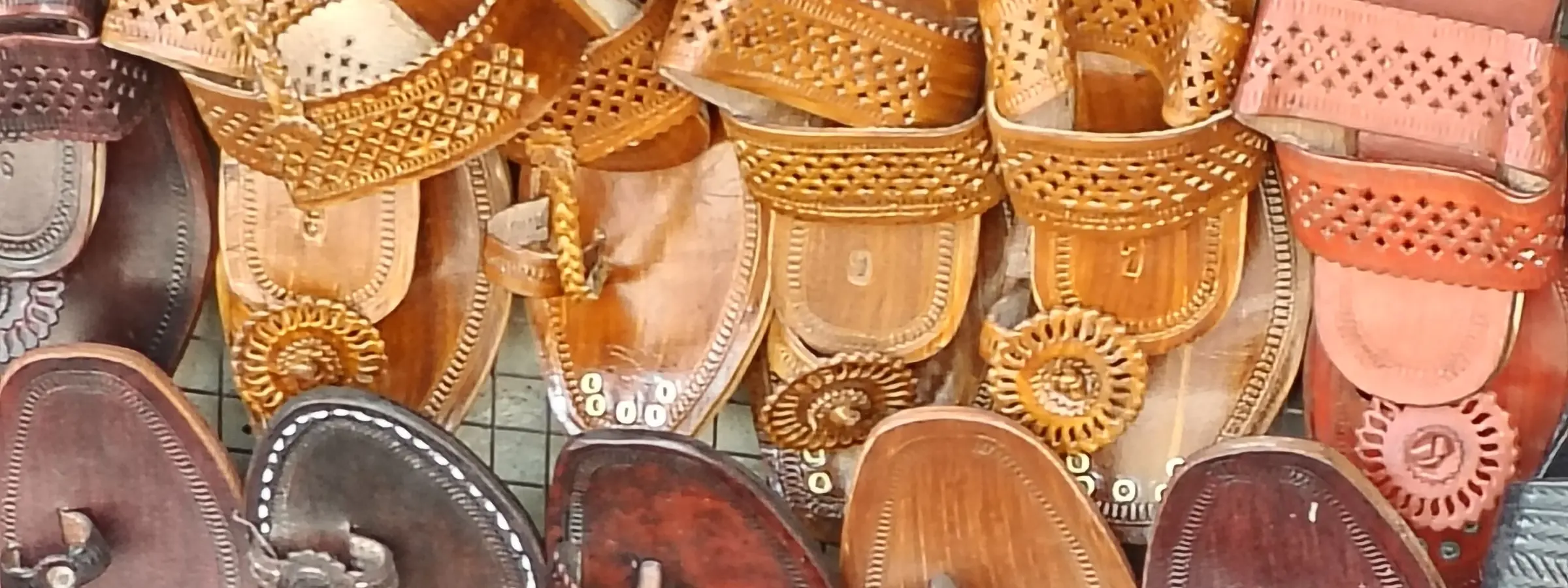
Kolhapur’s crafts, as they meet ecommerce
- Known for
- Kolhapuri chappals and Kolhapuri saaj jewellery
- Registered GI
- Kolhapuri chappals, Maharashtra and Karnataka districts
- Footwear rule to check
- Whether a BIS quality control order applies
- Busy seasons
- Wedding months, Diwali, Gudi Padwa
- Marketplaces to start
- Amazon, Flipkart, Meesho; Myntra and Ajio for labels
- How we work
- Remotely, from Gandhi Nagar, New Delhi
The GI register lists the districts and the method; check both before using the Kolhapuri name on a listing.
Handmade pairs, sold with the right words
Marketplace accounts
Amazon, Flipkart, Meesho, Myntra and Ajio run weekly: size variations, exchanges, claims and settlement checks.
Chappal listings
Sizes against foot length, leather and sole named, break-in and care written plainly, with close-up shot lists.
A storefront for your brand
A Shopify or WooCommerce store with size exchanges, wedding sets of chappals and saaj, and Marathi pages.
Marathi and English ads
Google and Meta campaigns timed to the wedding months and festivals, judged on pairs kept after exchanges.
Sales counted once
GA4, Tag Manager, Meta Pixel and Conversions API set up so storefront orders and ad spend line up.
In short
- Ecommerce services in Kolhapur help chappal makers and saaj jewellery sellers list, price and advertise handmade footwear and jewellery online.
- Kolhapuri chappals are a registered geographical indication covering districts of Maharashtra and Karnataka, so the name belongs to pairs made there in the registered way.
- A chappal listing should give sizes against foot length, name the leather and the sole, and warn that new pairs are stiff and dislike water.
- A saaj listing must say whether the piece is gold or gold-plated and name the base metal, since gold jewellery carries hallmarking rules.
- We work with Kolhapur sellers remotely from Gandhi Nagar, New Delhi; packing and dispatch stay with the seller.
Our ecommerce services in Kolhapur are for the chappal makers and jewellery sellers who want to sell Kolhapuri chappals and saaj online under their own name. We run the accounts, listings and ads; the workshops, stock and dispatch stay in Kolhapur.
Kolhapur is known for the Kolhapuri chappal, a handmade leather sandal with braided straps and a toe loop, and for the Kolhapuri saaj, a traditional necklace bought for weddings across Maharashtra. Both sell online, and both carry names that buyers trust.
A trusted name has to be used carefully. The chappal is a registered geographical indication, so Kolhapuri on a listing is a claim about where and how a pair was made, and the saaj raises questions of metal and plating that a listing must answer.
Because we run brands of our own as well, exchanges, claims and commissions are familiar to us from the seller’s side. Our only office is in Gandhi Nagar, New Delhi, and Kolhapur sellers work with us remotely, on user access, reports and calls.
How do Kolhapuri chappals reach online buyers?
Kolhapuri chappals reach buyers through the city’s chappal shops, through wholesalers who supply shops across India, and through makers’ own listings online. The online route lets a workshop put its own name on a pair and keep the margin the trade would share.
It also puts the pair to a different test. A buyer at a Kolhapur shop tries it on and feels the leather; a buyer online has the listing, the photographs and a size chart, and sends back whatever does not fit.
Much of the making happens in small workshops, where a family cuts, stitches and braids the leather by hand. A workshop selling online needs someone to own the listings, the stock count and the claims, which is the part we take on.
Handmade variation adds a twist. No two hand-cut pairs are quite alike, so the listing should say that colour, braiding and stitching vary slightly from pair to pair, and the photographs should show a typical pair rather than the finest one in the shop.
Who may call a chappal Kolhapuri?
Makers in the registered districts, working in the registered way. Kolhapuri chappals are a registered geographical indication covering Kolhapur, Sangli, Satara and Solapur in Maharashtra and Belagavi, Dharwad, Bagalkot and Vijayapura in Karnataka.
- Genuine pairs. Made in those districts by the registered method; keep your workshop’s or supplier’s details, and authorised-user papers where you hold them.
- Other leather sandals. Described by what they are, such as a handmade leather sandal with a toe loop; never Kolhapuri-style or Kolhapuri-inspired.
- Synthetic copies. Named by their material, a rexine upper or a synthetic sole, and sold at their own price.
Marketplaces can act on a complaint from a geographical indication’s registered proprietor and remove a title that cannot be supported. Your own brand needs a trademark to be protected on the marketplaces; the GI protects the name, not your listings.
Authorised users are recorded on the register beside each GI. If you buy from a maker who is one, keep their details with your stock records, because a marketplace that receives a complaint will ask where the pairs came from.
Our catalogue and listing work drafts every title from your papers, and keeps the name out wherever they fall short.
Which marketplaces suit chappals and saaj?
Amazon and Flipkart suit Kolhapuri chappals searched by size, colour and price; Meesho suits value pairs and imitation jewellery; Myntra and Ajio suit a footwear or jewellery label with styled photography. Choose by price band, then keep stock deep in the sizes that sell.
| Channel | Suits from Kolhapur | Watch for |
|---|---|---|
| Amazon | Chappals by size and colour; imitation saaj | Size variations, BIS checks, jewellery rules |
| Flipkart | Festive and wedding pairs, gift sets | Sale-event pricing and stock by size |
| Meesho | Value chappals, imitation jewellery | Exchanges and thin margins |
| Myntra | Footwear labels with styled imagery | Brand approval and size charts |
| Ajio | Ethnic footwear and jewellery labels | Category approval and image standards |
| Own storefront | Wedding sets, made-to-order pairs, gold saaj | Paid traffic; prepaid payment |
Each chappal size is a variation with its own stock, and a missing size stops a design selling as surely as a poor photograph. Stock by size is watched weekly, with the middle sizes kept deep before the wedding months.
Sizing a handmade chappal for online buyers
Size a chappal by foot length, measured from your own pairs, and say how the fit behaves. Handmade sizes do not always follow shoe sizes, so the chart and a short fit note do the work of the shop’s try-on.
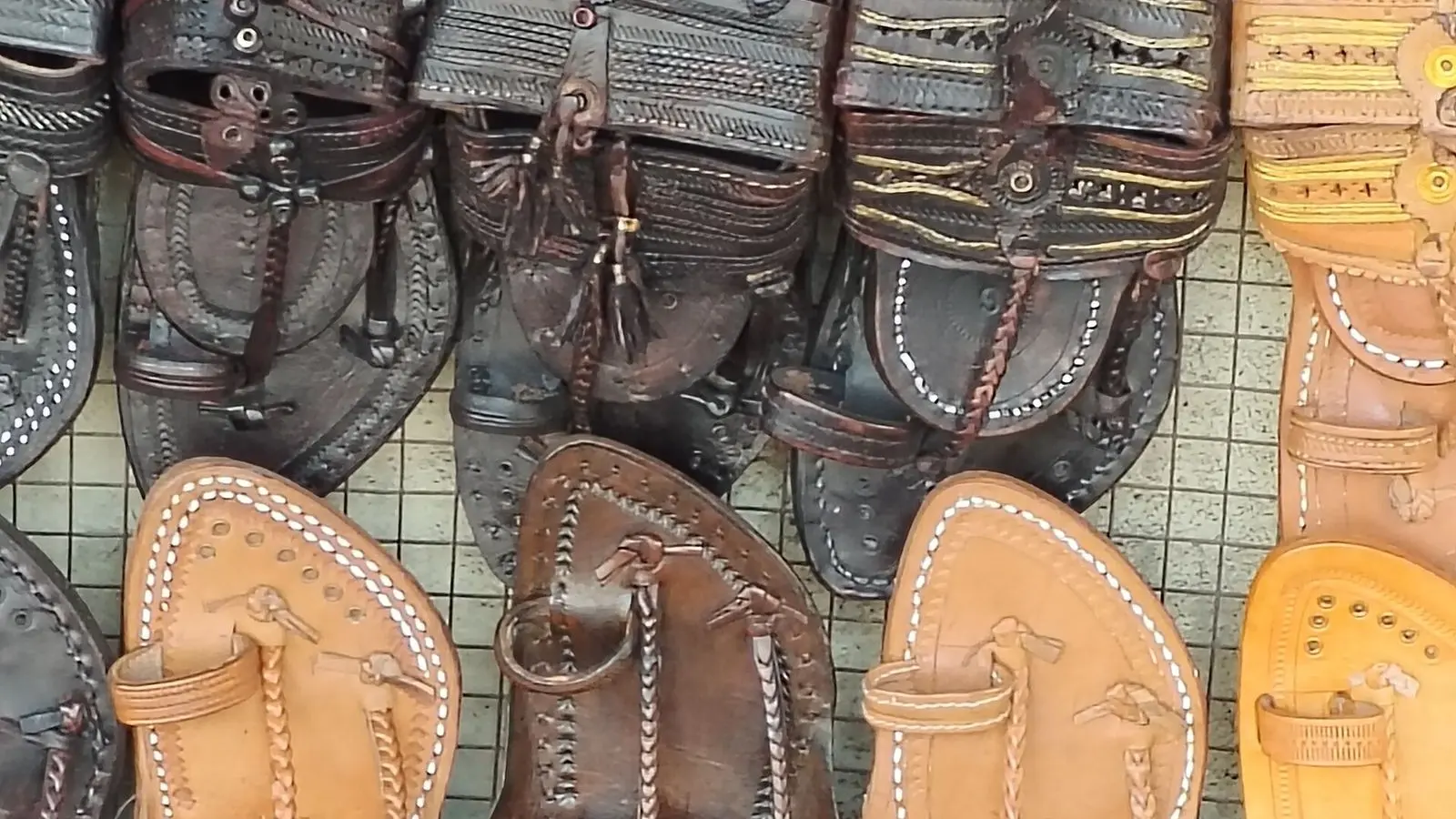
- Foot length. In centimetres for each size, with a note on how to measure a foot at home.
- Width. Whether the pair runs narrow or wide, since the straps sit across the widest part of the foot.
- Toe loop. Where it sits and whether it gives; a loop that rubs brings complaints.
- Break-in. New leather is stiff and eases with wear; say so, or a firm first fit reads as a wrong size.
- Men’s and women’s. Separate charts, because the lasts and strap widths differ.
Exchanges for size cost freight both ways, so a chart that prevents one pays for itself. Where your marketplace or store allows it, offer an exchange rather than a refund, and record each swap so the chart can be corrected.
Our page on selling footwear online in India covers size charts across the category.
Photographing chappals and saaj that sell
Photograph a chappal the way a buyer would inspect it in the shop: from above, from the side, the sole, the braiding close up, and on a foot. Daylight and one plain background keep the leather’s colour true from listing to listing.
- Above and side. The strap pattern from above; the thickness of the sole and the heel from the side.
- Sole. The underside, so the buyer can see the stitching and the material.
- Detail. The braid and the toe loop close up, where the handwork shows.
- On a foot. One photograph worn, so the buyer can judge the fit and the width.
- Saaj. The whole necklace laid flat, the motifs close up, the clasp, and the piece worn for length.
Leather photographs warmer or cooler depending on the light, and plated jewellery can pass for solid gold under a lamp. Check each image against the piece itself on a phone before it goes live, and leave filters alone.
Leather, the monsoon and care advice
Leather chappals do not like water, and Kolhapur’s long, wet monsoon makes that a selling issue as well as a wearing one. Vegetable-tanned leather can stain, stiffen or lose its shape when soaked, and leather stored in damp air can grow mould.
- In the listing. A plain care note: keep the pair dry, dry a wet pair in the shade, and oil the leather now and then.
- In storage. Stock kept off the floor, in dry air, with silica gel in the boxes through the monsoon.
- In the pack. Each pair in a bag inside the box, so damp in transit does not reach the leather.
- In returns. Each returned pair checked for water marks and mould before it goes back into stock.
Name the tanning if you know it. Vegetable-tanned leather darkens with sun and wear, which many buyers of handmade chappals like, while chrome-tanned leather starts softer; saying which sets the right expectation about colour and stiffness.
The monsoon also changes what sells. Leather chappals slow in the rainy months while waterproof footwear sells, so plan the leather range around the dry season and the wedding months rather than against the rain.
BIS, declarations and GST for chappal sellers
Check whether a BIS quality control order covers your chappals before you list them, because some footwear falls under one and marketplaces can ask for licence details. Your adviser can confirm the position for handmade leather pairs.
Boxed chappals sold online also carry Legal Metrology declarations on the box, including MRP, net quantity, the maker’s or packer’s name and address, and consumer-care details. The listing shows the same declarations, apart from the month and year.
GST depends on each product’s HSN code and, for footwear, on the sale value per pair, so your tax advisor confirms the rate for each design. Marketplaces deduct TCS from payouts, claimable against your GST; our fee carries GST at 18% on its own line.
Selling Kolhapuri saaj and imitation jewellery
A saaj sold online is often gold-plated or imitation jewellery, and the listing must say so in the title. Name the base metal, the plating and any stones, and keep the word gold for pieces that are gold, with the purity stated.
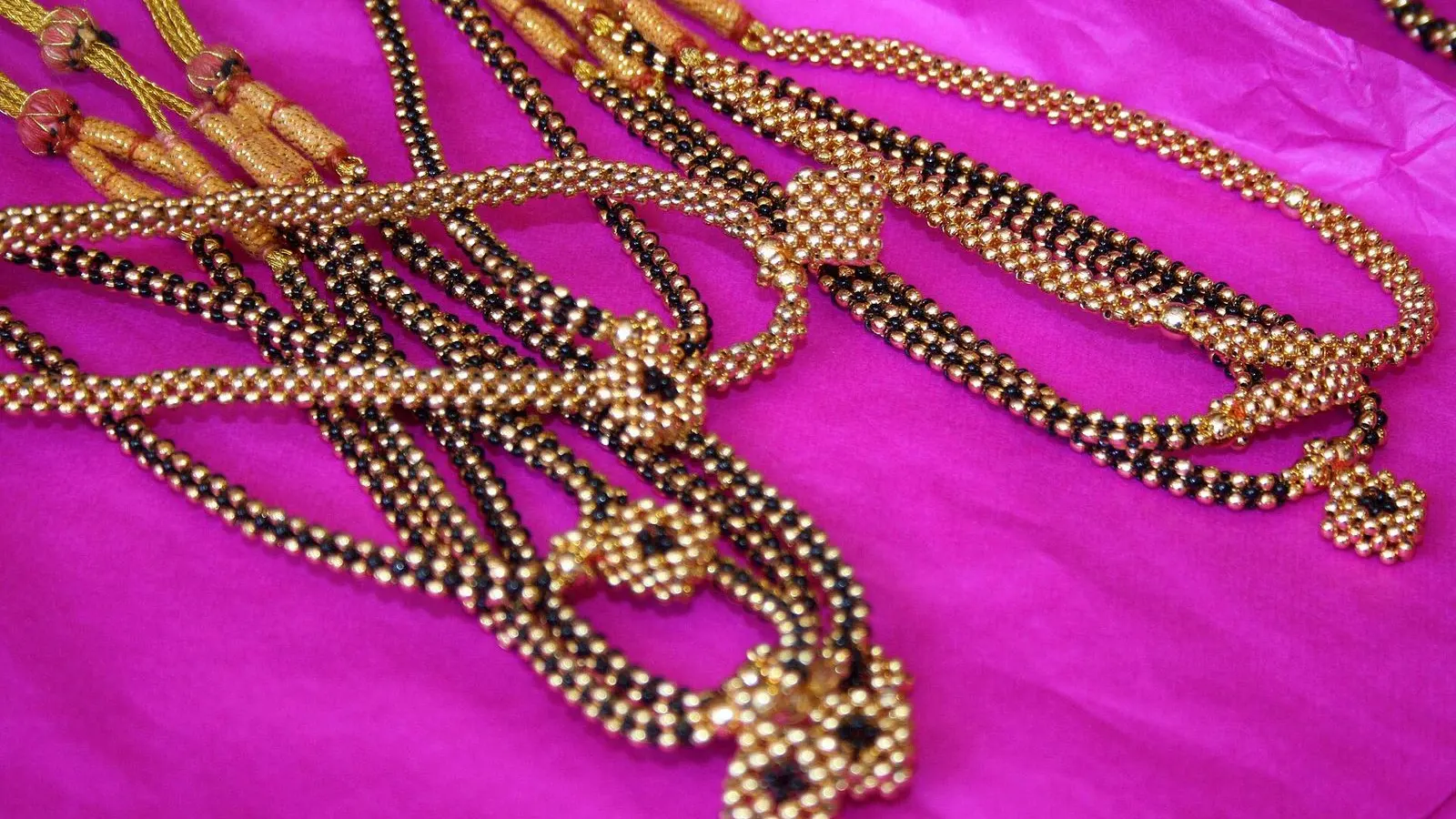
- Gold. BIS hallmarking rules apply to gold jewellery, and marketplaces ask for category approvals before fine jewellery can be listed; check both first.
- Gold-plated. The base metal, copper, brass or silver, with the plating named and care advice so it lasts.
- Imitation. Fashion jewellery described as fashion jewellery, with the materials of the beads and stones.
- Size. The length of the necklace and the size of the central motif, with the piece shown on a model for scale.
The saaj sells beside other Maharashtrian bridal pieces, such as the thushi, a close-fitting necklace of gold beads, and the nath. Sets sold together need each piece named and photographed alone as well as together.
Gold pieces add a pricing question, because their price follows the gold rate. A storefront can update prices as the rate moves; on a marketplace, check the category rules for gold before listing at all.
Accessories are covered on our page about selling clothes online in India, including fashion returns and photography.
When do Kolhapur chappals and saaj sell?
Kolhapur’s crafts sell to Maharashtra’s calendar: the wedding season that opens after Tulsi Vivah, Diwali, Gudi Padwa in March or April, and Akshaya Tritiya, when gold is bought. Chappals sell through the dry months, and saaj follows the weddings and the gold-buying days.
| Occasion | What sells | Live by |
|---|---|---|
| Diwali and Padwa | Festive chappals, gift sets, saaj | Before the festive sale events |
| Wedding season, after Tulsi Vivah | Bridal saaj and thushi, chappals for the family | Before Diwali |
| Gudi Padwa, March or April | New chappals, gold and plated jewellery | February |
| Akshaya Tritiya | Gold and gold-plated jewellery | A month ahead |
| Monsoon | Leather slows; care notes matter | Stock kept dry |
Wedding orders often cover a whole family, so a listing that sells several sizes of one design, with a chart for each, saves a round of calls before the date.
Buyers outside Maharashtra follow their own calendars, so the national sale events and Diwali matter for the whole range. Our page for Pune sellers covers Maharashtra’s festival calendar in more detail.
Why chappals come back, and what helps
Chappals come back over size, comfort and appearance: too tight across the foot, a toe loop that rubs, or leather darker or lighter than the photograph. Each reason has a fix in the listing or the pack, and each return costs freight both ways.
| Return reason | Listing fix | Pack or process fix |
|---|---|---|
| Too tight or too loose | Foot-length chart and a width note | Exchange offered for size |
| Stiff at first | A break-in note in the listing | — |
| Colour differs | Daylight photographs; variation explained | — |
| Water-marked or mouldy | A care note on water | Pairs bagged; stock kept dry |
| Worn and returned | — | Packed pairs photographed; claims filed |
Each marketplace sets its own return window and claim limits. Your staff pack to guidance we write, and we file claims for pairs that come back worn or damaged, with your photographs as evidence.
What a pair costs you once it sells
A pair sold online costs more than its making and its leather. Commission and fees come off the price, the box and the bag add to the parcel, each exchange adds two journeys, and TCS is held from every marketplace payout until you claim it.
- Freight. Light for a single pair, so the box size matters more than the weight; keep it small.
- Exchanges. The cost to watch most in footwear; a good size chart is the cheapest cure.
- Sale events. A discount you fund; decide in advance which designs can carry one.
- Advertising. Measured against pairs kept after exchanges, not pairs ordered.
We put each design on a margin sheet before it is priced or advertised: making cost, fees, box and freight, an allowance for exchanges, and what is left. A design that only pays at full price sits out the sale events.
Which language should your ads use?
Use the language your buyers read, and test it. Marathi creative can reach buyers across Maharashtra, Kannada suits buyers in north Karnataka, where the craft is also made, and English and Hindi reach the rest of India.
Google matches Search ads to the language they are written in, so a Marathi ad group needs ads written in Marathi; Meta can target people by the language they use in the app. Buyers also type Kolhapuri chappal in English letters, so English keywords stay.
Search terms often carry the person and the occasion: Kolhapuri chappal for men, for women, for a wedding. Build ad groups around those, with only the sizes you have in stock.
Video suits the craft: a pair being stitched, the braid being worked, the chappal flexing on a foot. Campaigns run through our Google Ads and Meta Ads management and are judged on pairs kept after exchanges.
When a Kolhapur brand needs its own store
A Kolhapur brand needs its own store when buyers come back for the same pair in a new colour, when it sells wedding sets of chappals and jewellery, or when it makes pairs to order. Until then, marketplaces find buyers more cheaply.
- Size exchanges handled as exchanges, with the replacement sent when the original is collected.
- Made-to-order pairs, with the making time stated and payment in advance.
- Wedding sets of chappals and saaj chosen together for one family.
- Marathi pages beside English, starting with the wedding and festival collections.
The build, the payments and the monthly upkeep are set out on our page about D2C storefronts on Shopify and WooCommerce. Your shipping app plugs into the store; packing and dispatch stay with you in Kolhapur.
How our ecommerce services in Kolhapur run
Our ecommerce services in Kolhapur run the selling side of a chappal or jewellery business from New Delhi: listings written from your workshop’s records, stock by size watched weekly, exchanges and claims handled, settlements checked, and ads paced to the wedding months.
- Read. Listings, return and exchange reasons, claims, settlements and the margin on each design.
- Correct. GI claims checked against your papers, size charts measured again, metal and plating named.
- Plan. Stock and listings set against the wedding months, Diwali, Gudi Padwa and the monsoon.
- Run. Uploads, pricing, exchanges, claims and ads, reported weekly on kept orders and margin.
From you we need account access, your size measurements and leather details, cost sheets, stock by size, and one person who decides prices and offers. The weekly routine is on our page about marketplace account management in Kolhapur.
The first month goes on the listings rather than the ads: GI claims checked, size charts measured again, and photographs retaken where colour or fit was unclear. Nothing changes on your accounts until you have approved the list.
Agra’s shoemakers sell leather footwear online under similar rules; our page for Agra sellers covers that trade.
Comparing ecommerce agencies for a Kolhapur business? Ask each how it would size a pair that stretches with wear, and what it would write for a chappal made outside the registered districts.
Mistakes that cost Kolhapur sellers money
The costly mistakes for Kolhapur sellers come from borrowed names and borrowed charts: the Kolhapuri name on pairs that do not qualify, gold on plated jewellery, shoe-size charts copied for handmade pairs, and leather left to the monsoon.
- Kolhapuri on pairs made elsewhere, or on synthetic copies.
- Gold on gold-plated saaj, or no base metal named at all.
- A shoe-size chart for handmade pairs, so exchanges pile up.
- No break-in note, so stiff new leather reads as a wrong size.
- Stock left on a damp floor through the monsoon.
- Wedding stock listed late, after the season has opened.
- Exchanges refunded instead of exchanged, losing the sale and the freight.
- Every colour of every design listed at once, so no size run stays complete.
To begin, tell us through our contact page what you make, which sizes sell and where you list today. Our questions come first, then a written scope and a quote.
Kolhapur’s crafts on our industry pages
What Kolhapur sellers ask before selling online
Can I sell Kolhapuri-style chappals made elsewhere as Kolhapuri?
How do I size Kolhapuri chappals for online buyers?
Can Kolhapuri chappals be worn in the rain?
Which marketplace is good for selling Kolhapuri chappals?
Do I need BIS certification to sell chappals online?
Can I sell imitation saaj on Amazon and Flipkart?
How much do ecommerce services cost for a Kolhapur business?
Can a Delhi company manage my Kolhapur chappal business online?
Other cities we work with
- Delhi NCR
- Mumbai
- Bengaluru
- Hyderabad
- Chennai
- Kolkata
- Pune
- Ahmedabad
- Surat
- Tiruppur
- Ludhiana
- Jaipur
- Lucknow
- Indore
- Chandigarh
- Kochi
- Coimbatore
- Panipat
- Karur
- Solapur
- Varanasi
- Bhadohi
- Moradabad
- Firozabad
- Saharanpur
- Jodhpur
- Agra
- Kanpur
- Meerut
- Jalandhar
- Channapatna
- Sivakasi
- Kannauj
- Mysuru
- Srinagar
- Amritsar
Tell us what you make in Kolhapur.
Send your range, your sizes and the channels you sell on now. We come back with questions, then a scope and a quote in writing.