Ecommerce glossary for Indian sellers
An ecommerce glossary India’s online sellers can keep beside the seller panel: marketplace fees, shipping and returns, GST, compliance, advertising, payments and garment sourcing, in plain English. Each entry gives the meaning first, then an example or the page that goes further.

In short
- RTO, return to origin, is an order that never reaches the buyer and travels back to the seller; a customer return was delivered first.
- TCS is GST a marketplace collects from seller payouts and reports in GSTR-8; TDS is income tax it deducts, now under the Income-tax Act, 2025.
- ACoS is ad spend divided by ad-attributed sales; ROAS is the same division turned upside down, so each is the other’s reciprocal.
- At the time of writing, GST on readymade garments is 5% up to ₹ 2,500 a piece and 18% above it, from 22 Sep 2025.
- Legal Metrology rules require packaged goods to carry declarations such as MRP and net quantity; listings show the same declarations, except the month and year.
This is an ecommerce glossary India’s marketplace sellers, D2C brands and garment buyers can work from: each term defined in plain English, with the arithmetic where there is some and the rule or platform setting behind it.
Terms are grouped by letter, each linked to the page on this site that goes further, and the arithmetic ones to our ecommerce calculators for sellers. Fees, rules and programme names change; those given here stand at the time of writing, in Oct 2026.
We are an operator, not an agency: we run brands of our own as well as accounts for clients, and we source garments in Gandhi Nagar. These are the words of our working week.
A
A+ content
The image-and-text section below an Amazon listing’s bullets, built from modules. It needs Brand Registry; at the time of writing, Basic A+ allows up to five modules and Premium A+, for eligible brands, up to seven. Our product listing services write it.
Account health
How a marketplace rates a seller’s standing. Amazon’s Account Health page shows a rating for policy compliance beside order metrics such as order defect rate, cancellations and late dispatch, each with its own target; missing them can restrict an account. See Amazon account management.
ACoS
Advertising cost of sales: ad spend divided by the sales credited to those ads, as a percentage, the measure Amazon’s advertising reports lead with. It is ROAS upside down, so an ACoS of 25% equals a ROAS of 4; see ROAS vs ACoS.
Advantage+ sales campaigns
Meta’s automated campaigns for online sales, formerly Advantage+ shopping campaigns. The automation chooses the audience, placements and budget split from the creative you give it; you keep a few hard limits, such as locations, a minimum age and excluded audiences. See Meta Ads management.
AOV
Average order value: revenue divided by the number of orders over the same period. A higher AOV spreads each order’s fixed costs, such as shipping and payment fees, over more revenue, which is why sellers use bundles and free-shipping thresholds.
AQL
Acceptance quality limit, often called acceptable quality level: the ISO 2859-1 method that accepts or rejects a lot on the defects found in a random sample. AQL 2.5 does not mean at most 2.5% of the lot is defective. See garment sourcing in Delhi.
ASIN
Amazon Standard Identification Number: the ten-character code Amazon gives each product in its catalogue, shown under Product details on the listing. Every seller of the same product shares its ASIN, and your SKU is mapped to it. See how to sell on Amazon India.
Attribution window
The period after a click or ad view in which a platform credits a sale to an ad. Each sets its own, so Google, Meta and GA4 can each claim one order; our guide to attribution after Consent Mode v2 explains what to trust.
AWB number
Air waybill number: the tracking number a courier gives each shipment, which Indian couriers use for parcels by road as well as air. It ties a parcel to its label, delivery attempts and any COD remittance, so quote it in every courier dispute.
B
Bale
A tightly packed bundle of garments or fabric, wrapped and marked for transport, often numbered “3 of 8” so the lot can be counted at handover. Bales travel with the invoice, packing list and lorry receipt; see buying wholesale in Gandhi Nagar.
Bill of supply
The document a supplier issues instead of a tax invoice when it charges no GST, typically under the composition scheme. No input tax credit can be claimed on it, so a registered buyer should ask for a tax invoice; see GST on readymade garments.
BIS
The Bureau of Indian Standards, India’s national standards body. It runs the certification behind the ISI mark, and the quality control orders that make certification compulsory for some products, toys and much footwear among them; check the BIS list of products under compulsory certification.
Brand Registry
Amazon’s free programme for brand owners. At the time of writing it needs a registered or pending trademark, India’s included, and opens A+ content, a Brand Store, Sponsored Brands and a tool to report infringing listings. Amazon’s Brand Registry page sets out the steps.
Break-even ROAS
The ROAS at which advertising neither makes nor loses money: the selling price net of GST divided by what one order leaves after every cost except ads. Below it, each sale an ad wins loses money. Work yours out with our break-even ROAS calculator.
Buy Box
The old name, still widely used, for Amazon’s featured offer: the offer behind the Add to Cart button when several sellers list one product. Other offers sit a click away, and sponsored ads for the product show only while you hold it.
C
CAC
Customer acquisition cost: marketing spend divided by the new customers it won. ROAS judges orders and CAC judges customers, so a brand whose buyers reorder can afford a higher CAC than one selling something bought once. We plan digital marketing budgets with both.
Care label
The label sewn into a garment for life, with fibre content and care symbols for washing, bleaching, drying, ironing and professional cleaning. At the time of writing, draft Textiles Committee regulations would require a durable label in English and Hindi.
CGST
Central GST: the Centre’s half of the tax on a sale within one state, charged with an equal SGST. A Delhi seller delivering in Delhi charges CGST and SGST; delivering to Noida, in Uttar Pradesh, it charges IGST. See GST for online sellers.
Chargeable weight
The weight a marketplace or courier bills: the higher of a parcel’s actual or dead weight and its volumetric weight, rounded up to the next slab. A light, bulky parcel pays for its space, as anyone who sells luggage online knows.
Chargeback
The reversal of a card payment after the customer disputes it with their bank; UPI disputes run much the same way. The gateway holds the amount until a decision, so answer before its deadline with the invoice, proof of delivery and the customer’s messages.
Closing fee
A fixed fee Amazon charges on each item sold, by price band and fulfilment channel, besides the referral fee; it was revised from 7 Sep 2026. Flipkart’s fixed fee per order varies with price band and seller tier. See Amazon’s fees and pricing page.
CMT
Cut, make and trim: the buyer supplies the fabric, and usually the trims, and a garment unit charges per piece for cutting, stitching, finishing and packing. It gives the buyer control of the fabric, and its risks; compare FOB, one price per finished piece.
COD
Cash on delivery: the buyer pays at the door, in cash or by UPI. It brings more RTO than prepaid orders, because a buyer who has not paid loses nothing by refusing. Couriers remit COD cash in batches; marketplaces pay it in the settlement.
Colour fastness
How well a fabric holds its colour through washing, rubbing, perspiration and light. Laboratories grade change of shade and staining from 1 to 5, where 5 means none, and light fastness from 1 to 8. Deep and bright shades bleed first.
Composition scheme
A GST option for small businesses: a fixed rate of tax on turnover, a bill of supply instead of a tax invoice, and no input tax credit. From 1 Oct 2023, composition sellers may sell through marketplaces, but only to buyers in their state.
Consent Mode
Google’s way of passing each visitor’s consent choice to its tags. Version 2 carries four signals: analytics_storage, ad_storage, ad_user_data and ad_personalization. In basic mode tags wait for consent; in advanced mode they send cookieless pings. See Google Consent Mode v2.
Contribution margin
What one order leaves after its variable costs. D2C brands often count it in three steps: after product cost (CM1), after packaging, shipping, payment fees, returns and RTO (CM2), and after the marketing that won the order (CM3). Break-even ROAS comes from it.
Conversion rate
The share of visits, sessions or clicks that end in an order; Amazon’s business reports show it per product as unit session percentage. Falling conversion on steady traffic usually points to the listing, price, stock or reviews rather than the ads.
Conversions API
Meta’s server-side route for website events, often called CAPI: purchases are sent from your server or storefront platform, alongside the Meta Pixel in the browser. With the same event name and event ID, Meta counts each purchase once. Our conversion tracking setup runs both.
CPA
Cost per acquisition, or per action: ad spend divided by the conversions it bought, such as purchases or sign-ups. Google’s target CPA bidding aims for the average you set; the most you can pay for an order is its contribution before advertising.
CPC
Cost per click: what a platform charges each time someone clicks an ad, the usual way search ads and Amazon’s sponsored products are bought. The highest CPC you can afford is your break-even cost per sale times your conversion rate. See Google Ads management.
CPM
Cost per mille: the cost of a thousand ad impressions. A rising CPM in festive weeks usually means more advertisers bidding for the same people, not weaker ads, so read it beside CTR and cost per purchase. See Meta ads for D2C brands.
Credit note
The GST document that reverses all or part of an invoice, for a return, an RTO or a short supply. It cuts the seller’s GST liability and the buyer’s credit by the same amount, and GST sets time limits for issuing it.
CTR
Click-through rate: clicks divided by impressions. A low CTR on search ads points to the ad or the offer; on marketplace ads, it often points to the main image, price or rating shown beside it.

D
D2C
Direct to consumer: a brand selling on its own website, usually Shopify or WooCommerce, beside or instead of marketplaces. It keeps the customer data, saves the commission, and runs checkout, payments, shipping and returns. See D2C website development and marketplace vs D2C.
Dark patterns
Design tricks that mislead buyers, such as false urgency, basket sneaking, drip pricing and subscription traps; India’s 2023 guidelines name thirteen. From 1 Jan 2027, G.S.R. 789(E) requires every e-commerce entity to audit itself for them each year and display a certificate.
DPDP Act
The Digital Personal Data Protection Act, 2023, which governs how a business collects and uses customers’ personal data, including through pixels and analytics. Its Rules were notified in November 2025; most business duties, such as notice, consent and security, apply from May 2027.
E
Easy Ship
An Amazon option in which you keep the stock and pack each order, and Amazon’s network collects it from you and delivers it. Damaged or swapped returns on Easy Ship orders are claimed through SAFE-T.
E-commerce operator
GST’s term, from section 2(45) of the CGST Act, for anyone who owns, operates or manages a digital platform for electronic commerce. Marketplaces are operators: they must register, collect TCS on their sellers’ sales and report it in GSTR-8.
E-invoice and IRN
Reporting each business-to-business invoice to an Invoice Registration Portal, which returns an IRN, the invoice reference number, and a signed QR code. At the time of writing it applies once aggregate turnover has exceeded ₹ 5 crore in any financial year from 2017-18.
E-way bill
The document, generated on the e-way bill system before goods move, that GST requires for goods moved by motor vehicle above a consignment value of ₹ 50,000; states set their own rules within the state. Part B carries the vehicle or lorry receipt number.
F
FBA
Fulfilment by Amazon: Amazon stores your stock, packs and delivers each order and handles returns, and the products earn the Prime badge. It adds storage, handling and removal fees; units lost in Amazon’s care are reimbursed through its own process, not SAFE-T.
FBF
Fulfilment by Flipkart: Flipkart collects stock from the seller’s location, stores it, packs and ships orders and handles returns, and the listings become eligible for the FAssured badge. Sellers outside it pack each order for Flipkart’s pickup. Flipkart describes it on its seller blog.
Featured offer
The offer Amazon shows by default on a product page, with the Add to Cart and Buy Now buttons, once called the Buy Box. It is chosen on price, delivery speed, stock and seller performance; in July 2026 Amazon removed its separate eligibility step.
Fit sample
A sample made in the base size to check fit and measurements against your chart, before colour, labels or bulk are approved. Approving fit proves nothing about the bulk fabric’s shade; the lab dip and the pre-production sample settle that. See private label clothing.
FOB
Free on board: strictly an Incoterm, under which the seller’s price covers the goods until loaded on board at the port of shipment. In garment talk it means full package: the supplier buys fabric and trims and quotes one price per finished piece.
Form 168 (Form 26AS)
The annual tax statement in which TDS deducted against your PAN appears, long known as Form 26AS. From tax year 2026-27 it is Form 168 under the Income-tax Act, 2025; check the marketplace TDS in it against your settlements before you claim it.
FSN
Flipkart Serial Number: Flipkart’s identifier for a product in its catalogue, as the ASIN is Amazon’s. Each seller’s offer on that product is a listing with its own listing ID, mapped to the seller’s SKU. See how to sell on Flipkart.
FSSAI
The Food Safety and Standards Authority of India. Anyone selling packaged food online needs its registration or licence: at the time of writing, registration up to ₹ 1.5 crore turnover, a state licence up to ₹ 50 crore, a central licence above.
G
GA4
Google Analytics 4, Google’s event-based analytics. It counts purchases reported from the buyer’s browser, so it usually shows fewer orders than your store does; a steady gap is normal, a sudden one is a tracking fault worth fixing before anyone reads the reports.
Gandhi Nagar
The readymade-garments wholesale market in East Delhi, where we are based and where our garments arm sources lots from manufacturers. Lots there are quoted by the piece, with GST and freight on their own lines; see our guide to the Gandhi Nagar garment market.
gclid
Google Click Identifier: a parameter Google Ads adds to the landing-page address when auto-tagging is on. It ties each visit to its ad click, and Google Ads website conversion tracking needs it, so never let a redirect strip it.
Google Tag Manager
Google’s tag management system: one container on your site that loads and controls tags, such as GA4, Google Ads and the Meta Pixel, without editing the site’s code for each change. The consent default belongs in it, set before any tag fires.
Grievance officer
The person an e-commerce business names, with contact details on its site, to handle complaints under the Consumer Protection (E-Commerce) Rules. Complaints are acknowledged within forty-eight hours and resolved within a month; from 1 Jan 2027 the complainant also gets a copy as recorded.
GSM
Grams per square metre: the weight of a fabric, and the usual shorthand for its thickness. Summer T-shirts typically sit around 140 to 160 GSM and sweatshirt fleece at 280 and above; higher means heavier, not better. See wholesale shirts and t-shirts.
GST registration
Registering under GST gives a business its GSTIN. Most sellers of goods on marketplaces need one, but the route for small online sellers is changing; check the current position with your adviser. Our guide to GST for online sellers covers the rest.
GSTIN
The fifteen-character GST identification number: a two-digit state code (Delhi is 07), the holder’s ten-character PAN, an entity code and a check character. Check any supplier’s on the GST portal’s taxpayer search before you pay.
GSTR-1
The GST return of outward supplies, filed monthly or quarterly, listing a business’s invoices and its credit and debit notes. Buyers’ input tax credit is built from it, so a late or wrong GSTR-1 costs them credit.
GSTR-2B
The monthly statement of input tax credit the GST portal builds from your suppliers’ returns. Credit missing from it generally cannot be claimed, so chase any supplier whose invoice does not appear.
GSTR-3B
The summary GST return in which a business declares its tax liability and input tax credit and pays the tax due, monthly or quarterly as its scheme requires.
GSTR-8
The monthly statement in which a marketplace, as an e-commerce operator, reports the TCS it collected against each seller’s GSTIN; the GSTR-8 manual shows what it holds. Only the marketplace can correct it, so match it to your settlements monthly.
GTIN
Global Trade Item Number: the number in a product’s barcode that identifies it to retailers and marketplaces anywhere. In India GTINs are licensed from GS1 India; Amazon asks for one when you create a new product page, unless it grants a GTIN exemption.
H
Handling time
The days a seller takes to hand an order to the courier. Marketplaces build the delivery date shown to the buyer partly from it, so a late handover breaks the promise and counts against the account. See marketplace account management.
Hangtag
The paper tag on a garment, carrying the brand, size and price and, for packaged garments, Legal Metrology declarations such as the MRP and the maker’s name and address. Washing instructions go on the care label; see starting a clothing brand in India.
Hosiery
In Indian trade usage, knitted garments such as vests, briefs, socks, T-shirts and thermal wear. Ludhiana is known for hosiery and woollens and Tiruppur for knitwear; see our pages on ecommerce services in Ludhiana and ecommerce services in Tiruppur.
HSN code
The Harmonised System of Nomenclature code that classifies goods and leads to their GST rate entry. India uses eight digits; invoices show at least four or six, depending on turnover. Find candidates with the GST portal’s HSN search and confirm with your adviser.
I
IGST
Integrated GST: the tax on a sale from one state to another, and on imports, levied by the Centre. Its rate equals CGST and SGST combined; whether the place of supply lies outside the seller’s state decides which applies.
Input tax credit
GST paid on business purchases, set against the GST you charge on sales. It needs a tax invoice in your name and GSTIN, the goods or services received, and the invoice in your GSTR-2B; fee and ad invoices count. See GST for online sellers.
ISI mark
The BIS standard mark, used under a licence held by the manufacturer, showing that a product meets its Indian Standard. Toys sold in India need it under the Toys (Quality Control) Order; see how to sell toys online in India.
K
Knit and woven
Knitted fabric is made of interlocking loops, as in T-shirts; woven fabric of crossing threads, as in shirts and jeans. GST puts knitted garments in chapter 61 and woven in chapter 62, at the same garment rates, which our GST calculator for garments applies.
L
Lab dip
A small piece of fabric dyed to your colour reference, sent for approval before the full run is dyed. Approve it in daylight against the physical reference, never on a screen; a print’s equivalent is a strike-off. See sampling and sourcing.
Landed cost
What one saleable unit costs by the time it is ready to sell: purchase price plus inward freight, packaging, labels, checking and rejects. GST stays out of it when you claim input tax credit; without a GSTIN, the GST becomes part of the cost.
Learning phase
The period in which Meta’s delivery system explores who responds to a new ad set. Significant edits, large budget changes among them, send an ad set back into learning, so move budgets in measured steps. See Google Ads and Meta Ads management.
Legal Metrology
The law on packaged goods: the Legal Metrology Act, 2009 and Packaged Commodities Rules, 2011. Pack declarations include MRP, net quantity, the maker’s, packer’s or importer’s name and address, month and year and consumer care; listings show the same, except the month and year.
Lorry receipt
The transporter’s receipt for goods booked, often called a bilty or GR, naming consignor, consignee, packages and freight terms. Its number goes into Part B of the e-way bill, and the consignee presents it to take delivery; “to pay” means freight due on arrival.
Lot
Goods bought or supplied together. In wholesale garments, it means pieces in agreed styles, sizes and colours, quoted by the piece with GST and freight on their own lines, then packed and handed to your transporter. Ask for our wholesale garment rate card.
LTV
Lifetime value: the contribution a customer brings over all their orders, not only the first. It decides how much a first order may cost to win, but only your own repeat-order records can show it; marketplaces rarely let a seller reach a buyer again.

M
Marketplace
A platform on which independent sellers list and sell to buyers, such as Amazon, Flipkart, Meesho, Myntra and Ajio. India’s e-commerce rules call it a marketplace e-commerce entity, unlike an inventory e-commerce entity, which sells stock it owns. See marketplace account management services.
MER
Marketing efficiency ratio: total revenue from your own order system divided by total marketing spend on every platform. It cannot say which campaign worked, but no platform’s attribution can inflate it, so it checks the ROAS each platform claims. Blended ROAS usually means MER.
Meta Pixel
Meta’s code on a website that reports page views, add-to-carts and purchases from the visitor’s browser. Browsers and ad blockers stop some of its events, so it runs with the Conversions API, deduplicated by event ID, and only as far as consent allows.
MOQ
Minimum order quantity: the smallest order a supplier accepts, usually per style and colour, with sizes split inside it by a size ratio. The hardest input to divide sets it: a fabric roll, a dye batch or a label run. See private label clothing.
MRP
Maximum retail price: the highest price, inclusive of all taxes, a packaged product may be sold at, printed on its pack. Nobody may sell above it, sale events included; raising an MRP to show a bigger discount invites penalties. See the Legal Metrology guide.
N
NDR
Non-delivery report: the courier’s notice that a delivery attempt failed, with the reason. Act on it the same day: confirm the address, phone number and delivery day with the buyer, and request a reattempt before the parcel turns into an RTO.
O
Order defect rate
Amazon’s share of orders, over a rolling sixty days, that drew negative feedback, an A-to-z claim or a chargeback. At the time of writing Amazon expects it below 1%, and missing that target can restrict an account however healthy its rating looks.
P
Parent-child listing
One product page grouping a style’s variations, such as sizes and colours, under a parent. Each child carries its own SKU, price and stock, and buyers switch between them without leaving the page. See product listing services.
Partial COD
A checkout in which the buyer pays a token online and the balance in cash or UPI on delivery, which filters out doubtful orders. Shopify’s and WooCommerce’s built-in COD methods lack it, so it comes from apps or plugins. See D2C storefronts.
Payment gateway
The service that takes online payments, such as UPI, cards, net banking and wallets, and settles them to your bank, net of its fee and GST. Indian Shopify stores connect an Indian gateway, and Shopify adds its own transaction charge on most plans.
Performance Max
A goal-based Google Ads campaign type that reaches all Google Ads inventory, from Search and Shopping to YouTube, Display, Discover, Gmail and Maps, with automated bidding, your product feed and your assets. It trades control for reach; see Google Shopping ads management.
Place of supply
The state GST treats as where a sale happens, which decides between IGST and CGST with SGST. For goods delivered to a buyer it is generally where the delivery ends, so most marketplace orders from a Delhi seller are inter-state.
PP sample
Pre-production sample: a piece made in the bulk fabric, trims and labels and approved in writing before bulk production starts. It becomes the standard the finished lot is checked against, and is kept for reorders.
Prior price
From 1 Jan 2027, under the Consumer Protection (E-Commerce) (Amendment) Rules, 2026, a seller or platform announcing a price cut must show the prior price beside the reduced one: the lowest price in the thirty days before the announcement.
Private label
Goods made to a buyer’s specification and sold under the buyer’s brand: in garments, your fabric, colour, fit, measurements and trims. We produce private label through partner units, from specification to approved sample to finished lot; see private label clothing.
Product feed
A file or live connection listing your products with attributes such as title, price, availability, GTIN, size and colour, for Google Merchant Center or Meta’s catalogue. Shopping ads draw on it; in India, feed prices must include GST and match the product page.
Q
QCO
Quality control order: a government order that makes BIS certification, and the ISI mark, compulsory for a product’s making, import and sale. Toys and much footwear are covered; check your product before you list. See how to sell footwear online in India.
R
Referral fee
Amazon’s commission: a percentage of the selling price, set by category and price band; at the time of writing many categories charge none below a price threshold. Flipkart calls it commission. Both carry GST, which is usually claimable as input tax credit.
Reverse pickup
A courier’s collection of a customer return from the buyer’s address, booked by the marketplace or by you through your shipping aggregator. Marketplaces charge reverse shipping under their rate cards, and some check the item at the door before taking it.
ROAS
Return on ad spend: sales credited to your ads divided by their cost. A ROAS of 4 means four rupees of sales per rupee spent, before GST, product cost, fees and returns; judge it against your break-even ROAS. See performance marketing services.
RTO
Return to origin: an order that never reaches the buyer and travels back to the seller, refused at the door, undeliverable or cancelled in transit. It usually costs shipping both ways; see how to reduce RTO and price yours with our RTO cost calculator.
S
SAC code
Services Accounting Code: the classification for services under GST, as the HSN code is for goods. Invoices for marketing and ecommerce services carry one; at the time of writing, GST on such services is 18%, shown on its own line.
SAFE-T claim
Amazon’s claim for a seller-shipped return, on Easy Ship, Self Ship or Seller Flex orders, that comes back damaged, used, incomplete or swapped, or never comes back. From 1 Aug 2025 it no longer covers damage to the product’s own packaging or broken seals.
Sale events
The marketplaces’ own festivals, each with nominations, event prices and stock cut-offs: Flipkart’s Big Billion Days, usually in September or October, Amazon’s Great Indian Festival and Prime Day, Myntra’s End of Reason Sale and Meesho’s Mega Blockbuster Sale. See festive sale planning.
Self Ship
An Amazon option in which you pack each order and ship it through your own courier, uploading valid tracking. The delivery promise, and any late or missing tracking, are then yours to answer for.
Seller Flex
An Amazon programme, open to sellers Amazon accepts, in which stock stays at your own premises and your team packs orders to Amazon’s process, while Amazon collects and delivers them.
Seller panel
The dashboard where a seller runs a marketplace account: Seller Central on Amazon, Seller Hub on Flipkart, the Supplier Panel on Meesho, which calls its sellers suppliers, the Partner Portal on Myntra, and Seller Central for Ajio Commerce.
Seller Protection Fund
Flipkart’s claim route for returns that arrive damaged, used, wrong or incomplete, or never arrive, and for shipments lost or damaged in its logistics. Claims go through Seller Hub within a short window, with photographs showing the shipping label. See Flipkart account management.
Server-side tagging
Moving tag processing from the visitor’s browser to a server you control, usually on your own subdomain, which decides what each vendor receives. It makes permitted data arrive more completely; it is not a way around a visitor’s consent. See tracking and attribution.
Settlement
A marketplace’s payout for a period, net of commission and fees, GST on those fees, TCS, TDS and recoveries for returns. Reconcile each to its orders by order ID, because tax reports follow invoice dates while settlements follow posting dates. See marketplace account management.
SGST
State GST: the state’s half of the tax on a sale within one state, charged with an equal CGST. In union territories without a legislature, such as Chandigarh and Ladakh, the state half is UTGST; Delhi, which has its own legislature, charges SGST.
Shipping aggregator
A service that books shipments with several couriers from one panel, with its own rate card, NDR handling and COD remittance. Storefront brands usually ship through one rather than contracting each courier; its weight discrepancy charges often come off the remittance.
Shopify
A hosted storefront platform paid by monthly plan, with themes and apps for payments, shipping and invoicing. At the time of writing Shopify’s own payment service is not offered in India, so stores connect an Indian gateway. See Shopify development and Shopify vs WooCommerce.
Shrinkage
How much a fabric or garment changes size after washing: the change divided by the original measurement, times 100, for length and width separately. Test it before setting the size chart and care label; knits can grow in width as they lose length.
Size ratio
How many pieces of each size a lot holds, such as S, M, L and XL in 1:2:2:1. Base it on your own sales by size; some wholesalers sell by the set, one piece of every size in a run. See wholesale kidswear.
Size set
One sample in each size of a style, made after the base-size fit sample is approved, to check that the grading holds across every size before bulk.
SKU
Stock keeping unit: your own code for each sellable variant, such as one style in one colour and size. Build codes from fixed segments, never reuse a retired one, and map each to the marketplace’s own ID, such as the ASIN or FSN.
Smart Bidding
Google’s automated bidding that sets a bid in each auction towards conversions or conversion value, through target CPA, target ROAS, Maximize conversions or Maximize conversion value. Google advises small, spaced changes to budgets and targets while a campaign is new.
Sponsored Products
Amazon’s cost-per-click ads for individual listings, shown in search results and on product pages. An ad shows only while your offer is in stock and holds the featured offer. Flipkart, Meesho, Myntra and Ajio sell sponsored placements of their own.
Suppressed listing
An Amazon listing still in your inventory but hidden from search, usually because a required field or the main image breaks a rule. Seller Central names the fault; fix it in your product master too, or the next bulk upload brings it back.
T
TACoS
Total advertising cost of sales: ad spend on a marketplace divided by all your sales there, paid and organic. ACoS judges the ads; TACoS shows how much the business leans on them, and a falling TACoS with steady ACoS means organic sales are growing.
Tax invoice
The GST invoice a registered supplier issues for a taxable sale, with its GSTIN and the buyer’s where registered, a unique number and date, HSN codes, value, rate, tax and place of supply. Only one in your name and GSTIN supports input tax credit.
TCS
Tax collected at source under GST: the marketplace holds it back from your payouts on your net taxable sales, deposits it and reports it in GSTR-8. Once you accept it on the GST portal, it pays GST you owe: a credit, not a cost.
TDS
Tax deducted at source under income tax: from 1 Apr 2026, section 393 of the Income-tax Act, 2025, formerly section 194-O. Marketplaces deduct it on the gross amount of the sales they settle, and it appears against your PAN in Form 168.
Tech pack
The written specification a garment is made from: flat sketches, a measurement chart with tolerances, fabric and GSM, trims, artwork, labels and packing. Whatever is missing, the unit guesses; see planning a first private label order.
Transporter
The road transport company that carries goods between cities, booked by the buyer for wholesale lots. It issues the lorry receipt; one not registered under GST takes a transporter ID from the e-way bill portal. We hand packed lots to the transporter you nominate.
Trims
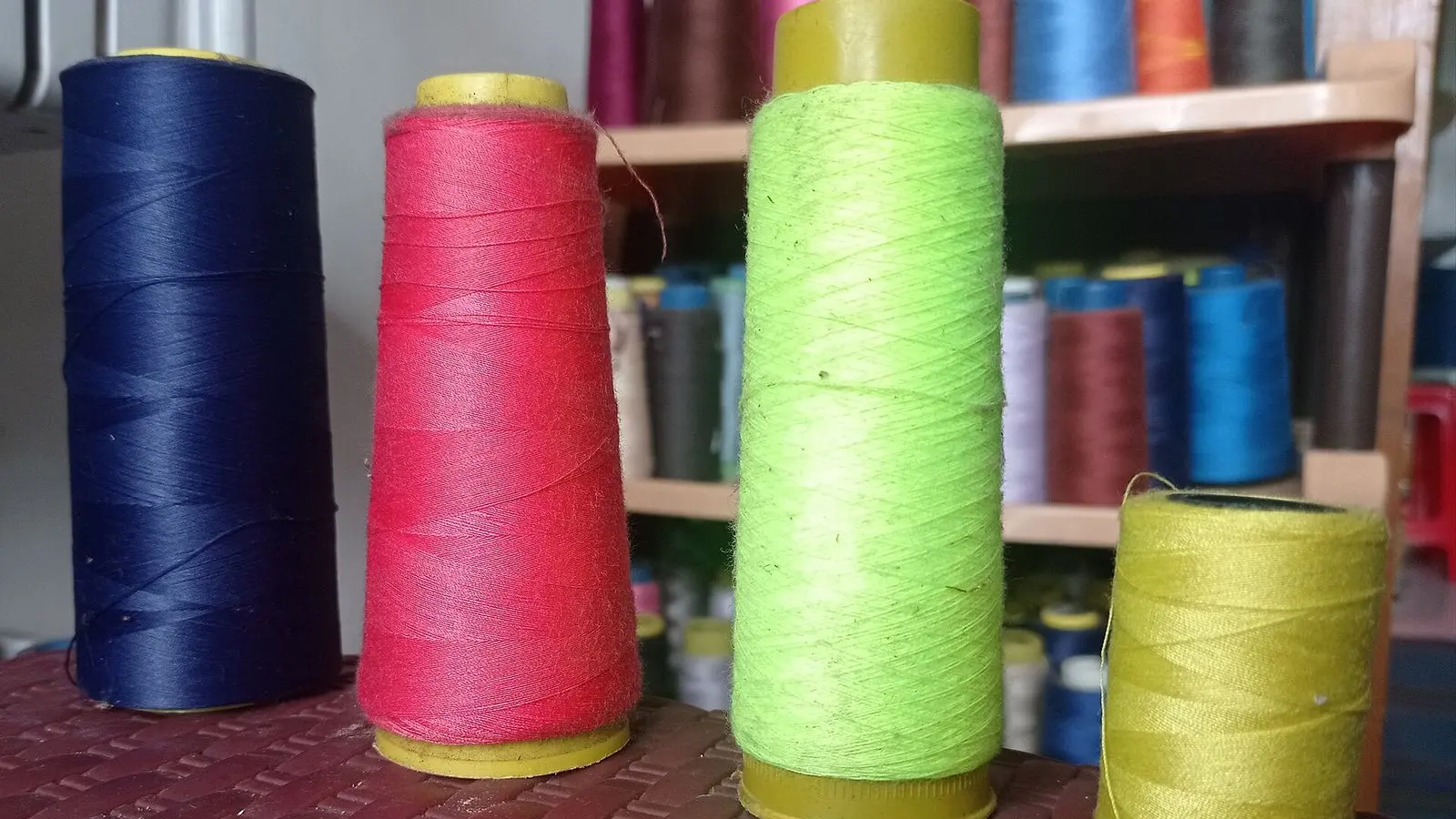
Everything on a garment besides the main fabric: buttons, zips, thread, elastic, interlining, tapes, labels and hangtags. Trims made or dyed to match come in minimum packs, so they can set a private label’s minimum as surely as the fabric does.
U
UPI
Unified Payments Interface: India’s real-time bank-to-bank payment system, run by NPCI, used through UPI apps by scanning a QR code or entering an ID. Stores take it through their payment gateway, and many couriers collect COD balances by UPI at the door.
UTM parameters
Labels added to a link, such as utm_source, utm_medium and utm_campaign, that tell GA4 where a visit came from; Google’s guide lists them all. Keep one lowercase convention, because GA4 treats Diwali and diwali as two campaigns.
V
Volumetric weight
A parcel’s size expressed as weight: length × breadth × height in centimetres, divided by a divisor the marketplace or courier sets; Amazon’s fee page uses 5,000 at the time of writing. Work it out with our volumetric weight calculator.
W
Weight handling fee
Amazon’s shipping fee on Easy Ship and FBA orders, charged by weight, size and distance. A carton larger than the dimensions on the listing can push a product into a dearer band, which shows up only in the settlement.
White label
A maker’s standard product finished with your labels, tags and packing, its fabric, colour and fit unchanged. It is quicker and cheaper to start than private label, but the same item can carry other sellers’ labels.
WooCommerce
An open-source plugin that turns a WordPress site into a store you host yourself, with extensions for payments, shipping and GST invoices. You own the code and the data, and answer for hosting, updates and security. See WooCommerce development.
Y
Yarn count
A number for the fineness of yarn: in the cotton count used in India, the higher the number, the finer the yarn, so 40s cotton is finer than 30s. With GSM and the knit or weave, it decides how a fabric feels and wears.
Questions sellers ask about ecommerce terms
What is RTO in ecommerce?
Is TCS the same as TDS on marketplace payouts?
What does ACoS mean on Amazon?
Is the Buy Box the same as the featured offer?
How is volumetric weight calculated?
What does MOQ mean when buying garments wholesale?
Tell us what you sell and where.
We reply with the questions we need answered, then a written scope or a quotation, with GST on its own line. Garment quotations are by the piece, with freight to be confirmed.