Marketplace accounts for Ahmedabad sellers
Our marketplace account management in Ahmedabad runs Meesho, Amazon, Flipkart, Myntra and Ajio for sellers whose stock comes from the city’s mills, cloth markets and utensil trade. We work remotely from Gandhi Nagar in New Delhi, with each account planned around Navratri, the Diwali break and the wedding months.

What shapes an Ahmedabad seller account
- Typical catalogue
- Many designs, short runs, frequent new arrivals
- Stock shared with
- The wholesale counter in the same shop
- Festive peak
- Navratri, with the sale events around it
- Trade pause
- Diwali to Labh Pancham; claims keep running
- Marketplaces
- Meesho, Amazon, Flipkart, Myntra and Ajio
- Run from
- Gandhi Nagar, East Delhi, not Gandhinagar
In short
- Marketplace account management for an Ahmedabad textile seller starts with catalogue discipline: many designs in short runs, listed in likely selling order.
- A trader selling the same designs over the counter and online needs a reserved online quantity, or wholesale sales turn into marketplace cancellations.
- Claim windows keep running while Gujarati traders close from Diwali to Labh Pancham, so returns from the festive sales must still be logged and claimed.
- Navratri outfits returned after the nine nights need opening videos and tag checks, because a worn chaniya choli is a claim to file, not stock.
- We run Ahmedabad sellers’ accounts from Gandhi Nagar in East Delhi, not Gujarat’s Gandhinagar, through user permissions that leave the owner login with you.
Our marketplace account management in Ahmedabad runs seller panels for traders and makers whose stock comes from the city’s mills, cloth markets and utensil trade. We work from Gandhi Nagar in East Delhi, not Gujarat’s Gandhinagar; the stock and the counter stay with you.
We run brands of our own as well, so commission, returns and claims are costs we carry too. A business that has always kept careful books deserves the same care in its panels: every payout checked line by line against the orders behind it.
Ahmedabad catalogues: many designs, short runs
An Ahmedabad textile account is a catalogue account first. A dress material or saree seller may add many new designs a week, each in a short run, so the panel work is getting the right designs live, in order, with nothing missing.
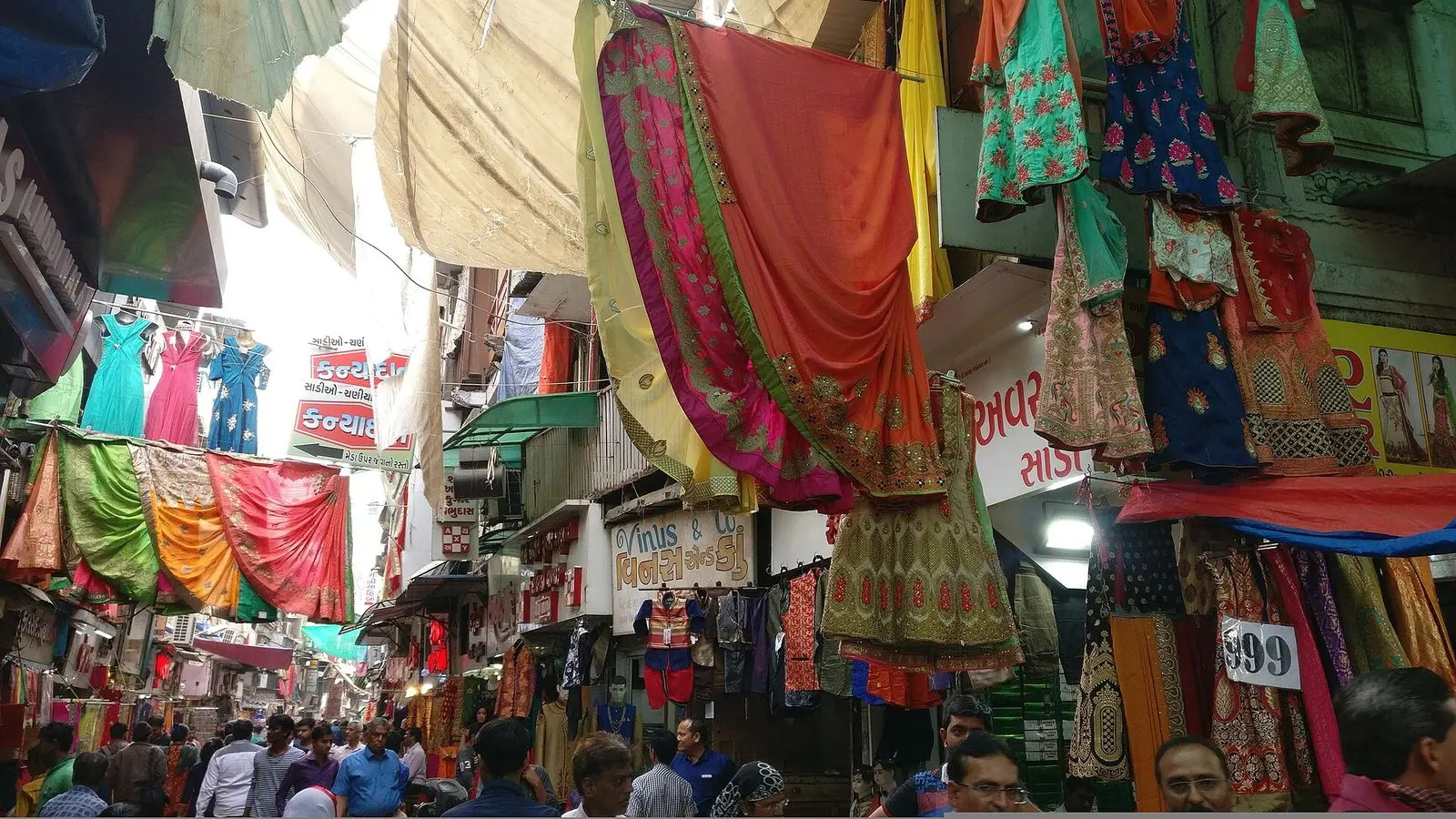
We set a listing rhythm with you by the week. New designs go up in the order they are likely to sell, judged from your counter sales and last season’s marketplace data, not the order the bundles arrived from the mill or the printer.
- Each design complete. Every piece in the set, its fabric and length, the work on it and whether it is stitched, so the listing survives the first return reason.
- Sold-out designs retired. A design that will not be restocked comes off the panel, rather than sitting as an out-of-stock listing that drags the account down.
- Repeats recognised. A print that comes back from the mill in a new colourway is listed as a variation of the old one, so its ratings carry over where the marketplace allows.
Meesho groups designs into catalogues for upload, and its buyers compare near-identical prints on a small screen. Our page on Meesho account management covers that panel; our guide on how to sell on Meesho helps decide whether it fits at all.
One shop, two counters: wholesale and online
Many Ahmedabad sellers run a wholesale counter and the marketplaces from the same stock. The counter sells by the dozen to a retailer who walks in; the marketplace sells one piece to a buyer who ordered last night.
Without a rule between them, the walk-in wins and the online order is cancelled. The fix is a reserved online quantity for each design, updated at a fixed time each day from your own count.
Designs that sell out over the counter are switched off online the same day, and the reserve is topped up only when stock comes back in.
Cancellations are one of the measures marketplaces score account health on, so this protects more than one order. An account that cancels often loses visibility first, and later its standing.
The same mill print can also reach several traders, and on Amazon several sellers can offer one product on a single listing.
A trader who wants control of the listing needs their own brand on it; brand registration, which needs a trademark, gives that control. Our page on Amazon account management explains the route.
Navratri on the panels, before and after
Navratri asks two things of an Ahmedabad account: everything live, stocked in every size and rated before the marketplace sale events that usually fall around it, and a disciplined clear-up of the returns that follow the nine nights.
- Before. Chaniya cholis, kediyus and dupattas listed with sizes and variations complete, Myntra and Ajio approvals settled well ahead, and handling times set so a parcel arrives before the night it was bought for.
- During. Stock checked daily against orders, styles running short in one size paused before they cancel, and festive prices held above your floor.
- After. Every return opened on video, compared with your tag and the photographs of the piece as it left, and claimed where it came back worn, damaged or swapped.
Return reasons are read once the season closes. A cluster of “waist too small” on one chaniya choli goes to its size chart before next year; a cluster of “colour different” goes to the photography.
Our page on Myntra seller account management covers the approvals and catalogue rules on that marketplace.
What happens between Diwali and Labh Pancham
Many Gujarati traders close from Diwali until Labh Pancham, the fifth day of the new year, but buyers do not stop ordering and the panels do not stop counting. The break needs a plan on every account before the shop shuts.

- Before Diwali. Holiday settings or longer handling times entered on each marketplace for the days you are closed, so orders are not cancelled for late shipping.
- Through the break. We keep the panels watched: claim windows run on, settlement queries are answered, and policy notices do not wait for Labh Pancham.
- From Labh Pancham. Returns that arrived over the break are opened and claimed first, then pending orders are cleared, then listings and ads restart.
Diwali also closes the books. Account books are worshipped at chopda pujan and the traditional year turns, while GST and TCS run on the April-to-March financial year. We keep the settlement summary month by month, so your accountant can build either year from it.
Denim and kitchenware on Amazon and Flipkart
Ahmedabad’s denim and its utensil trade both suit Amazon and Flipkart search, and both carry costs that only show up in the settlement report. The account work keeps those costs visible.
Denim lives in variation families: one style in several waists, lengths and washes. We keep each family whole, so a buyer can move between sizes without leaving the listing, and read its returns waist by waist.
A returned pair that is not the pair you sent goes straight to a claim, with the opening video and your tag code as the evidence.
Kitchenware has its own calendar and its own paperwork. Steel and brass sell ahead of Dhanteras, so stock and listings are in place before it; products covered by BIS certification, such as pressure cookers, have their licence uploaded before a marketplace asks.
Heavy steel is charged for shipping on its weight and size, and glass and ceramic pieces break. Sets are declared by their number of pieces, and a set that arrives short is a return waiting to happen.
Our page on selling kitchenware online covers the category in full.
Sponsored ads only where stock runs deep
Sponsored ads suit few designs in a short-run textile catalogue. A print with a handful of pieces can sell out before an ad pays back, so marketplace ads go only on designs with depth in every size, margin left after commission, and ratings already earned.
For a Navratri range, that usually means the core styles the shop reorders, not the one-off pieces. For denim, it means the fits that sell all year. Everything else is left to the marketplace’s own search.
When our team also runs your ads, bids follow the online reserve each day, so spend stops the moment a design runs low. Our page on Google Ads management in Ahmedabad covers the campaign side.
Weddings, summer and the monsoon on the panels
After Diwali, an Ahmedabad account moves to the wedding months, which run into February. Gharchola and panetar sarees, kurta sets and heavier dress materials need listing before the first wedding dates, with the work and the fabric stated plainly.
Summer arrives in March and stays until the rains, so cotton dress materials, lighter sarees and bedsheets go live in February, ahead of the heat, rather than after its first week.
The monsoon, from late June to September, is a returns problem as much as a sales one. Fabric that sits damp in transit can come back marked or musty.
Whoever packs at your end gets written guidance on inner polybags and sealed cartons, and every damp return is claimed with its opening video. We write the guidance; your staff do the packing.
GST, TCS and the settlement checks
Settlement checks in an Ahmedabad account start from the tax on each listing. Dress materials and sarees may carry a different HSN code and rate from stitched garments, so we enter the code and rate your advisor confirms, and check that each marketplace applies it.
The current rates follow the GST Council’s September 2025 rate changes and any notification since; your advisor reads them against your products, and we work from that reading. We do not decide tax treatment or file returns.
Each month we match every payout to its orders, refunds, fees and deductions, including TCS, the tax collected at source under GST from your payouts. Anything short is raised as a ticket, and your accountant receives the TCS summary by marketplace to claim it.
How the work runs from Gandhi Nagar, Delhi
Everything happens inside the seller panels, so nothing needs a visit in either direction. You add us as a user on each marketplace, keep the owner login, and hear from us through a weekly report and a short call.
From you we need a daily figure for the online reserve, new designs with photographs and piece lengths, and a video of each return as it is opened.
When a print or fabric needs checking, a piece can come to our Gandhi Nagar office. Give anyone sending it our full East Delhi address: a parcel booked to Gujarat’s Gandhinagar ends up a short drive from your shop, and a long way from ours.
Our fee carries GST at 18% on its own line. If you also want a store of your own beside the marketplaces, our page on ecommerce website development in Ahmedabad covers that build.
The rest of what we run for the city is on our page about ecommerce services in Ahmedabad, and the full method is on our marketplace account management services page. To start, send us your marketplaces and your monthly design count.
Account work for Ahmedabad sellers
Meesho supplier panels
Dress material, saree and kurti catalogues uploaded in selling order, with prices held above your floor after returns.
Amazon and Flipkart accounts
Denim, kitchenware and home textiles run week to week: variations, stock, and fees checked against settlements.
Myntra and Ajio for labels
Brand approval, style codes and size charts for Navratri wear and design-led labels, and claims for worn returns.
Returns, claims, settlements
Every payout matched to its orders, fees and TCS, and every damaged or worn return claimed inside its window.
Listings at volume
New designs written up at an agreed weekly pace, with fabric, lengths and work stated for each piece.
Questions Ahmedabad sellers ask about accounts
How much does marketplace account management cost in Ahmedabad?
How do I sell dress materials on Meesho from Ahmedabad?
My shop sells wholesale too. How do I stop cancelling online orders?
What happens to my marketplace orders between Diwali and Labh Pancham?
Can I claim for a chaniya choli returned after Navratri?
Which marketplace is right for Ahmedabad denim?
Do you need my GST details to manage my Flipkart account?
Can a Delhi company run my Ahmedabad seller account without visiting?
More of our work in this city
Tell us what your Ahmedabad shop lists.
Send your marketplaces, roughly how many designs you add each month and what keeps going wrong. We read the panels, then send a written scope, the backlog we found and a quote.