Marketplace accounts for Bengaluru brands
Marketplace account management in Bengaluru, for brands that built their name on a storefront and now need Amazon, Flipkart, Myntra and Ajio run with the same care. We run the seller panels remotely from Gandhi Nagar, New Delhi, and report numbers your finance team can trace.

What the accounts involve here
- Usual starting point
- A storefront first, marketplaces second
- Marketplaces we run
- Amazon, Flipkart, Myntra, Ajio, Meesho
- Busiest months
- August to November, Ganesha to Deepavali
- Brand protection
- Brand programmes need a trademark
- GST on our fee
- 18%, charged as IGST, on its own line
- How we work
- Remotely, from Gandhi Nagar, New Delhi
In short
- Marketplace account management in Bengaluru usually means running Amazon, Flipkart, Myntra and Ajio for a D2C brand that already sells on its own storefront.
- Marketplace prices for a storefront-first brand should follow written floor prices and the website price, so a sale event never undercuts the brand’s own store.
- Amazon Brand Registry needs a trademark that is registered or applied for, and gives a brand tools to report copies, which funded brands attract quickly.
- Settlement reconciliation matches each marketplace payout to orders, returns, fees, TCS and TDS, so a finance team can trace every figure to the downloads.
- Kavita Enterprises runs Bengaluru seller accounts remotely from Gandhi Nagar, New Delhi, through user permissions rather than shared passwords, with a weekly report and call.
Marketplace account management in Bengaluru usually begins with a brand that sold on its own storefront first and now wants Amazon, Flipkart, Myntra and Ajio run with the same care. We run those seller accounts remotely, from Gandhi Nagar in New Delhi.
That order matters. A Bengaluru brand built on Shopify and Instagram arrives with a price list, repeat customers and a finance team that already reads its numbers closely, and the marketplaces have to fit around all three rather than replace them.
We run brands of our own as well, so we read fee changes, deal deadlines and claim rules from the seller’s side. That is the sense in which we are an operator, not an agency.
What changes when a storefront brand adds marketplaces?
For a brand used to its own website, three things change at once. Its prices become visible beside other sellers’, one stock pool now serves the website and several seller panels, and money arrives on each marketplace’s settlement cycle instead of the payment gateway’s.
On Shopify, a Bengaluru team decides what the product page says and what its own site search shows first. On a marketplace, the listing follows the platform’s template, other sellers can offer the same product, and the platform ranks what its buyers see.
The account side covers listings, prices, stock counts, returns and claims, settlements and account health, and it is the part we take on. Storing, packing and dispatching orders stay with your team or the logistics provider your storefront already uses.
Our marketplace account management service sets out the full weekly routine. What follows is how it fits a Bengaluru brand: its prices, its categories, its calendar and the people who read its numbers.
How do we protect your storefront prices?
We price every marketplace listing from two figures you approve: the floor below which an order loses money, and the price on your own website. Going below your website price needs a written reason, such as a different pack size, and your sign-off.
Repeat buyers carry the plans of many Bengaluru D2C brands, and repeat buyers compare prices. A refill that costs less on Amazon than on your site moves a subscriber from your storefront, where you hold the relationship, to a marketplace, where you do not.
Sale events test this hardest. Some discounts are funded by the marketplace and some by the brand, and a deal entered in a hurry can sit below your website price for the whole event. We check each deal against both figures before submitting it.
Each price change is logged with its reason, and the log is shared with whoever runs your storefront, so a Shopify discount code and a Flipkart deal are never planned in ignorance of each other.
What do Bengaluru’s categories need from the accounts?
Every category the city sells brings its own account work: documents to file before listing, return rules to read, and claims to file afterwards. Three common ones are below; the silk trade has a section of its own further down.
Skincare, haircare and supplements
These sell on Amazon as replenishment, where a stock-out can send a regular customer to another brand’s listing. We hold a stock buffer on the products customers reorder, and file each licence before listing: cosmetic licences for skincare, food licensing for supplements.
Many marketplaces refuse returns of opened personal care products on hygiene grounds, so the claims here are mostly about damage in transit and wrong items sent back. Our page on how to sell personal care products online covers the category in full.
Activewear and sleepwear
These belong on Myntra and Ajio as well as Amazon. Both fashion marketplaces approve a brand before its first listing and expect catalogue photography to their standards, so we prepare the onboarding with you through our Myntra seller account management.
Fitted styles draw size returns. We read return reasons by style every month and send each pattern to whoever owns the size chart, because a leggings style that keeps coming back as too small is a listing problem before it is a product problem.
Channapatna toys and gifts
Toys need BIS certification under the Toys (Quality Control) Order before they can list, and marketplaces ask for the licence details. We keep a toy listing back until the licence, or your advisor’s written view that an exemption applies, is on file.
Lacquered wood can chip in transit, so packing photographs matter for every toy order a buyer might send back. Our page on how to sell toys online in India covers age grading and the rest of the listing.
How do funded Bengaluru brands stop copies?
With a trademark, the marketplaces’ brand programmes and a weekly check of every listing. Products that sell well for a funded brand attract copies quickly, and a copy that borrows your images can take sales and reviews before anyone notices.
On Amazon, Brand Registry needs a trademark that is registered or applied for. It gives you more control over listing content and tools to report sellers of copies; we prepare the enrolment with you, and your attorney files the trademark.
Each week we check who else is offering your products, whether your title or images have been edited, and whether the offer shown by default is still yours. Under our Amazon account management that check is part of the routine.
Flipkart, Myntra and Ajio each run their own process for intellectual property complaints. We file reports with your trademark papers attached, keep a log of every one, and tell you when the same seller keeps coming back.
Can a Chickpet silk shop run seller accounts?
Yes, once its label is approved on Myntra or Ajio, and provided the account is run around what silk buyers fear: colour that changes in daylight, fibre that is not what was described, and returns that come back changed.
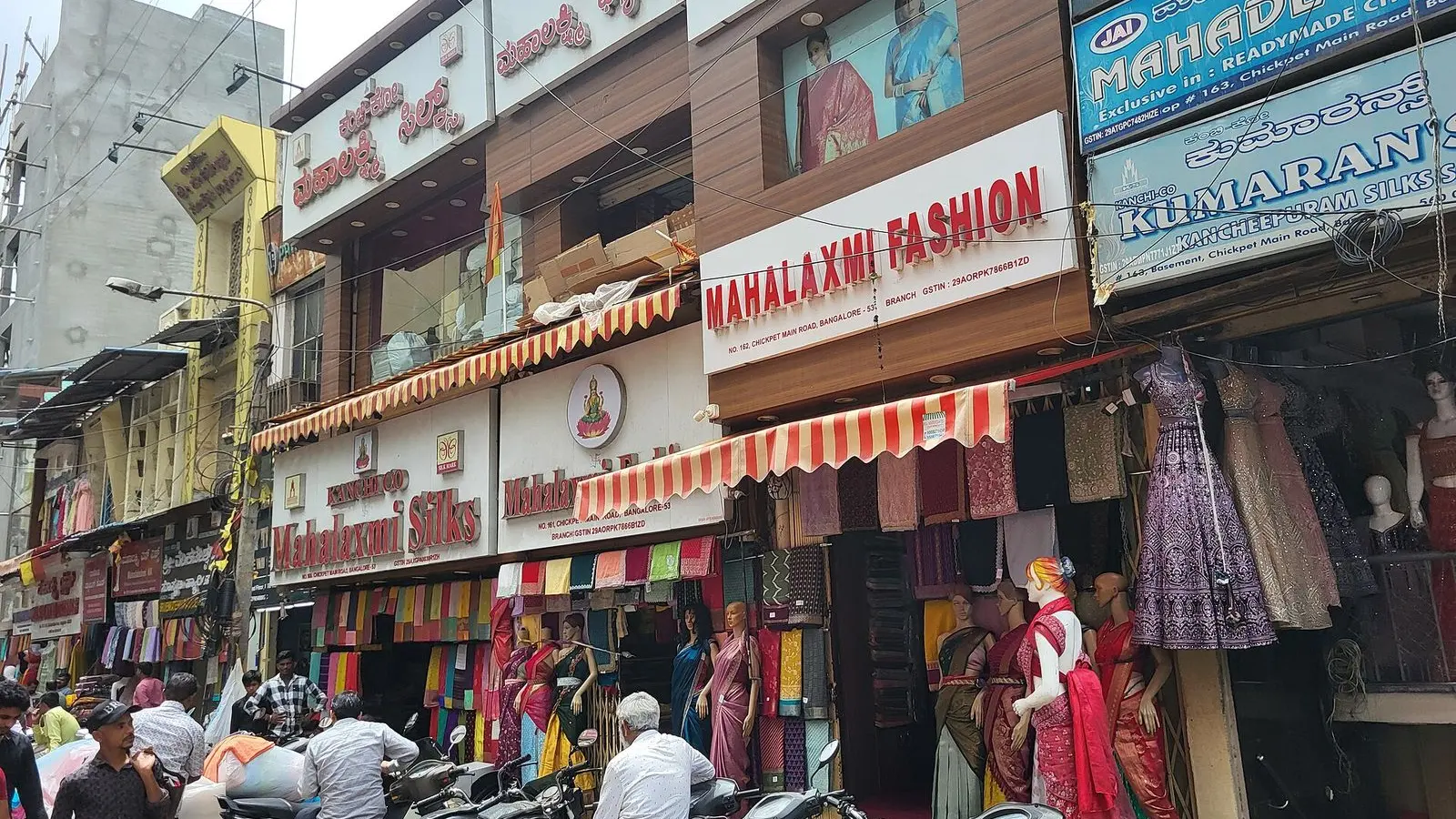
Each listing states the silk and zari content, the weight, the weave and whether a blouse piece is included, worded the same way on every marketplace. Mysore silk is a registered Geographical Indication, so that name goes only on sarees entitled to carry it.
Sarees bought for an occasion are sometimes returned after it, or swapped for a cheaper piece. Your team photographs each saree’s border and pallu before it is packed; we attach those photographs to the claim and appeal a rejection that does not match them.
Varamahalakshmi brings Karnataka’s saree buyers out in August, ahead of the marketplaces’ festive events, so silk listings and stock by colour need settling in July, well before the rush that builds towards Deepavali.
When are Bengaluru seller accounts busiest?
From August to November, when Ganesha Chaturthi, Dasara and Deepavali run into the marketplaces’ festive sale events. Deal submissions close ahead of each event, so prices, stock by size and sponsored-ad budgets have to be agreed while the monsoon is still falling.
In Karnataka, Dasara leads straight into Deepavali, which leaves little room between events to correct a mistake. We submit deals in one approved batch, with a note of every product whose marketplace price would fall below its storefront price.
Then the returns arrive. Festive orders come back through November and December, and each marketplace’s claim window runs on its own clock, so damaged and wrong returns are logged as they land rather than in a monthly batch.
Ugadi in spring and Sankranti in January bring smaller peaks of their own. Our guide to festive sale planning for online sellers covers deal preparation step by step.
What does your finance team receive?
A reconciliation they can trace to the marketplaces’ own downloads, rather than a summary they must take on trust. Finance teams and analysts at Bengaluru brands usually ask for the rows, so the shared sheet keeps every order, refund, fee and deduction behind each payout.
The monthly close shows net sales after returns, fees checked against the current schedule, claims filed and paid, and two deductions to plan around: TCS, tax collected at source under GST, and TDS under income tax, both claimable as credits.
Payouts follow each marketplace’s settlement cycle, so cash lands well after the order. For a brand watching its runway, the close also lists what each marketplace owes, what it has paid and what is in dispute, so the board pack starts from settled numbers.
What does the first month look like?
Mostly reading and agreeing, because a Bengaluru brand’s storefront prices, subscriptions and investor reporting all depend on the marketplaces behaving predictably. You add us as users with the permissions we agree, and we compare every marketplace price with your storefront before changing anything.
Next we agree the rules with whoever owns the range on your side, often a brand or category manager: floor prices, who approves deals, how stock figures reach us and what stays in-house. Then comes the backlog: suppressed listings, open claims, unmatched payouts.
Your analyst sees the reconciliation sheet in the first month, so its format is settled before anyone reports from it. If you are weighing an in-house hire instead, our guide to hiring a marketplace account manager sets out what the role should cover.
How do we run Bengaluru accounts from Delhi?
Through the seller panels, a shared sheet and a weekly call, which work the same from Gandhi Nagar as from Indiranagar. Our only office is in New Delhi, nothing here needs a visit, and your accounts stay registered to your business throughout.
If your storefront needs work as well, see our page on ecommerce website development in Bengaluru. Our Bengaluru page covers everything else we run for brands in the city.
To begin, send us your marketplaces, your storefront platform and what is going wrong. We will reply with our questions, then the backlog we found and a written scope.
Seller panels for storefront-first brands
Amazon account management
Brand Registry, listings, prices checked against your storefront, returns, reimbursements and settlements, run every week.
Myntra seller accounts
Brand onboarding, style codes, size charts and return claims for activewear, sleepwear and ethnic labels.
Flipkart account management
Festive deal submissions, stock buffers by size and a fee check on every settlement.
Catalogue and listings
Storefront product pages rewritten into each marketplace’s template of titles, attributes, images and declarations.
Marketplace ads in step
Sponsored ads paused when stock runs short or a price would fall below its floor, whoever runs the campaigns.
Questions Bengaluru brands ask about marketplaces
How much does marketplace account management cost in Bengaluru?
Can you run our Amazon account while our team runs Shopify?
Should our prices on Amazon match our own website?
How do I stop other sellers copying my brand on Amazon India?
Can you get our activewear brand onto Myntra and Ajio?
Can a Chickpet saree shop sell Mysore silk on Myntra?
Do you need our Seller Central password?
Will you handle our Big Billion Days and Great Indian Festival deals?
More of our work in this city
Send us your seller accounts and storefront.
List the marketplaces you sell on, your storefront platform and what is going wrong. We read the accounts and reply with the backlog we found and a written scope.