Ecommerce services in Varanasi
Our ecommerce services in Varanasi help Banarasi saree weavers, traders and labels sell online under their own names: marketplace accounts, listings, storefronts and ads. We work remotely from Gandhi Nagar, New Delhi, while your looms, stock and dispatch stay in Varanasi.

Varanasi’s looms, as they meet ecommerce
- Known for
- Banarasi silk sarees, brocades, lacquered wooden toys
- Names protected
- Banarasi sarees and Varanasi lacquerware toys (GI)
- Buying peaks
- Wedding months, Durga Puja, Diwali, Karva Chauth
- Marketplaces to start
- Amazon, Flipkart; Myntra and Ajio for labels
- Claims to prove
- Handloom, pure silk, type of zari
- How we work
- Remotely, from Gandhi Nagar, New Delhi
Check every claim and GI use against your own documents; your tax adviser confirms HSN codes and GST rates.
The work we take off your desk
Marketplace accounts
Amazon, Flipkart, Myntra, Ajio and Meesho run weekly: uploads, pricing, returns, swap claims and settlement checks.
Saree and brocade listings
Fabric, zari, technique, loom and blouse piece written per marketplace, with shot lists for the border, pallu and reverse.
A storefront for your label
A Shopify or WooCommerce store for single handloom pieces and new collections, with prepaid-first checkout.
Wedding-season ad plans
Budgets set from your margin and paced around the wedding months, Durga Puja and Diwali, judged on sarees kept.
Readymade lots from Delhi
Readymade garments sourced in Gandhi Nagar for Varanasi shops, quoted by the piece and handed to your transporter.
In short
- Ecommerce services in Varanasi cover what Banarasi saree sellers need online: marketplace accounts, listings that name the weave and zari, storefronts and paced ads.
- Banaras Brocades and Sarees is a registered geographical indication, so the name belongs only on sarees woven where and how the registration requires.
- A Banarasi listing should state handloom or powerloom, the silk and zari used, the weaving technique and the blouse piece, with photographs of the reverse.
- Banarasi sarees sell hardest before the north Indian wedding months, Durga Puja and Diwali, so new designs need ratings before the autumn sale events.
- Varanasi sellers can work with us remotely through user access, shared reports and calls, while looms, stock and dispatch stay in the city.
Our ecommerce services in Varanasi are for the weavers, gaddidars and labels behind Banarasi silk sarees and brocades who want to sell online under their own names. We run the accounts, listings and ads; your looms, stock and dispatch stay in Varanasi.
Varanasi is known for Banarasi silk sarees and brocades, woven on handlooms and powerlooms in the city and the villages around it, with zari borders, pallus and motifs worked into the cloth. The city also turns wooden toys finished in bright lacquer.
Two of those trades carry registered geographical indications: Banaras Brocades and Sarees, and Varanasi Wooden Lacquerware and Toys. A GI ties a name to a region and its method. Online, that is an asset only while every listing using the name is entitled to it.
We are an operator, not an agency. We run brands of our own as well. For Varanasi sellers, commission, returns and advertising costs belong in the margin calculation for each sale.
Our only office is in Gandhi Nagar, New Delhi. Varanasi sellers work with us through user access to their seller and ad accounts, a weekly report and calls, so nobody travels and nothing leaves your premises except the orders you send.
How Banarasi sarees reach buyers today
Banarasi sarees reach buyers by three routes: through the trader who commissions and sells a weaver’s work, through resellers sharing photographs, and through marketplace accounts and storefronts run by the people who make or own the designs.
The gaddidar’s route
Much of the city’s weaving has long run through gaddidars, traders who commission designs, often supply the yarn and zari, and sell the woven sarees on to shops across India. The weaver earns a weaving charge; the buyer’s name and feedback stay with the trader.
Selling direct
A weaver family, a cooperative or a trader can open its own seller accounts and keep the retail margin. The work changes with it: photographs of every design, a listing per marketplace, returns to inspect, claims to file and payouts to check.
A label with its own designs
A label commissions designs and sells them under one name, on fashion marketplaces and on a store of its own. Buyers come back for the next collection, and the label, not the platform, keeps the relationship.
Whichever route you take, the unit of business shrinks. A shop buys a range and settles problems with a phone call; an online buyer orders one saree, compares it with the photograph, and sends it back if the colour, weight or zari disappoints.
Which marketplaces suit a Varanasi saree label?
Handloom silk sarees start on Amazon and Flipkart, where buyers search by fabric, occasion and price, and add Myntra or Ajio once photography and catalogue meet those platforms’ standards. Value powerloom lines can work on Meesho; single pieces need a store of your own.
| Channel | Suits from Varanasi | Watch for |
|---|---|---|
| Amazon | Silk and organza sarees searched by fabric and occasion | Variation rules, claims for swapped returns |
| Flipkart | Festive and wedding buying, value to mid-priced sarees | Sale-event prices and stock you can deliver |
| Myntra | Labels with on-model photography and style codes | Brand approval and catalogue standards |
| Ajio | Ethnic labels with a consistent look | Category approval and image rules |
| Meesho | Value powerloom sarees, dupattas and suits | Thin margins and return losses |
| Own storefront | Single handloom pieces, trousseau buyers, new collections | Paid traffic, prepaid checkout, parcel value |
Amazon and Flipkart carry the searches: “Banarasi silk saree”, “katan saree with blouse piece”, “organza saree for wedding”. Fabric, work and occasion fields matter as much as the photograph, because an empty field hides the saree from every buyer who filters on it.
Myntra and Ajio approve brands before onboarding and expect on-model photography, style codes and colour names built to their templates. For a Varanasi label with its own designs, they are where a name starts to mean something to buyers who have never seen the city.
Meesho suits price-led buyers deciding on the first image. A handloom saree’s cost rarely survives its returns there, but powerloom sarees, dupattas and dress materials can, once the landed cost, packaging and return losses are worked out per piece.
Our page on selling clothes online in India compares the channels for ethnic wear in more depth.
What a Banarasi listing has to state
A Banarasi listing has to state the base fabric, the zari, the weaving technique, whether it is handloom or powerloom, the length, the blouse piece and the weight, then show the saree draped, flat, close up and from the reverse.
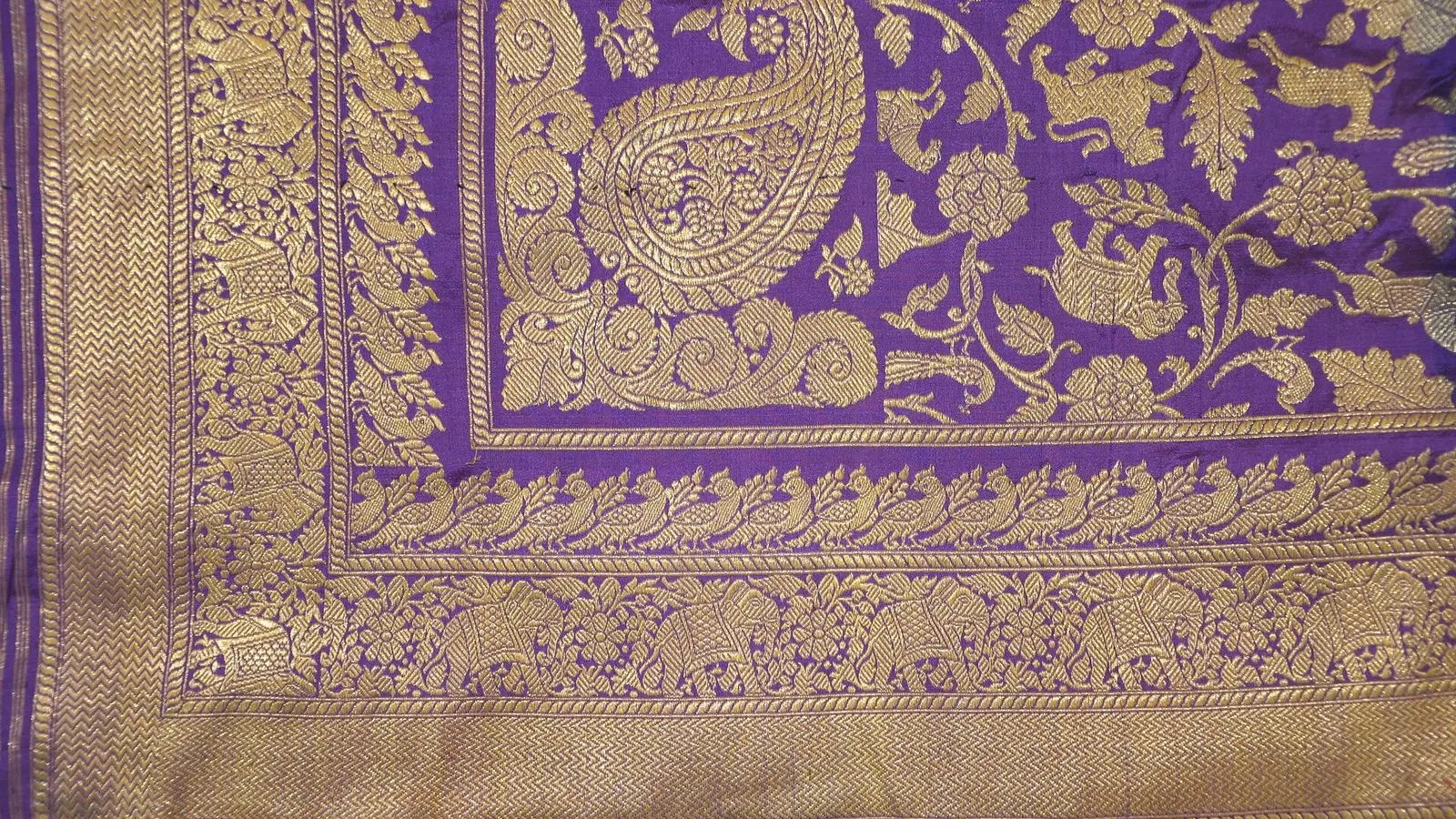
- Base fabric. Katan, the pure silk of plain weave; kora or organza; georgette; tissue, where zari runs through the ground; or a blend, named as the yarn supplier states it.
- Zari. Real, tested or metallic zari, in the words your zari supplier uses. Never “pure zari” without the supplier’s papers.
- Technique. Kadhua, where each motif is woven in separately and the reverse stays neat, or cutwork, where the extra thread runs across the width and the floats are cut away at the back.
- Loom. Handloom or powerloom, in the title and in the attributes, every time.
- Size and weight. The length of the saree and of the blouse piece, whether the blouse piece is attached, and the weight in grams, which tells a buyer how the saree will fall.
- Care and occasion. Dry clean or not, how to store it, and whether it suits a wedding, a festival or regular wear.
Photographs follow a buyer’s questions: the saree draped front and back, the pallu spread, the border and blouse piece close, the reverse of one motif, and a flat shot in daylight so the zari reads gold rather than yellow.
Our catalogue and listing work writes these fields for each marketplace from your design sheets, then checks them against the return reasons once orders arrive.
The trade’s own design names
Buyers who know Banarasi sarees search by the trade’s words: jangla for an all-over creeper pattern, butidar for small scattered motifs, tanchoi for patterns in coloured silk, shikargah for hunting scenes, konia for the corner motif. Use each only where it fits.
Handloom or powerloom: saying which, plainly
Say which loom made the saree, in the title and in the attributes. Varanasi weaves both, buyers pay differently for each, and a buyer who paid for handloom and receives powerloom returns it and says so in a review that stays on the listing.
Handloom shows itself to a trained eye: small irregularities in the weave, and a reverse that shows how each motif was finished. Photograph those details, and if your sarees carry the Handloom Mark, show the label in the images.
The GI name is a separate question. Banaras Brocades and Sarees is registered for the region and its traditional method, so check the registration’s definition with your adviser before using the name on a powerloom saree, or on anything woven elsewhere.
Marketplaces can act on listings whose material or origin claims do not match the product, and a buyer’s complaint is often how they find out. A plain description costs nothing; a removed listing takes its ratings with it.
Sell the saree the loom made, and say which loom made it.
Silk, zari and the claims you can prove
Claim pure silk only where you can prove it, and describe zari as its supplier does. Silk and zari are where Banarasi listings most often overstate, and where returns and complaints follow fastest.
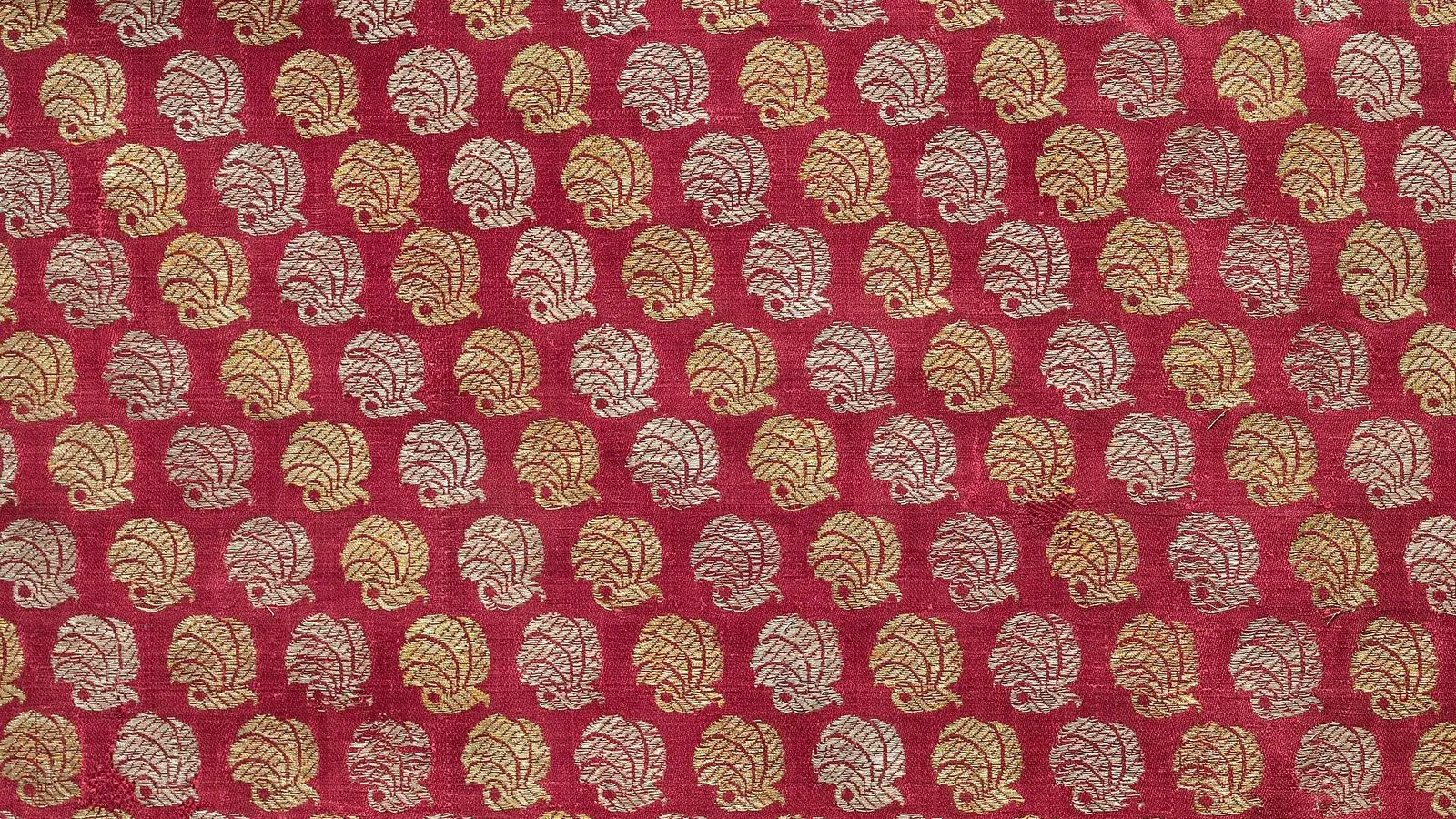
- Pure silk. Back it with the Silk Mark label where the saree carries one, or with a test report. Viscose and polyester sold as art silk are man-made fibres; name them.
- Zari. Real zari has a silver base, tested zari a copper one, and metallic zari is made from coated film. Buyers pay differently for each, so use the supplier’s description and keep the invoice.
- Weight. Give it in grams. A heavy silk with dense zari and a light georgette are different purchases, even at a similar price.
- Colour. Zari photographs warm or cold depending on the light, so shoot in daylight and check the screen against the saree in hand.
Care belongs in the listing too. Zari tarnishes in damp air and silk creases along folds held for months, so tell buyers to store the saree wrapped in cotton or muslin and to refold it now and then.
Silk sellers in the south answer the same questions about pure silk and zari; our page for Mysuru sellers covers that trade and its own protected names.
Weddings, Diwali and Puja: when Banarasi sells
Banarasi sarees sell hardest before weddings and the autumn festivals, and their buyers are spread across India, so a Varanasi seller’s calendar is the country’s. Each occasion pulls different designs, in different regions, at different times.
| Occasion | Buyers | What sells |
|---|---|---|
| North Indian wedding months | From Dev Uthani Ekadashi in November, with breaks the calendar sets | Heavy silk and tissue sarees, bridal reds, sarees for guests |
| Durga Puja and Bengali weddings | Bengal and the east | Benarasi sarees, as Bengali buyers spell them |
| Karva Chauth | Punjab, Delhi and the north | Red and festive sarees |
| Diwali and Dhanteras | Across India | Festive sarees, bought to wear and to give |
In Bengal the Benarasi is the traditional bridal saree, and buyers there often spell it that way when they search. Listings and ads that carry both spellings, where the saree is entitled to the name, meet Bengali buyers in their own words.
The marketplaces’ festive sale events, such as Flipkart’s Big Billion Days and Amazon’s Great Indian Festival, usually fall in September and October. Wedding and Puja designs need stock and early ratings before them, because a saree listed during the rush starts with no reviews.
Dev Deepawali, when the ghats are lit on Kartik Purnima, brings visitors to the city itself. Online, plan around your buyers’ occasions rather than the city’s, and keep gifting dates such as Raksha Bandhan on the plan as smaller peaks.
Our page on selling festive gifts online plans those gifting dates month by month.
Pricing a handwoven saree for online sale
Price each design from its full cost, then add what selling online adds: commission and fixed fees, freight out and back, packaging, the discount you fund in sale events, advertising, and the returns you cannot resell. A swapped or worn saree costs its full price.
- High value, small parcel. A silk saree is light to send but costly to lose, so a refused or swapped parcel hurts more than its freight suggests.
- Cash on delivery. Refusals gather around cash orders and impulse buys. On your own store, keep costly sarees prepaid; on marketplaces, watch which designs collect refusals.
- RTO. Return to origin is an order that never reaches the buyer, refused at the door or undeliverable, and it costs freight both ways.
- TCS. Tax collected at source under GST is withheld from each marketplace payout; you can claim it against your GST, but it holds cash in the meantime.
We build a margin sheet for each design before it is priced or advertised: cost, each channel’s fees, a return allowance from your own history, and what is left. Heavy wedding sarees that only pay at full price stay out of deep discounts.
GST follows each product’s HSN code, and silk sarees and brocade are often classified as fabric rather than readymade garments, so the garment rate rule may not apply. Your tax adviser confirms each code and rate.
Returns, swaps and claims on silk sarees
The costliest return on a Banarasi saree is the one that is not yours: a different, cheaper saree sent back in place of the one you dispatched. A handloom piece is its own evidence, if you record it before it leaves.
- Record each saree. A tag number, and close photographs of the border, the pallu and the reverse of one motif, where a handloom piece differs from every other.
- Photograph the packed parcel. The folded saree, its tag, the box and the seal, before the courier collects it.
- Open returns on video. Outer packaging in view, from the first cut to the saree laid out.
- Claim promptly. Each marketplace sets its own time limit and evidence rules for claims.
Tamper-evident tags help with the other costly return, an occasion saree worn once and sent back. A tag that has to be cut before the saree can be worn, missing on return, turns an argument into evidence.
Fold with tissue between the layers so zari does not press into silk, bag each saree against monsoon damp, and box heavy pieces rather than posting them in a mailer. We write that guidance for your staff; we do not pack or ship.
Claims and returns are part of our marketplace account management in Varanasi, run weekly beside listings and settlements.
Brocade by the metre, and for the home
Varanasi’s brocade sells beyond the saree: as fabric by the metre for lehengas, blouses and sherwanis, as dupattas and unstitched suits, and as cushion covers, table runners and bedspreads. Each is a different listing with different questions.
- Fabric by the metre. Width, the length each unit sells, fibre, zari, weight, and whether the pattern repeats or is placed, with a photograph of the full width.
- Dupattas and suits. Each piece of a suit named with its fabric and length; a dupatta’s length, width and border.
- Brocade for the home. Cushion covers with or without the filler, runners by length and the table they fit, bedspreads by bed size, and how each is cleaned.
Home pieces sell in a different category, to buyers comparing them with printed and embroidered alternatives, so the listing has to show why woven brocade costs more. Our page on selling home textiles online covers sizes, sets and returns.
Packaged goods sold online carry Legal Metrology declarations on the pack, including MRP and net quantity, and the listing repeats them apart from the month and year. Your adviser confirms which apply to each product.
Selling Varanasi’s lacquered wooden toys
Varanasi’s wooden toys are turned on a lathe and coloured with lac, the craft registered as Varanasi Wooden Lacquerware and Toys. Online they sell to parents and to gift buyers, and the two groups expect different things from a listing.
A toy for children has rules a decorative piece does not. Toys sold in India need BIS certification and the ISI mark under the Toys (Quality Control) Order, which carries exemptions for some handmade toys. Check with your adviser whether yours qualify before you list.
- Age grade. Say which ages the toy suits, and warn where small parts make it unsuitable for young children.
- Finish claims. Natural colours or lead-free lacquer only with a test report behind the claim.
- Decor or toy. A lacquered piece sold for display belongs with decor or gifts, described as decor, not as a plaything.
- Sets. Name every piece in a kitchen set or a stacking set, and declare the number of pieces.
Lacquerware sells as Diwali gifts and as return gifts at weddings and children’s birthdays, so stock and listings follow those dates. Our page on selling toys online in India explains certification and age grading in detail.
Advertising Banarasi sarees across India
Advertise to buyers already planning an occasion, show what a still photograph cannot, and judge every campaign on sarees kept after returns. A campaign that wins on orders placed can lose money once swaps and returns are counted.
- Meta. Short videos of the drape, the pallu opening and zari catching the light, with catalogue ads for buyers who viewed a design.
- Google. Shopping for a storefront, with fabric and occasion in the feed, and search ads on the words buyers use. Google matches Search ads to the language they are written in, so Hindi and Bengali searches need Hindi and Bengali ads.
- Marketplace ads. Sponsored listings on designs with ratings and margin, paused the day stock runs out.
Our performance marketing services in Varanasi set those budgets from your margin and pace them around the wedding months and the Puja.
When a Banarasi label needs its own store
A Banarasi label needs its own store when it sells pieces nobody else lists, to buyers who return for each collection and want the story of the weave. Marketplaces find the first buyers; a store keeps them and saves the commission on the next order.
- One piece, one product. Each handloom saree listed with a stock of one, and marked sold the moment it goes.
- Collections by weave and occasion. Katan, organza and tissue; wedding, festive and gifting.
- Trousseau orders. Families buying several sarees for one wedding, with a way to hold pieces and pay for them together.
- Prepaid first. UPI and cards for costly sarees, with cash on delivery kept for lower-priced lines, if at all.
- GST invoices carrying your GSTIN and the HSN code your adviser confirms.
Some labels offer buyers a video call to see a saree before paying, which the store can book from the product page. Our D2C storefronts on Shopify and WooCommerce cover the build and its upkeep; packing and dispatch stay with you.
How our ecommerce services in Varanasi run
Our ecommerce services in Varanasi run remotely and in writing: you give us user access with permissions you control, we send one weekly report, we discuss it on a call, and every change we make is logged. Looms, stock and packing stay with you.
- Read. Listings, return reasons, claims, settlements and the margin on each design, marketplace by marketplace.
- Repair. Fabric, zari and loom described plainly, attributes completed, and shot lists written for your photographer.
- Measure. One way of reading every marketplace’s return and settlement reports, and tracking on your store if you run one.
- Run. Uploads for new designs, pricing for each sale event, claims and ads, reported weekly on sarees kept and margin.
From you we need account access, design sheets with fabric, zari and weight, cost sheets, and one person who decides prices and discounts. Photography stays with your photographer in Varanasi, working to the shot lists we write.
Before choosing an ecommerce agency for a Varanasi business, ask how it would prove a swapped saree, and which marketplaces it sells on with its own money.
Mistakes that cost Varanasi sellers money
The expensive mistakes are claims the saree cannot back, single pieces sold twice, festive designs listed late and swaps nobody can prove. Each shows up first in the return reasons and the reviews.
- “Pure silk” or “pure zari” without a label, a test or the supplier’s papers.
- Handloom in the title of a powerloom saree, or the GI name on a saree not entitled to it.
- No photograph of the reverse, so a buyer cannot judge the weave.
- One saree listed on three marketplaces with no shared stock count, and sold twice.
- Wedding designs live after the sale events start, with no ratings to compete.
- No dispatch record, so a swapped saree cannot be claimed.
- Zari shot under tube light, so the gold reads green or grey on screen.
- Deep discounts on heavy silk, so every event order loses money.
To start, send your range, the looms it comes from and where you sell now through our contact page. Our reply comes as questions first; the written scope and quotation follow.
Where Varanasi’s goods sit on our site
Questions Varanasi sellers ask us
How do I start selling Banarasi sarees online?
Can a powerloom saree be sold as Banarasi?
Is Meesho good for selling Banarasi sarees?
What is the difference between kadhua and cutwork Banarasi sarees?
How do I stop customers returning a different saree?
When should I list wedding sarees online?
How much do ecommerce services cost for a Varanasi seller?
Do Varanasi wooden toys need BIS certification?
Other cities we work with
- Delhi NCR
- Mumbai
- Bengaluru
- Hyderabad
- Chennai
- Kolkata
- Pune
- Ahmedabad
- Surat
- Tiruppur
- Ludhiana
- Jaipur
- Lucknow
- Indore
- Chandigarh
- Kochi
- Coimbatore
- Panipat
- Karur
- Solapur
- Bhadohi
- Moradabad
- Firozabad
- Saharanpur
- Jodhpur
- Agra
- Kanpur
- Kolhapur
- Meerut
- Jalandhar
- Channapatna
- Sivakasi
- Kannauj
- Mysuru
- Srinagar
- Amritsar
Tell us what you weave or sell.
Send your range, whether it is handloom or powerloom, and where you sell now. We reply with our questions, then a written scope and a quotation for the work.