Ecommerce services in Bhadohi
Our ecommerce services in Bhadohi help carpet and rug makers in the belt around Bhadohi and Mirzapur sell to Indian homes online: marketplace accounts, listings, storefronts and ads. We work remotely from Gandhi Nagar, New Delhi, and your looms, stock and dispatch stay where they are.
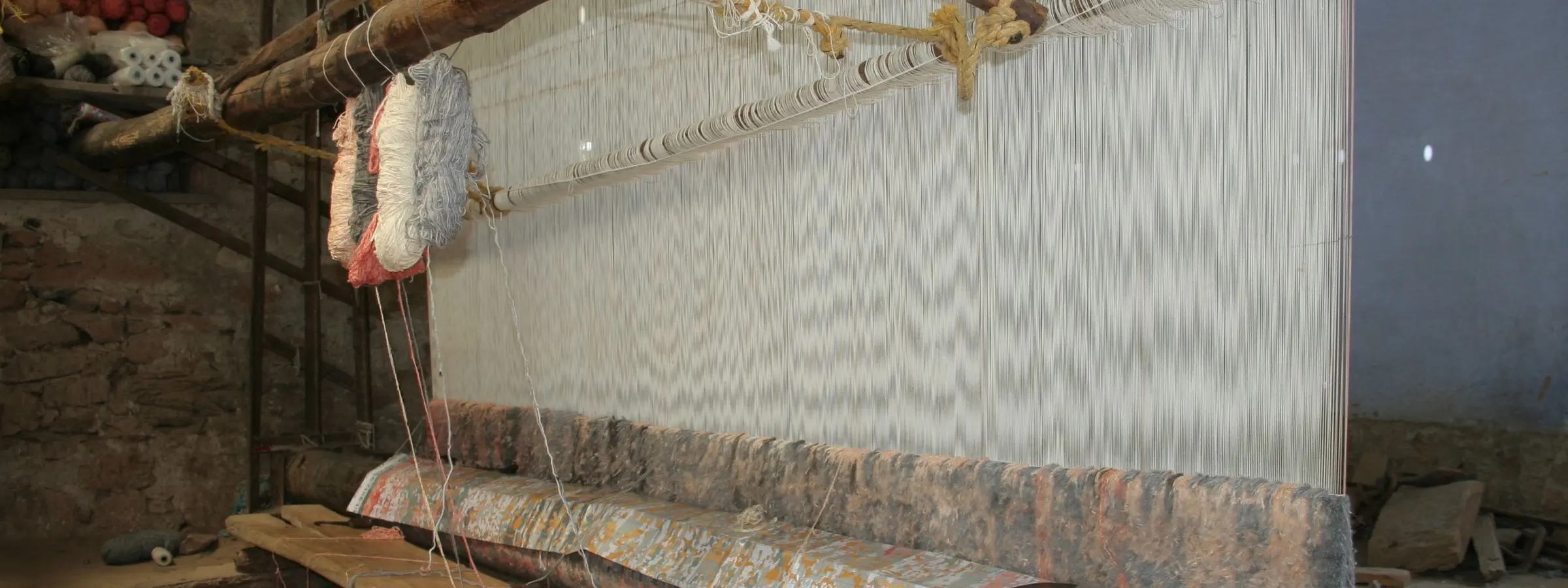
The carpet belt, as it meets ecommerce
- Known for
- Hand-knotted and tufted carpets, rugs, dhurries
- The carpet belt
- Bhadohi, Mirzapur and neighbouring districts
- Name protected
- Bhadohi handmade carpet, a registered GI
- Sells online as
- Rugs, runners, dhurries, bath and door mats
- Selling seasons
- Diwali, weddings, winter wool, summer cotton
- How we work
- Remotely, from Gandhi Nagar, New Delhi
Freight and GST depend on each rug’s size, weight and HSN code; confirm codes and rates with your tax adviser.
Work that follows the rug, not the city
Marketplace accounts
Amazon, Flipkart, Meesho, Myntra and Ajio run weekly: uploads by size, pricing after freight, returns and damage claims.
Rug listings that hold
Construction, pile, fibre, size tolerance and edge written per marketplace, with shot lists for the back and corners.
A store for your rugs
Shopify or WooCommerce stores with size variants, made-to-order rugs, colour approvals and prepaid checkout.
Season-paced advertising
Wool rugs pushed as winter arrives, cotton dhurries in summer, and budgets held for Diwali and the wedding months.
Freight in the price
Volumetric weight worked out for every rolled size before a rug is priced, listed or advertised.
In short
- Ecommerce services in Bhadohi help carpet makers who built ranges for export buyers sell rugs online to Indian homes, through marketplaces and their own stores.
- A rug listing must say how the rug was made, hand-knotted, hand-tufted, flat-woven or machine-made, with a photograph of the back, where construction shows.
- The Bhadohi handmade carpet is a registered geographical indication, so the name belongs only on carpets made where and how the registration requires.
- Rug freight is charged on packed size as well as weight, so rolled dimensions belong in the margin sheet before any price is set.
- Bhadohi makers can work with us remotely from Gandhi Nagar, New Delhi, through user access, shared reports and calls, while weaving and dispatch stay local.
Our ecommerce services in Bhadohi are for carpet and rug makers in the belt around Bhadohi and Mirzapur who want Indian homes, not only overseas importers, to buy from them online. We run accounts, listings and ads; looms, stock and dispatch stay with you.
Bhadohi is known for hand-knotted carpets and rugs. The town and the districts around it, Mirzapur among them, form a carpet belt that also makes hand-tufted rugs, flat-woven dhurries and kilims, and much of its work has long gone to buyers overseas.
The Bhadohi handmade carpet is a registered geographical indication, a name tied to the region and to the way its carpets are made. Used correctly, it tells an Indian buyer something a photograph cannot; used on the wrong rug, it invites complaints.
We are an operator, not an agency, and we run brands of our own as well. For a Bhadohi seller, fees, freight and returns decide what a rug sale leaves behind.
We work from our only office, in Gandhi Nagar, New Delhi. Bhadohi makers add us as users on their seller and ad accounts, read a weekly report and talk to us on calls; nothing about the work needs anyone to travel.
From export orders to Indian living rooms
Selling rugs online in India is a different trade from exporting them. An export order is an importer’s specification, inspected and shipped in bulk; an online order is one rug, chosen on a phone, sent to a flat, and returnable.
- Who decides. An importer’s buyer approves a strike-off; an online buyer decides from photographs and a size chart.
- What is sold. Export ranges follow the sizes and colours an overseas market wants; Indian buyers often look for runners, bedside rugs and medium sizes for smaller rooms.
- Who carries the risk. The importer takes the shipment and its unsold stock; online, every unsold, returned or damaged rug is yours.
- Who owns the design. A design woven to an importer’s order often belongs to that importer under the contract, so it may not be yours to sell at home.
None of this is a reason to stay away. It is a reason to build an Indian range on purpose, from designs you own, in sizes Indian rooms take, priced after freight, rather than listing whatever export stock is left over.
Which marketplaces suit Bhadohi rugs?
Most rug buying online starts on Amazon and Flipkart, where shoppers filter by size, material and room. Meesho suits low-priced cotton dhurries and mats, Myntra and Ajio suit design-led home ranges from approved brands, and large or custom pieces belong on your own store.
| Channel | Suits from Bhadohi | Watch for |
|---|---|---|
| Amazon | Wool and blended rugs, runners and bath mats searched by size | Fees and freight on the packed size |
| Flipkart | Mid-priced rugs and dhurries in festive buying | Sale-event prices that freight can swallow |
| Meesho | Cotton dhurries, door mats and bath mats at value prices | Return losses on thin margins |
| Myntra and Ajio | Design-led rugs from approved home brands | Brand approval and image standards |
| Own storefront | Large, hand-knotted and custom-size rugs | Paid traffic, deposits, prepaid checkout |
Amazon and Flipkart buyers type “hand knotted wool rug”, “runner for hallway” or “cotton dhurrie 5×7” and then filter by size, material and colour. A rug with an empty construction or material field drops out of those filters, whatever its photographs show.
Meesho buyers decide on price and the first image. Light cotton dhurries and mats can carry a margin there; a heavy wool rug rarely can, because one return costs more to move than the sale earned.
Myntra and Ajio sell home ranges alongside fashion and approve brands before listing. For a maker with a recognisable design language and consistent photography, they are a place to build a name with buyers who have never heard of Bhadohi.
Our page on selling home furnishings online covers rugs beside curtains and cushions, including returns and made-to-measure orders.
Hand-knotted, tufted or flat-woven: name it
Name the construction in the title and the attributes, and prove it with a photograph of the back. Bhadohi makes several kinds of rug, buyers pay differently for each, and “handmade” alone does not say which.
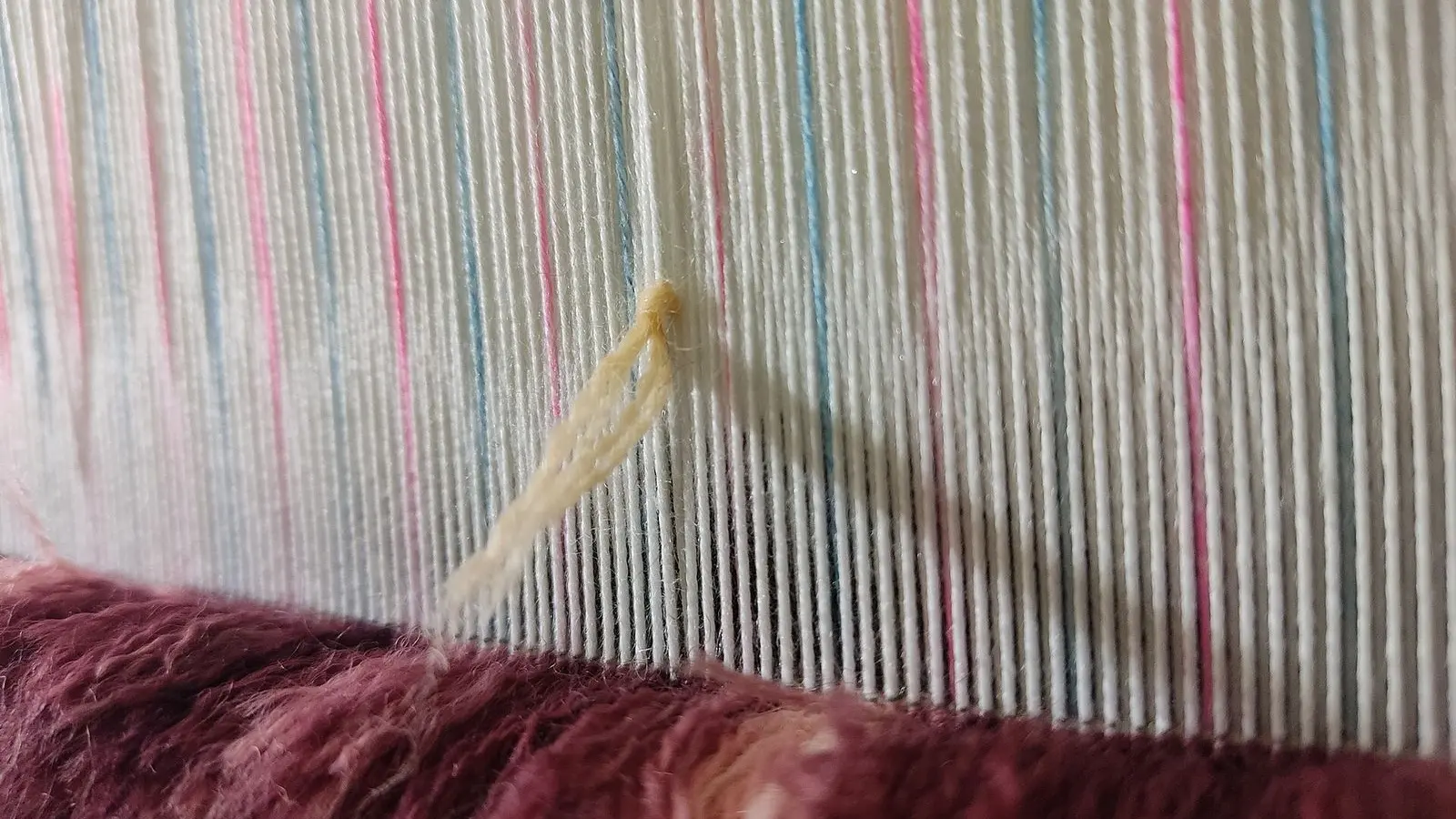
- Hand-knotted. Each knot tied by hand around the warp threads, so the pattern shows clearly on the back. The slowest to make, and priced to match.
- Hand-tufted. Yarn punched through a cloth backing with a hand-held tufting tool, then sealed and covered with a second cloth. Quicker to make; the back is hidden.
- Flat-woven. Dhurries and kilims woven without a pile, often reversible and light enough to fold for storage.
- Machine-made. Woven on power-driven looms. Say so; it is a different product at a different price.
If you state a knot count, count it on the back and say how it was measured. Buyers who know rugs will check, and a figure that does not match the rug ends in a return and a review.
The GI name follows the same rule as every other claim. Before calling a rug a Bhadohi handmade carpet, check with your adviser that it meets the registration’s definition; for everything else, describe the construction and the fibre in plain words.
Turn the rug over before you write its title.
Wool, viscose, jute: fibre claims that hold
Name every fibre in the rug as your yarn supplier names it, pile and foundation both, and describe the feel separately. Fibre claims draw complaints quickly, and they are the easiest part of a listing to get right.
- Wool. “Wool” for wool, and “wool blend” with the proportions for a blend. A named origin for the wool only with the yarn supplier’s documents.
- Viscose. Often sold as art silk or bamboo silk; call it viscose, and say that it marks with water and needs careful cleaning.
- Silk. Silk only for silk, and a silk-and-wool rug with the share of each.
- Cotton and jute. Cotton for most dhurries and many foundations; jute for natural-fibre rugs, which shed and feel coarse at first, and should say so.
- Shedding. A new wool rug sheds loose fibre for a while. A line in the listing costs less than the returns that follow without it.
Marketplaces can restrict listings whose material claims do not match the product, and a review saying “not wool” follows a rug for the rest of its life online.
Sizes that Indian rooms actually buy
Give every size in feet and in centimetres, measured on the finished rug, with the tolerance a handmade piece can vary by. Indian buyers usually measure their rooms in feet.
A rug that arrives a few centimetres short of its listing reads as a fault unless the tolerance was stated, so state it once, in the size chart, for every design.
- Runners. For corridors, kitchens and the side of a bed; length matters more than width.
- Bedside and doorway rugs. Small sizes that sell on price and colour, often in pairs.
- Living-room rugs. Sized to sit under a coffee table with the front legs of the sofa on the rug.
- Dining and large rugs. Sized so chairs stay on the rug when pulled out; these suit made-to-order more than stock.
- Round and odd shapes. The diameter, and for odd shapes a drawing with every dimension.
Export ranges often stop at sizes few Indian flats can take. A maker moving to domestic buyers usually needs more runners and small rugs than an export catalogue holds, and fewer room-filling sizes.
Photographing a rug so it sells
Photograph each rug the way a buyer would inspect it in a shop: whole and square from above, then close, then from the back, then in a room. Colour has to be true, because colour is a common reason rugs come back.
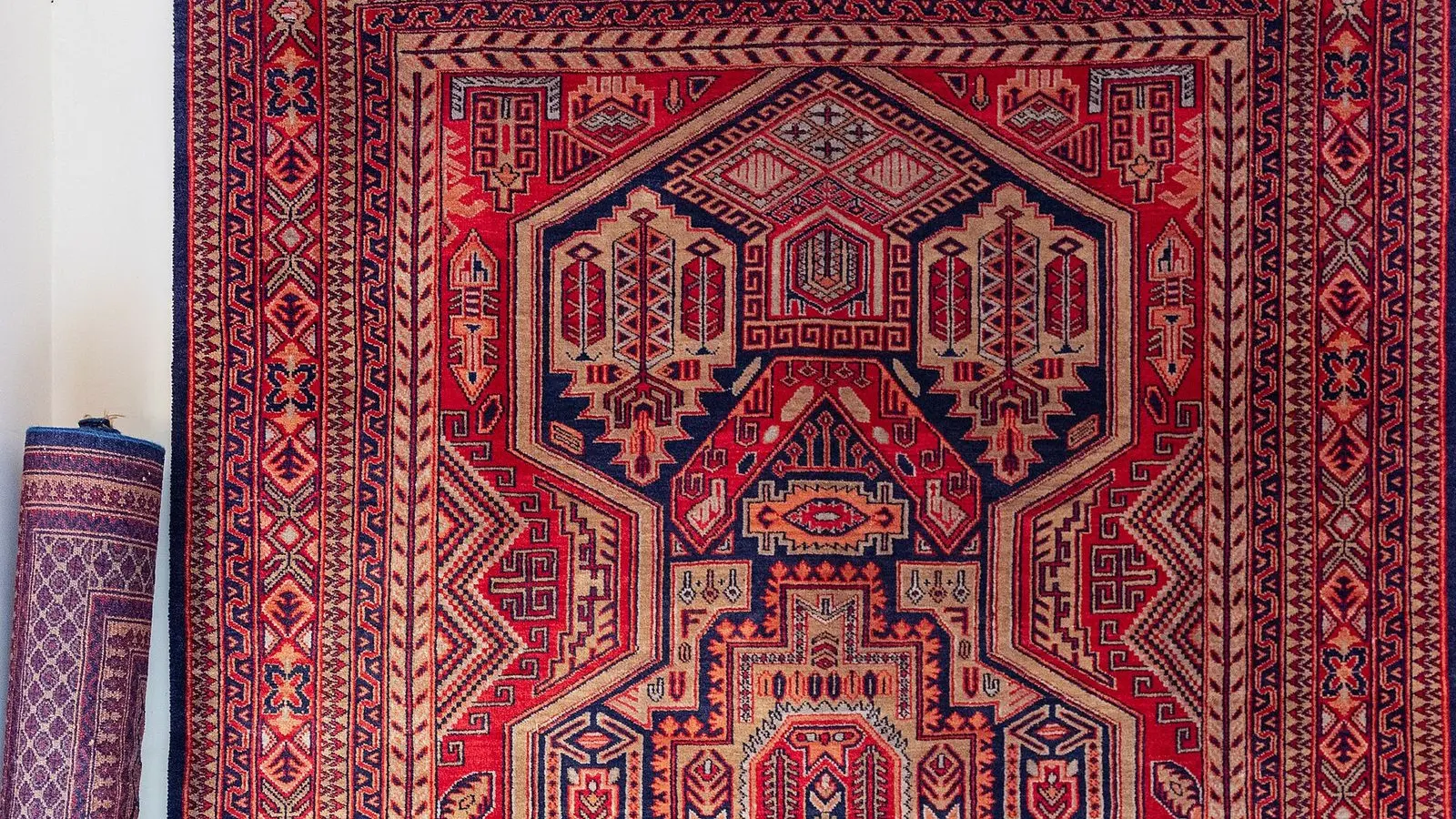
- The whole rug, square. Shot from above in daylight, edges parallel to the frame, so the pattern reads as it will on the floor.
- The pile, close. A corner showing pile height and how the colours sit in the knots or tufts.
- The back. The construction’s proof, as described above.
- The edge. Fringe, binding or serging, close up.
- The room. The rug under furniture, for scale, with its size in the caption.
Pile changes how colour reads: a rug looks lighter from one end and richer from the other. Shoot from the same direction for every design, and add a short video of the rug being turned, which shows the shading better than any still.
Our catalogue and listing work writes the shot list for your photographer and builds each listing from it, marketplace by marketplace.
What a rug costs to sell and send
Beyond its cost to make, a rug sold online carries commission and fees, freight to the buyer, packaging, the discount you fund in sale events, advertising, and returns that cost freight both ways. Freight is where rug margins disappear first.
- Volumetric weight. Couriers and marketplaces usually charge on the higher of the actual weight and a weight worked out from the packed dimensions. A rolled rug is long, so its volumetric weight can exceed its real weight.
- Weight slabs. Fees and freight rise in steps, and a rug just over a step pays for the whole of the next one.
- Returns. A returned rug travels back at your cost, often creased or marked, and may need cleaning before it can be sold again.
- TCS. Tax collected at source under GST comes off each payout; you claim it against your GST later, but the cash is held meanwhile.
Work out both weights for every size before you price it; our volumetric weight calculator does the arithmetic. We then build a margin sheet per design and size, and keep sizes whose freight leaves nothing out of sale events and ads.
Packing rugs, transit damage and claims
Roll rugs rather than folding them, wrap the roll against damp, and protect the ends, where rolls are most often crushed or torn. Then photograph every packed rug before it leaves, because a claim for transit damage is decided on evidence.
- Roll, do not fold. A fold leaves a crease that a buyer reads as damage, and a hand-knotted rug folded tightly can crack along the line.
- Wrap twice. Polythene against monsoon damp, then a woven outer bag or carton against abrasion.
- Label the roll. Design, size and order number on the outside, matching the invoice.
- Photograph it. The rug laid out with its tag, then the packed roll, before collection.
Rugs come back wet, stained, crushed, used, or swapped for a cheaper piece. Video every return being opened and photograph the front and the back, so the claim can be filed inside the marketplace’s time limit.
We write the packing guidance and file the claims; your staff pack, and we never handle parcels.
Diwali, weddings and the winter rug season
Rugs sell around three moments: the weeks before Diwali, when households clean and refurnish; the wedding and housewarming months, when new homes are set up; and the arrival of winter in the north, when wool underfoot becomes a want rather than a luxury.
| Period | What sells | On the account |
|---|---|---|
| Before the autumn sale events | Living-room sizes and runners in festive colours | Listings live and stocked, early ratings |
| Diwali | Rugs, runners and mats to refresh homes and to give | Delivery promises that land before the day |
| Wedding and housewarming months | Larger rugs and sets for a new home | Bundles, prepaid offers on costly pieces |
| Winter in the north | Wool and thicker pile | Ads opened region by region as the cold arrives |
| Summer | Cotton dhurries, jute and flat-weaves | Light, washable ranges at the front |
The marketplaces’ festive sale events, such as Flipkart’s Big Billion Days and Amazon’s Great Indian Festival, usually fall in September and October. Rugs need ratings before then, and stock deep in the sizes that sell, since a sold-out size cannot be rewoven in time.
Rugs are also bought as gifts for a new home, so Diwali and wedding listings should describe gift packing where you offer it, and say plainly where you do not.
Made-to-order rugs and custom sizes
A custom rug is the order a Bhadohi maker can fill and a marketplace cannot easily sell: a size, a colourway or a design adjusted for one room, woven after the buyer has approved it.
- The request. Size, shape, colours and the room, with a photograph or a floor plan if the buyer has one.
- The approval. A design drawing, and yarn poms or a woven sample so the buyer sees the colours in daylight.
- Payment and dates. A deposit or full payment before weaving, with the delivery date stated on the order.
- Before dispatch. Photographs of the finished rug for the buyer’s approval, then the balance, then the rug.
Custom rugs are usually not returnable, which the store’s policy must state in words your adviser approves. Our page on ecommerce website development in Bhadohi covers the store that takes these orders, from request form to GST invoice.
Advertising rugs to Indian homes
Advertise rugs the way buyers imagine them, on a floor, under furniture, in light, and judge each campaign on rugs kept after returns. Spend follows the season: wool where winter is arriving, cotton and jute where it is warm, and everything before Diwali.
- Meta. Room settings and short videos of the pile moving under a hand, with catalogue ads for buyers who viewed a design.
- Google. Shopping ads for a storefront, with size, material and construction in the feed, and search ads on the words buyers use.
- Marketplace ads. Sponsored listings on sizes with stock and ratings, paused wherever freight leaves no margin.
Hindi words such as kaleen for a carpet and dari for a flat-weave turn up in searches typed in English letters, so the search terms report decides which to add. Our performance marketing services set the targets these campaigns run to.
GST, labels and the declarations rugs carry
GST on a rug follows its HSN code, which can differ with construction and fibre, so your tax adviser confirms the code and rate for each product before it is listed. Our own services carry GST at 18%, on its own line.
Packaged rugs sold online carry Legal Metrology declarations on the pack, including MRP, net quantity and the maker’s or packer’s name and address, and the listing repeats them apart from the month and year.
For a rug, your adviser confirms how the net quantity is declared: by size, by number or both.
Marketplaces collect TCS from each payout and ask for a GSTIN when you register. Registration rules are changing for small online sellers; check the current position with your adviser.
For buyers who furnish a whole room at once, rugs sit beside cushions, throws and bedspreads; our page on selling home textiles online covers those lines and their own labelling.
How we work with Bhadohi makers
The work runs from New Delhi: you add us as a user with permissions you control, we report weekly and discuss it on a call, and every price or listing change is logged. Weaving, stock and packing stay with you.
- Read. Your listings, sizes, return reasons, claims, freight charges and settlements, marketplace by marketplace.
- Rebuild. Construction, fibre and size stated plainly, variations merged by design, and shot lists written for your photographer.
- Price. A margin sheet per design and size, with freight from the packed dimensions.
- Run. Uploads, sale events, claims, freight disputes and ads, reported weekly on rugs kept and margin.
From you we need account access, a design sheet for each rug with construction, fibre, sizes and packed dimensions, cost sheets, and one person who decides prices. Our marketplace account management in Bhadohi covers the panel work in detail.
Hand-knotted carpets are also the trade of Srinagar, and Panipat’s looms make rugs and dhurries of their own; our pages for Srinagar sellers and Panipat sellers cover how those trades sell online.
Comparing agencies for a Bhadohi business? Ask each how it would price a rug whose volumetric weight exceeds its real weight, and what it sells online with its own money.
Mistakes that cost Bhadohi sellers money
The costly mistakes for a carpet maker are claims the rug cannot back, freight left out of the price, export ranges listed as they are, and photographs that change the colour. Each shows up in the return reasons before it shows in the accounts.
- “Hand-knotted” on a tufted rug, or the GI name on a rug that does not qualify.
- Viscose sold as silk, or “bamboo silk” with no mention of viscose.
- Prices set before freight, so large sizes lose money on every order.
- Export sizes only, with no runners or small rugs for Indian rooms.
- Rugs folded for dispatch, arriving creased and coming straight back.
- No photograph of the back, so the construction can be neither judged nor proved.
- Size given without a tolerance, so a handmade rug a little short reads as a fault.
- Export designs listed without checking who owns them.
Write to us through our contact page with your range, its constructions and sizes, and the channels you sell on. The first reply is our questions; a written scope and quotation come after.
Where Bhadohi’s rugs sit on our site
Questions Bhadohi carpet makers ask us
How do I sell handmade carpets online in India?
What is the difference between hand-knotted and hand-tufted rugs?
Can a tufted rug be sold as a Bhadohi handmade carpet?
Which marketplace suits rugs and carpets?
How do I reduce returns on rugs sold online?
How is shipping charged on carpets?
How much do ecommerce services cost for a Bhadohi carpet maker?
Can an exporter sell the same rug designs online in India?
Other cities we work with
- Delhi NCR
- Mumbai
- Bengaluru
- Hyderabad
- Chennai
- Kolkata
- Pune
- Ahmedabad
- Surat
- Tiruppur
- Ludhiana
- Jaipur
- Lucknow
- Indore
- Chandigarh
- Kochi
- Coimbatore
- Panipat
- Karur
- Solapur
- Varanasi
- Moradabad
- Firozabad
- Saharanpur
- Jodhpur
- Agra
- Kanpur
- Kolhapur
- Meerut
- Jalandhar
- Channapatna
- Sivakasi
- Kannauj
- Mysuru
- Srinagar
- Amritsar
Tell us what your looms make.
Send your range, its constructions and sizes, and where you sell now. We reply with our questions, then a written scope and a quotation for the work.