Ecommerce websites for Lucknow chikankari labels
We offer ecommerce website development in Lucknow for chikankari labels and trading houses, on Shopify or WooCommerce. Each store is built for handwork: pages that show the stitches, stock that may exist once, and orders that wait on an embroiderer.
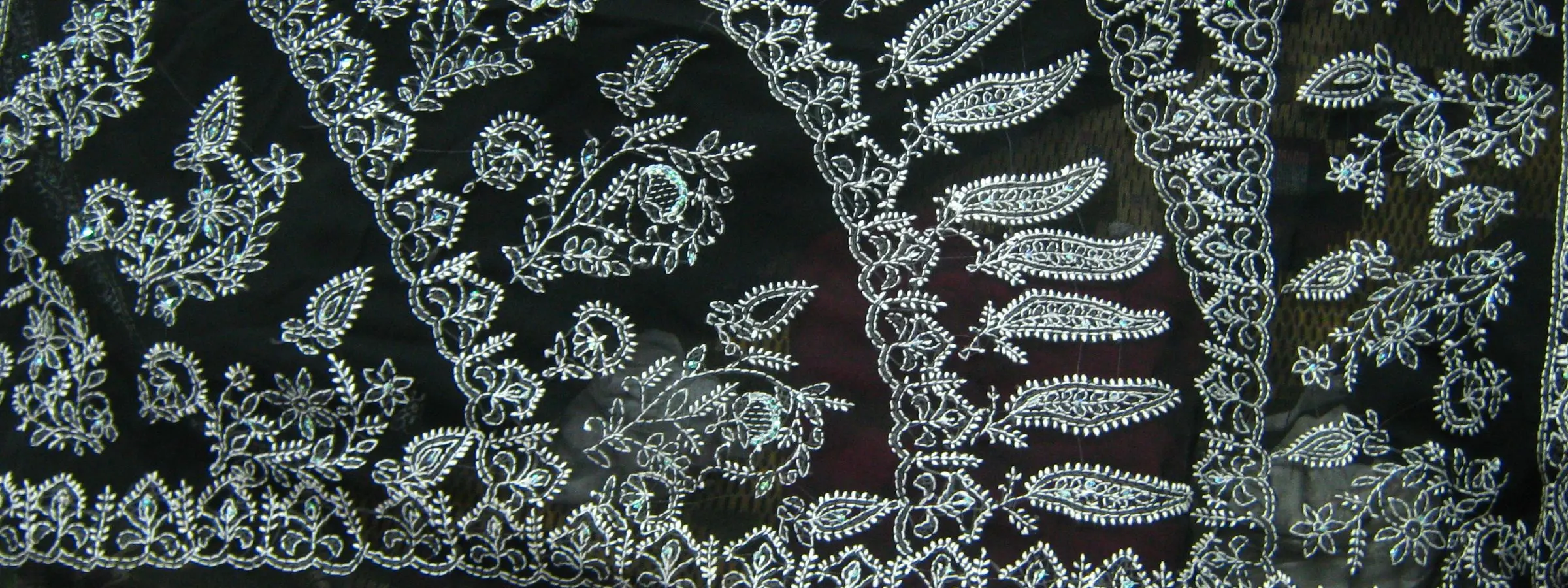
What a chikankari store has to handle
- Platforms
- Shopify or WooCommerce
- Photographs per product
- Front, back, close-up, reverse, inner
- Stock
- Single pieces, small batches, made to order
- Buyers served
- Shoppers, gift buyers, boutiques and resellers
- Calendar
- Ramadan and Eid, summer whites, weddings
- Orders shipped by
- Your staff or your shipping partner
In short
- Ecommerce website development in Lucknow usually means a store built for handwork: close-up product pages, single-piece stock and made-to-order chikankari.
- A chikankari product page should show the same set of photographs every time, including the reverse of the embroidery and the inner.
- One-of-a-kind pieces should be listed with a stock of one and closed when sold, not left as sold-out pages that promise a restock.
- A trade section behind a login lets approved boutiques and resellers order by the set at trade prices, with their GSTIN on the invoice.
- We build Lucknow stores remotely from Gandhi Nagar, New Delhi; packing and dispatch stay with the label or its shipping partner.
Ecommerce website development in Lucknow has a particular brief: a store that proves handwork, sells pieces that may exist once, and keeps buyers informed while a made-to-order kurta is with the embroiderer. We build such stores on Shopify and WooCommerce, from Gandhi Nagar, New Delhi.
How chikankari is photographed, described and sold across channels is on our page about ecommerce services in Lucknow. This page is the store itself: its product template, its stock rules, its trade counter and the way it follows Eid.
We run brands of our own as well. For a Lucknow label’s store, the work begins with embroidery details, stock and the buyer’s approval route.
What should a chikankari product page show?
The same things, in the same order, on every product, so a buyer comparing three kurtas compares like with like. The template is built once, with a slot for each photograph and each fact, and a piece cannot go live with a slot left empty.
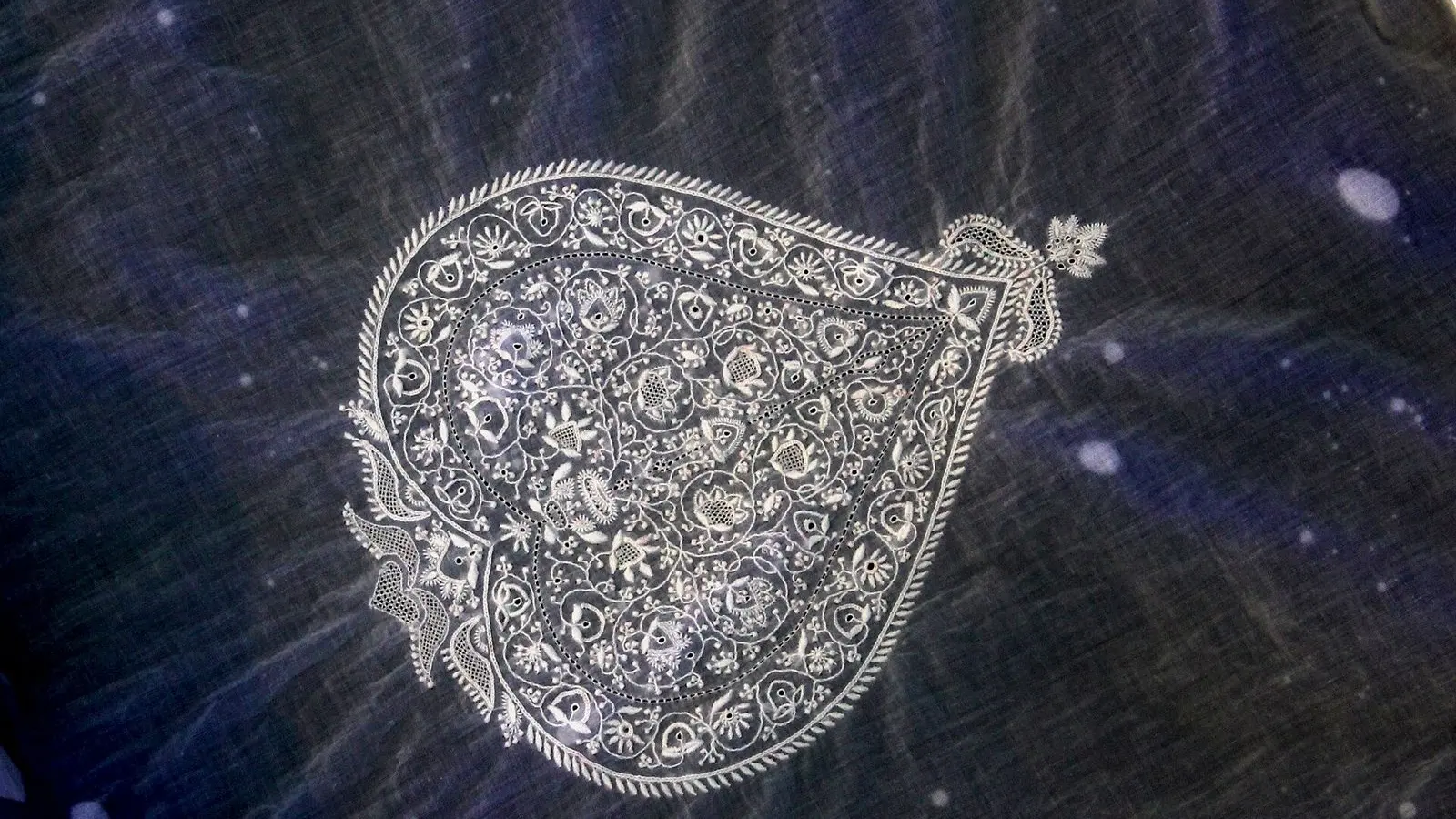
- Photographs in a fixed order: front, back, the densest panel up close, the reverse of the work, the inner, and every piece of a set.
- A short video of the kurta moving, or held up to the light, where the work is fine enough to be lost in a still.
- Facts as fields: method, stitches, fabric, inner, set contents, finished measurements and care, held as data rather than typed into a description.
- A line near the button saying that handwork varies a little from piece to piece, so no buyer expects a copy of the photograph.
Holding the facts as fields lets buyers filter by them: hand or machine, mulmul or georgette, with or without an inner. It also lets the store’s search give the same results for the craft’s many spellings, chikan, chikankari and Lucknowi among them.
The fields come from the same product record as your marketplace listings, built by our product listing services, then rewritten for the store, where there is room to name every stitch.
How should a store show shades of white?
As named shades with a guide, never as one colour. Chikankari is traditionally worked white on white, and a buyer matching a kurta to a dupatta, or ordering for a family, notices differences between white, off-white and ivory that a phone screen hides.
- A shade guide photographed once in daylight, with the label’s whites side by side, and linked from every white product.
- The shade in the title and the filter, so a buyer looking for ivory never lands on bright white.
- The fabric beside the shade, because the same white reads differently on mulmul and on georgette.
- The inner named with it. A sheer white kurta over a white inner looks different from one over a beige inner, so the inner’s colour is a field of its own.
Returns marked “colour different” on a white piece often trace back to one of these four. The monthly report lists them by product, so the guide and the titles are corrected where the problem starts.
How should single pieces be sold online?
As products with a stock of one, each with its own photographs and measurements, closed when they sell. A one-of-a-kind piece shown as a variant of something else, or left up as a sold-out page, promises a restock that will never come.
- A collection for single pieces, showing only what is available today, so a buyer never falls for something already gone.
- Sold pieces moved to an archive page without a buy button, where the work still shows what the label makes.
- Honest counters. “Two left” appears only when two are left, on small batches sold by size.
- Restock alerts only on styles that will be embroidered again, never on single pieces.
Single pieces that also sit on a marketplace need one stock count across both, or the same kurta sells twice; our page on marketplace account management in Lucknow covers the panel side.
How do made-to-order chikankari orders work online?
With the making time shown before checkout, payment taken upfront, and an update at each stage. A buyer who orders a piece not yet embroidered is waiting on handwork, and silence turns a patient buyer into a cancellation.
- The order. Fabric and colour chosen from swatches on the page, a size or measurements given, and the making time, set by you, shown as a range.
- Printing. The design printed on the fabric in washable blue, with a short message to the buyer.
- Embroidery. The piece with the embroiderer, the stage that takes longest, with a message when it begins.
- Washing and finishing. The print washed out and the piece finished, photographed and checked before dispatch.
Each update goes by email or WhatsApp through the provider you use, and the buyer’s order page shows the same stage.
We recommend prepaid only for made-to-order pieces, because the work begins the day the order is placed; cancellation terms come from you and your advisor.
Should a handwork store offer cash on delivery?
For some pieces. Ready, machine-embroidered and lower-priced pieces can take cash on delivery after a confirmation message, while single pieces and made-to-order work are better prepaid, because a refused parcel takes the only piece off sale until it is back on your shelf.
RTO, return to origin, is the parcel refused at the door or never delivered, which pays freight both ways. On a single hand-embroidered piece it costs more than freight: for the weeks the parcel is travelling back, nobody else can buy it.
The store can set cash on delivery by product type and by order value, and offer a small incentive to prepay where your margin allows. Refusals are read by pincode every month, and the rules are tightened where they cluster.
Can boutiques buy from the same store?
They can, through a trade section behind a login. Lucknow trading houses have long supplied shops across India, often by phone and WhatsApp, and a trade section lets approved boutiques see trade prices, order by the set and receive an invoice with their GSTIN.
- Approval first. A boutique applies with its GSTIN, and you approve each account before any trade price shows.
- Sets, not pieces. Trade orders in size sets or assorted packs, with the quantity rules you set.
- Prices kept apart. Shoppers never see trade prices, and trade buyers see the retail price beside their own.
- Invoices. The buyer’s GSTIN and name on the tax invoice, so a registered boutique can claim its input tax credit.
On Shopify, some B2B features depend on the plan, and an app can fill the gap on others; on WooCommerce, trade pricing comes through extensions. We choose the route by how much of your business is trade.
Trade orders tend to repeat: a boutique that sold a set wants it again in the next colour. A reorder button on past trade orders, and a trade catalogue that marks which styles can be embroidered again, keeps those buyers off the phone.
How do visitors who bought in Lucknow reorder?
Through a store they hear about before they leave the city. Visitors to Lucknow often buy chikankari to take home, and a buyer who liked your kurta in the shop has no way back to it from home unless the shop gave them one.
A card in every bag at the counter, with the store’s address and a reason to visit it, turns a visitor into a buyer who can reorder from anywhere. The store’s customer account then keeps their size and their past orders.
The same applies to families who send chikankari to relatives in other cities. A gift option with a message and a separate delivery address lets them do it from the store instead of a chat.
How should the store follow Eid and summer?
By changing collections on dates set in advance. Eid moves earlier each year, so the Eid collection, the gifting page and the last order date for Eid delivery are dated afresh every year, with a day kept in hand for the moon.
- Before Ramadan. The Eid collection built and scheduled, gift options switched on, and the last order date shown on every gifting page.
- The summer. White and pastel cotton brought to the front as the heat begins, with care instructions on each piece.
- The wedding months. Occasion pieces with mukaish or zardozi given their own collection, close-up video and clear return terms.
Store changes are scheduled ahead of these dates, so nothing is edited by hand in the busiest weeks. Gift boxes and the festive sale calendar are covered on our page on how to sell festive gifts online.
How is ecommerce website development in Lucknow run?
In four stages, all remote, with your decisions at each. Every stage happens on a staging copy of the store that you review on your own phone, and pieces can travel to us in Gandhi Nagar when a product page needs the embroidery in hand.
- Scope. Platform, the product template, single-piece and made-to-order rules, the trade section and gift options.
- Content. Photographs in the fixed order, facts entered as fields, and spellings loaded into search.
- Launch rehearsal. Test orders for a single piece, a made-to-order kurta and a trade set, with invoices checked by your accountant.
- After launch. Monthly upkeep, with a short report on speed, checkout drop-off and the searches that found nothing.
Shopify suits most chikankari labels without a developer, and WooCommerce suits trading houses already on WordPress; our pages on Shopify development and WooCommerce development cover each. The full service is on our D2C website development page.
We never pack or ship orders; the store connects to your shipping app.
Size charts and fabric descriptions for clothing are covered in our guide on how to sell clothes online in India. To start, send your range and how much of it is made to order.
Stores built around handwork
Shopify stores
Hosted stores for chikankari labels without a developer, with product templates built for handwork photographs.
WooCommerce stores
WordPress stores for trading houses already on it, with trade pricing, hosting and monthly upkeep.
Product data and shot lists
Stitch, fabric, inner and care details written once, with a shot list your photographer can follow.
Panels from the same stock
Myntra, Ajio, Amazon, Flipkart and Meesho run from the store’s stock count, so no piece sells twice.
Orders counted from day one
GA4, Tag Manager, Meta Pixel and Conversions API set up during the build and checked with test orders.
Questions Lucknow labels ask about stores
How much does an ecommerce website cost in Lucknow?
Can my website take orders for chikankari made to order?
How do I sell one-of-a-kind chikankari pieces online?
Can boutiques order wholesale from my website?
Should my chikankari store show prices?
How do I stop white kurtas looking different on the website?
Can customers send Eid gifts through my store?
Can you build our store without visiting Lucknow?
Tell us how your pieces sell today.
Send your range, the share of it made to order and whether boutiques buy from you. We reply with the questions that decide the platform, then a quotation.