Ecommerce websites for Bengaluru brands
Ecommerce website development in Bengaluru for D2C brands whose first store was built for launch day and now has to carry repeat orders, paid traffic and an analyst’s questions. We build and maintain Shopify and WooCommerce stores remotely, from Gandhi Nagar, New Delhi.

What a Bengaluru store build covers
- Platforms
- Shopify and WooCommerce
- Usual starting point
- A launch store that has outgrown itself
- Checkout
- UPI, cards, wallets, COD under rules
- GST on your orders
- CGST and SGST in-state, IGST otherwise
- GST on our fee
- 18%, charged as IGST, on its own line
- How we work
- Remotely, from Gandhi Nagar, New Delhi
In short
- Ecommerce website development in Bengaluru is often a rebuild of a quickly launched store that now needs speed, subscriptions, clean tracking and correct GST invoices.
- Shopify suits most D2C brands because the platform carries hosting and updates; WooCommerce suits brands already on WordPress with someone to maintain it.
- A custom front end is worth its upkeep only when a brand has engineers to maintain it and needs something no theme can do.
- A Karnataka-registered store charges CGST and SGST on orders within the state and IGST on orders to other states, at rates its accountant confirms.
- Kavita Enterprises builds and maintains stores remotely from Gandhi Nagar, New Delhi; packing and shipping stay with the brand or its logistics provider.
Ecommerce website development in Bengaluru is often a second build, for a store launched quickly that now has to carry subscriptions, paid traffic and an analyst’s questions. We build and maintain Shopify and WooCommerce stores for the city’s brands from Gandhi Nagar, New Delhi.
The first store usually did its job: it took orders for a launch, a fundraise or a first Instagram campaign. What it rarely planned for were the apps, scripts and integrations a growing brand adds later, which is where speed and data start to slip.
We run brands of our own as well, so we know what a slow checkout or a broken invoice costs a seller. That is what we mean by an operator, not an agency.
Which platform suits a Bengaluru D2C brand?
For most, Shopify, because the platform carries hosting, security and updates, and many of the city’s D2C brands started there anyway. WooCommerce suits brands already running WordPress for content, or needing control of their hosting, provided someone maintains it.
Brands with engineers on staff sometimes ask for a headless build, a custom front end fed by Shopify’s back end. It earns its upkeep only when a theme cannot do the job and the engineers will still be there to maintain it next year.
We build on maintained themes and say plainly when a custom front end would cost more to keep than it earns. Our Shopify development and WooCommerce development pages cover each platform in detail.
The full scope, from checkout to monthly upkeep, is on our D2C website development page. Here we cover what changes when the store belongs to a Bengaluru brand.
Rebuild the launch store, or repair it?
Repair it first, if the theme is sound. Most slow launch stores are slow because of what was added later: an app for every campaign, review and chat widgets loading before the product, and images uploaded at camera size.
We list every app and script with its monthly cost and its purpose, remove what nobody uses, and measure again. A rebuild is worth it when the theme fights the catalogue, as when a one-product launch store now carries a full range.
Either way, nothing is deleted. Products, customers, orders and reviews move across where the platforms allow, and every old address redirects to its new page, so the links in creators’ posts, your Instagram profile and live ads keep working.
Which payments should a Bengaluru store take?
UPI, cards, net banking and wallets, through a payment gateway registered to your business, with cash on delivery under rules. City buyers often prepay, while orders from smaller towns in Karnataka and beyond lean more on COD, so the rules can differ by pin code.

We cap COD by order value, switch it off where refusals run high, and send a confirmation message before the order reaches your shipping partner. A refused parcel comes back as RTO, return to origin, having paid freight both ways for no sale.
A small prepaid incentive can cost less than the refusals it prevents; whether it does depends on your margin, and we work that out per product. Refusals are reported by pin code every month, so the rules follow the evidence.
For the city’s fitness-equipment brands and other high-value orders, EMI options through the gateway let a buyer spread the cost, and we show them on the product page rather than at the last step. Bulky items also need delivery charges set by pin code.
Can a D2C store sell subscriptions and refills?
Yes, and for Bengaluru’s skincare, haircare and supplement brands it is often the reason to have a store at all. Subscriptions run through an app on Shopify or an extension on WooCommerce, tied to a gateway that supports recurring payments.
Recurring payments in India need a mandate from the customer, which the gateway records and manages, so the subscription is designed around your gateway’s rules before the offer is announced, not after the first charge fails.
We build the refill cadence, skip and pause options, and a reminder before each charge, sent only to customers who agreed to receive messages. The labelling such products need is covered on our page about selling personal care online.
Can Chickpet and Channapatna sellers sell direct?
Yes, and a store does what a marketplace listing cannot: it explains the weave of a Mysore silk saree, or how a Channapatna toy is turned and lacquered, at whatever length the product deserves.
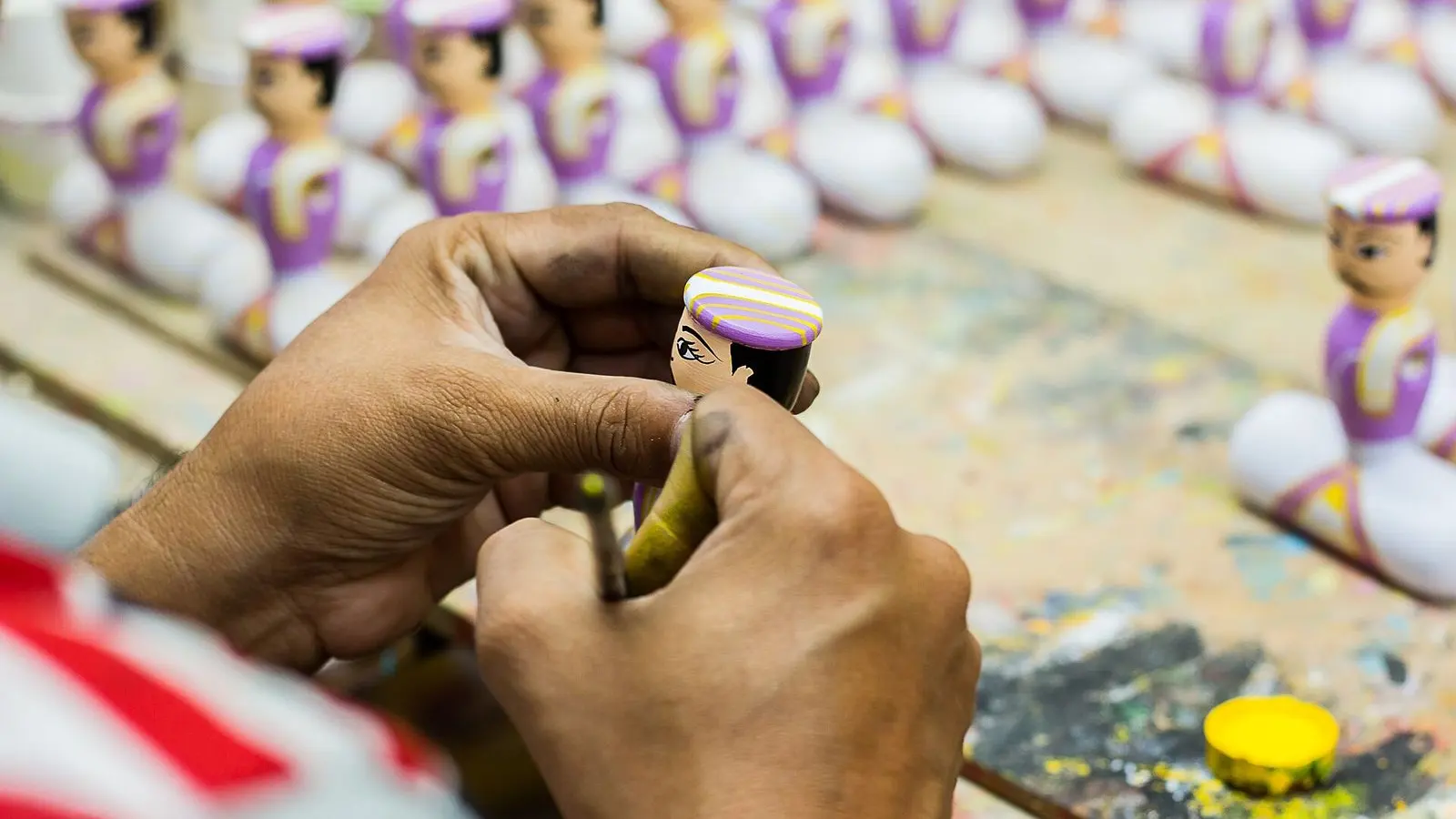
A saree store needs collection pages by weave and occasion, product pages with daylight close-ups of border and pallu, and the silk and zari content stated in the same words on every piece, so a returned saree can be matched to its description.
A toy store needs the age grade, the materials and the BIS licence details on each product page, because the Toys (Quality Control) Order covers toys sold through a brand’s own website as much as through a marketplace.
Our toys and baby care page covers testing and labelling in more depth.
How should a Karnataka store charge GST?
By place of supply. If your registration is in Karnataka, orders delivered within the state carry CGST and SGST, and orders to other states carry IGST, at the rates your accountant confirms for each HSN code. We set these as rules, not platform defaults.
On Shopify, the tax settings work with an invoicing app. We test orders addressed to Bengaluru, to Mysuru and to another state, and send the resulting invoices to your accountant before launch.
Credit notes are set up at the same time, so each refund reverses the invoice it belongs to, and the monthly export matches what your accountant files.
Activewear and sleepwear labels need one more rule. At the time of writing, readymade garments carry GST at 5% up to ₹ 2,500 a piece and 18% above it, so a discount can move a piece from one rate to the other.
Should the store have Kannada pages?
Usually not the whole store. The city’s mixed workforce keeps most Bengaluru storefronts in English, but a Kannada landing page can carry a campaign aimed at buyers across Karnataka, or a limited edition for Kannada Rajyotsava.
We build such pages from the same templates, so product data, prices and tracking stay shared with the English store. The Kannada text itself should be written or checked by a native writer on your side; we place it and test the page.
How quick should a Bengaluru store be?
Quick enough that a visitor arriving from an Instagram ad sees the product before deciding to leave. We measure against Core Web Vitals, the loading, responsiveness and layout-stability scores Google publishes, on a mid-range phone rather than an office laptop.
Growing Bengaluru brands tend to add tools one at a time: quizzes, loyalty points, reviews, chat, heatmaps. Each loads scripts on every page, so we keep a register of what is installed, why and at what monthly cost, and review it every month.
What tracking should an analyst expect at launch?
Purchase events that match the order count in the store admin from the first day. GA4 and Tag Manager, the Meta Pixel with Conversions API, and Consent Mode v2 go in during the build, and test orders are reconciled across all three before launch.
Event names, the data each event carries and the UTM rules go into a handover document, which a Bengaluru analyst usually asks for first. Our conversion tracking setup goes further, with server-side tagging where it pays.
Once the store converts reliably, paid traffic follows. Our page on performance marketing services in Bengaluru covers how those budgets are set from margin.
What happens in the first month?
Decisions and inputs, more than code. We agree the platform, what moves from the old store, the payment methods and COD rules, and which apps stay; your team gathers brand assets, product data, policy text and the gateway documents.
The build runs on a staging copy your team can open at any time, with test orders through every payment method. Launch is timed away from Ugadi, Varamahalakshmi and the weeks before Deepavali, when a broken checkout would cost the most.
From your side we need one approver for designs, test orders and the launch, often the founder or the head of growth, so decisions do not wait on a meeting.
What happens after the store launches?
Under an upkeep level we look after it month to month: theme and app updates checked before they go live, backups, uptime alerts and the app register. Changes are frozen in the week before a sale event, when a broken update would hurt most.
The monthly report goes to the founder and the analyst alike: conversion by device and traffic source, checkout drop-off by step, payment failures by method, page speed, and every change we made. Questions on any figure go into the next call.
Do we need to meet in Bengaluru?
No. Scoping happens on calls, designs and content travel as shared documents and staging links, and the store, domain and every account stay in your business’s name. Our only office is in Gandhi Nagar, New Delhi.
Packing and shipping stay with your team or your logistics provider; we connect the store to their app and never handle parcels.
If marketplaces come next, see our page on marketplace account management in Bengaluru; our Bengaluru page lists everything else we run in the city.
To start, send us your store address, catalogue size and the apps you run, and we will reply with the questions that decide the build.
Stores built for repeat orders
Shopify development
Theme set-up or rebuild, apps audited, checkout and invoices configured, and the catalogue moved across cleanly.
WooCommerce development
WooCommerce stores on hosting you own, kept patched and backed up, for brands already running WordPress.
Subscriptions and refills
Subscription apps, refill bundles and reminders sent with consent, for skincare, haircare and supplement brands.
Tracking from launch day
GA4, Tag Manager, Meta Pixel with Conversions API and Consent Mode v2, documented for your analyst.
Traffic planned from margin
Paid traffic budgets set from contribution margin, so the new store is not judged on platform-reported sales.
Questions Bengaluru brands ask about their store
How much does ecommerce website development cost in Bengaluru?
Should our D2C brand go headless or stay on a Shopify theme?
Can you fix a slow Shopify store without rebuilding it?
Can our website sell skincare refills on subscription?
Should a Bengaluru brand offer cash on delivery on its website?
Will our store charge GST correctly inside and outside Karnataka?
Can you rebuild our website without losing Google rankings?
Do you have to come to Bengaluru to build our website?
More of our work in this city
Tell us what your store has to carry.
Send your current store address, catalogue size and the apps you run. We reply with the decisions that shape the build, then a written scope and quote.