Ecommerce website development in Delhi NCR
We offer ecommerce website development in Delhi NCR on Shopify and WooCommerce, planned with you in Gandhi Nagar, East Delhi. Each store is set up for the region’s three tax states, its tower-block addresses and its festive calendar.
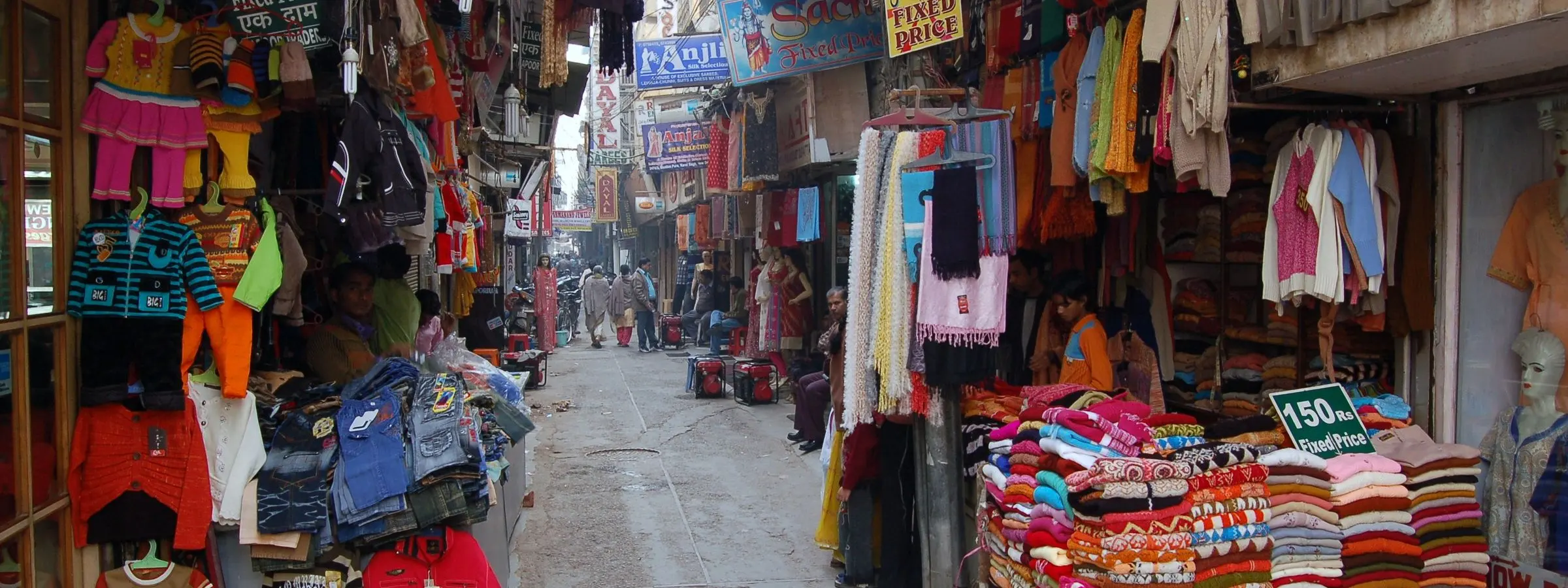
What an NCR store has to handle
- Platforms
- Shopify or WooCommerce
- Tax by delivery state
- CGST and SGST in Delhi; IGST beyond
- Address form
- Flat, tower or block, society, landmark
- Live before
- Navratri, for the festive run
- Planning meetings
- In Gandhi Nagar, or by video
- Orders shipped by
- Your team or your shipping partner
In short
- Ecommerce website development in Delhi NCR means building a Shopify or WooCommerce store that charges GST correctly across Delhi, Haryana and Uttar Pradesh.
- A store registered in Delhi charges CGST and SGST on orders delivered in Delhi, and IGST on orders delivered to Gurugram, Faridabad, Noida or Ghaziabad.
- NCR checkout forms work better with separate fields for flat, tower or block, and society or colony, plus a landmark and a pincode lookup.
- Delhi NCR brands should launch a new store before Navratri and move platforms in a quieter month, such as July or after the winter weddings.
- Kavita Enterprises builds and maintains NCR stores from Gandhi Nagar but never packs or ships orders; your team or shipping partner does.
Ecommerce website development in Delhi NCR has three local tests: GST charged right in three states, addresses complete enough for a Noida tower block, and a store live before the festive run. We build and run Shopify and WooCommerce stores from Gandhi Nagar.
Delhi NCR is home, so the scope, the design review and the launch rehearsal can be agreed across a table in Gandhi Nagar. Bring the products too: a product page reads better when its writer has handled the fabric and the packing.
The build itself happens in the platform admin and a staging copy, so meetings are for decisions. We also sell under brands of our own, and the payment, invoice and RTO problems below are ones we meet as a seller.
How should an NCR store charge GST?
By the delivery address, not by where the brand sits. For a store registered in Delhi, an order delivered in Delhi carries CGST and SGST, while one delivered to Gurugram, Faridabad, Noida or Ghaziabad carries IGST, and the store has to tell them apart.
On either platform that means tax rules set by state, with Delhi as the home state, and an invoice that prints the place of supply. WooCommerce’s tax documentation shows rates set by location; on Shopify, tax settings and an invoicing app share the job.
Before launch we test it with three orders, to a Delhi pincode, a Gurugram pincode and a Noida one, checking the tax split, the invoice and the credit note on cancellation. Your accountant signs off those invoices, not a description of them.
A pincode lookup protects all of this. When the form fills the state from the pincode, a buyer in Ghaziabad cannot pick Delhi from a list by mistake and leave you with an invoice carrying the wrong tax.
Why do NCR checkouts need better address fields?
Because many NCR buyers live in multi-storey societies, and an address without the tower, the flat number and the society’s name is how an order becomes a failed delivery. Delhi’s older colonies bring their own pattern of block letters, house numbers and landmarks.

We build the address form around that: separate fields for flat or house number, tower or block, and society or colony, a landmark line, and a pincode lookup. The shipping label then carries what a guard at a society gate asks for.
Cash-on-delivery orders get a confirmation message before they go to your shipping partner. The region reads Hindi and English, so we write it in both and keep whichever version more buyers confirm. The guide on how to reduce RTO sets out the other levers.
Payment habits split along similar lines. UPI suits small orders, gifting buyers from offices often pay by card, and a high-value lehenga may need card EMI, which gateways offer on eligible cards. We switch on what your buyers use, and nothing else.
What do NCR trades need from a store?
Each of the region’s trades asks something different of a store: occasion wear needs measurement and making time, gifting needs bulk orders and business invoices, and Panipat’s furnishings need sizes a standard product template does not hold.
Wedding and occasion wear
Sellers from Chandni Chowk and Karol Bagh who open a store need pages that slow the buyer down. A lehenga or sherwani page wants close video of the work, the garment’s weight, the lining fabric, and a plain note on alterations.
Made-to-measure pieces need a measurement form inside the order and a making time counted back from the buyer’s wedding date. We recommend prepaid only for them, because a custom outfit refused at the door cannot be sold to anyone else.
Corporate and festive gifting
Companies across Gurugram, Noida and Delhi buy Diwali gift sets and hampers in quantity. A store that wants those orders needs quantity price breaks, an optional GSTIN field for the company’s invoice, and a recipient sheet for orders going to many addresses.
Set an order cut-off your dispatch can meet before Diwali, and show it on every gifting page.
Hampers carry every Legal Metrology declaration on the pack, and the product page repeats them apart from the month and year. Our page on how to sell festive gifts online covers packing and freight.
If you print company logos on gift boxes, the product page needs an upload field and the order a proof step, so the company approves the artwork before anything is printed.
Furnishings from Panipat
A Panipat maker selling curtains, rugs and cushion covers direct needs size as a real option, with the price moving by size, and shipping charged on packed weight rather than one flat rate. A rug sold below its freight cost loses money every time.
Curtains made to size also need a measuring guide on the product page, with photographs of where to measure the width and the drop, because a curtain made to a wrong measurement cannot be sold again.
Can a Delhi shop and store share stock?
Yes, if both sell from one stock count. A Karol Bagh or Lajpat Nagar trader who opens a store keeps selling over the counter, and each piece sold there must leave the online stock at once, or the store sells pieces that are gone.
On Shopify, its point-of-sale app can take counter sales into the same count. On WooCommerce, or with a billing system you already use, we connect the two or agree a daily stock upload, and hold a buffer on fast sizes in the festive rush.
Prices need the same care. A walk-in buyer who bargains at the counter and finds a lower price online the same evening will say so, so we agree with you which prices the store shows and which offers stay in the shop.
How does an export house open a store?
An NCR export house opening its own store starts with sizes. Its charts were written for overseas buyers, so the store needs Indian size labels and a chart in inches and centimetres measured on finished pieces, or the early returns will say so.
The second job is a brand story without the buyers’ names. An Okhla or Faridabad unit usually cannot name the overseas labels it makes for, so the store sells on fabric, construction and fit, with close photographs of seams and finishes.
Returns are the other new habit. An export house is used to a buyer’s inspection report, not to single pieces coming back by courier, so the returns policy, written with your advisor, and the person who receives returns need settling before launch.
Once the store has a season of orders behind it, marketplace account management in Delhi NCR can add Myntra and Ajio beside it, drawing on the same stock and product records.
When should an NCR brand launch or migrate?
Launch before the festive run and migrate outside it. For an NCR brand that means a new store live by early September, ahead of Navratri, Karva Chauth and Diwali, and any platform move made in July or after the winter weddings.

From September to January a Delhi store carries its heaviest traffic: festive gifting, then the wedding season and winter collections. Theme changes, app installs and checkout edits wait until it passes, and sale banners and offer codes are scheduled ahead.
Winter collections bring heavy photographs of jackets and shawls, and festive banners pile up on the home page. We check page speed on a phone after each seasonal change, not once at launch, and remove whatever the last season left behind.
The winter collection page goes live in October and comes down in February, with its January clearance prices, around Lohri, scheduled in advance so nobody has to edit prices during the last cold weeks.
Should an NCR store be in Hindi?
Usually not as a full second language. A complete Hindi version doubles the upkeep on every product and policy page, while English product data already answers buyers who search in English or in Hindi typed in Roman script.
Site search is where Hindi in Roman script matters most. Buyers type kurta pajama, kurta pyjama and kurta payjama for the same thing, so we load spelling variants and Hinglish words into the store’s search synonyms, and read the searches that found nothing each month.
Hindi earns its place in smaller spots: a festive banner, the cash-on-delivery confirmation, a Karva Chauth collection heading, a line on the gifting page. Have it written or checked by a native writer, and judge it on orders.
How does the build run from Gandhi Nagar?
We suggest meeting in Gandhi Nagar for three decisions, the scope, the design and the launch rehearsal, and moving everything else through the staging copy and shared documents.
- Scope. Platform, catalogue size, payment methods, cash-on-delivery rules, tax set-up across the three states, and any store moving across.
- Design. Reviewed on phones on the staging copy, with Hindi lines tried in banners where your buyers read them.
- Launch rehearsal. Test orders through every payment method and each state’s pincodes, invoices checked, old links redirected.
- After launch. Monthly upkeep, with a short report on speed, checkout drop-off and RTO by pincode.
Shopify suits most NCR brands without a developer, because the platform carries the hosting through a Diwali peak; WooCommerce suits export houses and brands already on WordPress. Our pages on Shopify development and WooCommerce development go into each.
We do not pack or ship your orders. Your team or shipping partner handles dispatch, and the store is linked to their shipping app, so tracking numbers reach buyers without anyone retyping them.
The full service is on our D2C website development page, and selling from the region more widely on our page for ecommerce services in Delhi NCR. To start, send your catalogue size and the platform you are on.
Stores, and the work around them
Shopify stores
Hosted stores for NCR brands without a developer, set up so the festive peak needs no server to watch.
WooCommerce builds and upkeep
Stores on WordPress for export houses and brands already on it, with hosting, updates and backups kept up monthly.
GST set by delivery state
Tax rules for Delhi, Haryana and Uttar Pradesh, invoice templates and credit notes signed off by your accountant.
Tracking from the first order
GA4, Tag Manager, Meta Pixel and Conversions API set up during the build, so launch sales are counted once.
Marketplaces beside the store
Flipkart, Amazon, Myntra and Ajio run from the same stock and prices as your NCR storefront.
Visitors through Google and Meta
Search, Shopping and Meta campaigns that send NCR buyers to the store, measured on orders kept.
Questions NCR brands ask about stores
How much does an ecommerce website cost in Delhi NCR?
Can my Shopify store charge IGST to customers in Gurugram and Noida?
Do you build ecommerce websites for wedding wear shops in Chandni Chowk?
Can a Gurugram company order Diwali gifts in bulk from my website?
Should my Delhi store’s COD confirmation messages be in Hindi?
Can we meet to plan our store in Gurugram or Noida?
Will you pack and deliver the orders from my Delhi website?
When should a Delhi brand move its store to a new platform?
More of our work in this city
Plan your NCR store with us.
Send your catalogue size, your current platform if you have one and the date you want to be live. We reply with the questions that shape the build and a day to meet in Gandhi Nagar.