Ecommerce websites for Srinagar crafts
Our ecommerce website development in Srinagar builds Shopify and WooCommerce stores for carpet, pashmina and papier-mâché sellers, where each piece is shown with its documents and sold with care. We build and maintain them remotely from Gandhi Nagar, New Delhi.
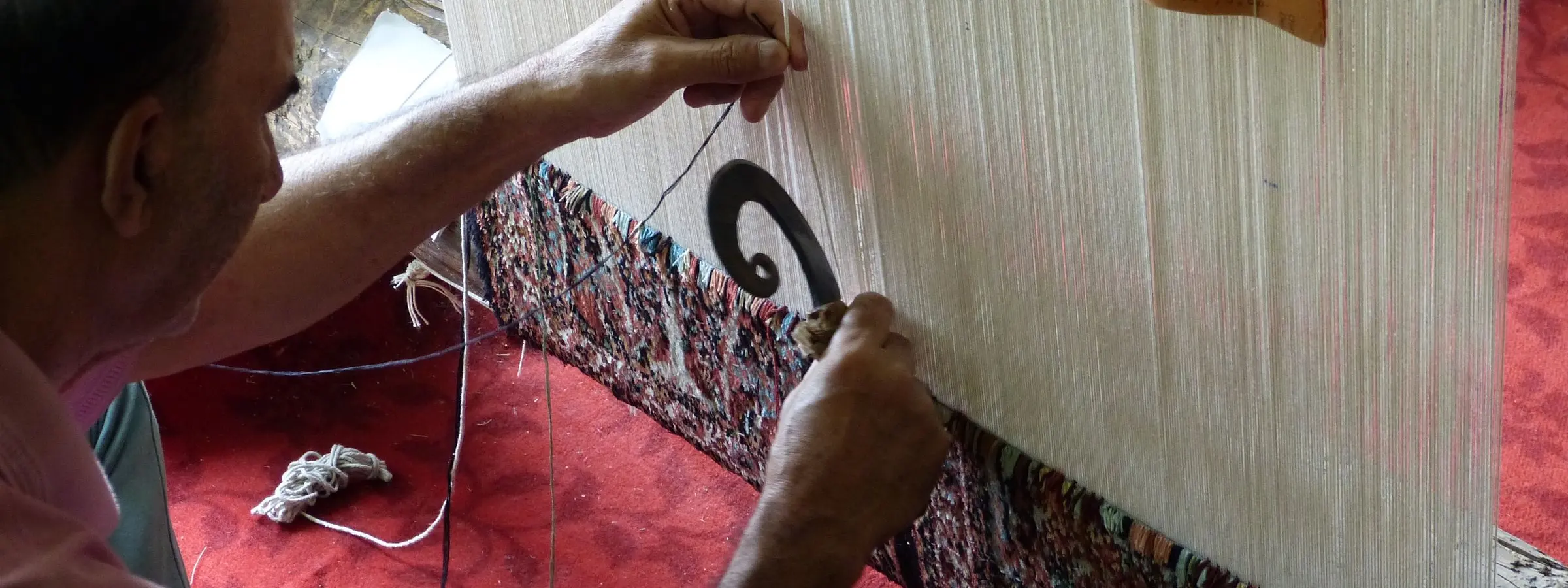
What a Srinagar craft store must do
- Platforms
- Shopify or WooCommerce
- Products
- Carpets, pashmina, papier-mâché, walnut wood
- Stock
- Often one of a kind
- Proof on the page
- GI labels, knot records, maker’s notes
- Payment
- Prepaid, with card EMI where offered
- Built from
- Gandhi Nagar, New Delhi, remotely
In short
- Ecommerce website development in Srinagar usually means a store for one-of-a-kind pieces, each carpet or shawl with its own page and a stock of one.
- A craft product page should show the documents behind its claims, such as a GI label for Kashmir Pashmina, beside close-ups of the work.
- High-value checkouts should be prepaid, with card EMI where the gateway offers it, because a refused cash order costs freight both ways.
- Carpet buyers often want to see the piece moving before paying, so a store can book video calls from the product page.
- We build Srinagar stores remotely from Gandhi Nagar, New Delhi; packing and shipping stay with the seller or its shipping partner.
Ecommerce website development in Srinagar starts from a question most stores never ask: how do you sell a carpet that exists only once? We build Shopify and WooCommerce stores for carpets, pashmina, papier-mâché and walnut wood that answer it, from Gandhi Nagar, New Delhi.
The store, its domain and the gateway account are registered to your business. We build and look after the site; dispatch stays with your staff or your shipping partner. We run brands of our own as well.
Which Srinagar sellers need their own store?
A store suits Srinagar sellers whose pieces are too valuable or too individual for a marketplace template. Four kinds gain most, each for its own reason.
- Carpet houses selling one-off hand-knotted carpets, where every piece needs its own page and a conversation before payment.
- Pashmina labels with sozni and kani work, whose buyers want to see the documents and the reverse of the work.
- Papier-mâché and walnut wood workshops with gift collections for Diwali, weddings and Christmas.
- Showrooms with past visitors who want to buy again from home, and come back each winter.
If none of these fits, the marketplaces are cheaper for now, and we say so before quoting. Our page on ecommerce services in Srinagar covers the marketplace side of the city’s crafts.
Selling pieces that exist only once
A one-of-a-kind piece needs a store built around a stock of one. Each carpet or shawl gets its own page, its own photographs and its own record, and the page changes to sold the moment payment clears.
- Sold pages kept as an archive of your work, with an enquiry button for similar pieces, rather than deleted.
- Collections by craft and size, so a buyer can browse silk carpets of one size, or sozni shawls in one colour.
- Holds on request, against a part-payment, when a buyer needs a few days to decide.
- One count everywhere, so a carpet sold on the store disappears from any marketplace at the same moment.
Pieces made in quantity, such as papier-mâché boxes and stoles, sit beside the one-offs with ordinary stock counts. The same record serves the store and the marketplaces, which our marketplace account management in Srinagar keeps in step.
Showing the proof on each product page
A craft product page should show the evidence behind its claims as plainly as the price. A buyer paying for Kashmir Pashmina or a hand-knotted silk carpet looks for proof before anything else.
- GI labels photographed, with the label number, where the piece carries one.
- Maker’s records for carpets: material, knot density and size.
- The reverse and the back: the underside of the embroidery, the back of the carpet, the joints of a walnut box.
- Plain words on method, sozni, aari or machine, and on care.
An about page can tell the story of the craft and the workshop plainly, with photographs of real work, and without borrowed history or claims of age that the documents do not support.
Only documents that belong to that exact piece appear on its page. Our product listing services write the record from your documents once, for the store and every marketplace.
Video calls and enquiries for carpets
Carpet buyers often want to see the piece move before they pay. A button on each carpet page can book a video call, at which you turn the carpet to the light, show the back and the knots, and answer questions.
- Booking through a simple form or calendar app, with the carpet’s code attached.
- A record of what was shown and agreed, kept with the enquiry.
- Payment through the store after the call, so the order, the invoice and the tracking stay in one place.
Calls also help a pashmina buyer choosing between two shawls: the colour of each in daylight, the weight in the hand, the work along the border.
Interior designers and hotels enquire the same way, for sizes and colours you may weave to order. A trade enquiry form keeps those requests apart from retail orders and in front of the person who quotes.
Detailed photographs that still load quickly
Craft buyers want to zoom into the stitching and the knots, and detailed photographs are heavy. The store keeps them sharp where it matters and light everywhere else, so a page with many images still opens quickly on a phone.
- Images sized to the space they fill, with a larger version loaded only when the buyer zooms.
- Video hosted where it streams well, not embedded as large files.
- Speed measured on mobile before launch and after every change, against Core Web Vitals, Google’s measures of loading, response and layout shift.
Every app or plugin added for a season is checked for its weight on the page and removed when the season ends.
Checkout for high-value orders
Make prepaid the only path for costly pieces. A refused cash-on-delivery carpet costs freight both ways, and a shawl swapped on return is harder to prove when nothing was paid in advance.

- UPI, cards and net banking through a gateway contracted in your business’s name.
- Card EMI for carpets, where the gateway offers it.
- Bank transfer for the costliest pieces, with the invoice issued first.
- Cash on delivery, if at all, kept to low-priced gifts.
Every order produces a GST invoice with your GSTIN and the HSN code your accountant confirms, and the store’s tax settings follow the rate they set for each craft.
Shipping costly pieces from the valley
Shipping stays with your team or shipping partner; the store’s job is to promise only what they can deliver. That matters more in Srinagar than in most places, because the valley’s winter can slow parcels.
- Declared-value cover on costly parcels, where your shipping partner offers it, priced into the order.
- Delivery confirmation by OTP or signature for high-value parcels, where offered.
- Order-by dates on gift collections, worked out from transit times and moved earlier in winter.
- A winter note on the store when roads are closed, rather than a promise the parcel cannot keep.
Carpets travel rolled and wrapped against damp, in a pack your staff test before the first order; papier-mâché needs a rigid carton with every gap filled. The packing guidance is ours to write and your staff’s to follow.
The store connects to the shipping app you use, so tracking numbers and delivery updates reach buyers without anyone retyping them.
Gift collections for Diwali, weddings and Christmas
Papier-mâché boxes and ornaments, walnut wood trays and stoles sell as gifts, and a gift collection needs more than a product grid: packaging shown, a gift message at checkout, delivery to another address and an order-by date.
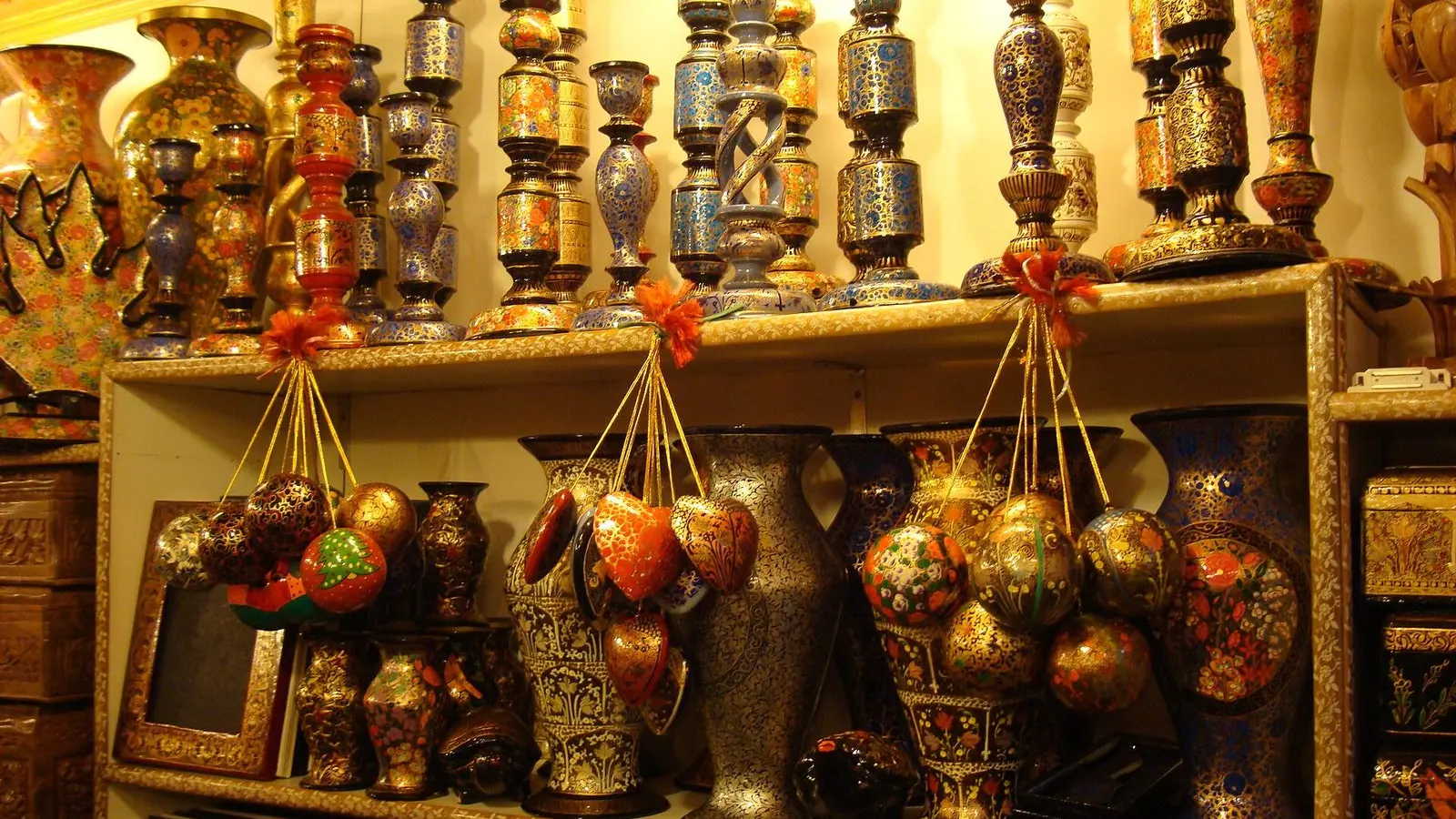
Christmas ornaments need their collection live by November, Diwali gifts before the autumn sale events, and wedding gifts before the season opens. Corporate gift orders ask for a quotation and a GST invoice, and suit the trade enquiry form.
Tracking sales that close after a call
A carpet sale often starts on the store and closes after a video call, so tracking must follow the buyer across both: the enquiry recorded as its own step, and the sale tied back to the visit that started it.
We set up GA4, Google Tag Manager, the Meta Pixel with Conversions API and Consent Mode v2 during the build, so the first enquiry is counted the same way as the hundredth. Our conversion tracking setup covers the method.
Care guides and after-sale service
A buyer of a costly piece wants to know how to keep it, and a care page answers before the question becomes a complaint. Write one for each craft and link it from every product page.
- Pashmina: dry cleaning by someone who handles fine shawls, folding with tissue, and storage away from moths.
- Carpets: turning the carpet now and then so it wears evenly, and professional washing rather than water at home.
- Papier-mâché: dusting only, away from water and direct sun.
- Walnut wood: a soft cloth, occasional polish, and no standing water.
If your workshop washes or repairs carpets, a service page with an enquiry form brings past buyers back, and keeps them buying from you rather than from whoever repairs their carpet.
Orders from buyers outside India
Kashmiri crafts draw interest from abroad, but a store should not take international orders until the rules are settled. Exports bring their own documents, a GST treatment of their own, international shipping and foreign-currency payments, each to agree with your adviser and shipping partner first.
Starting with buyers in India and adding countries later is the simpler route. When you get there, Shopify can publish other languages at their own addresses, and a WordPress store can add them through a translation plugin.
How a Srinagar store build runs
The build happens in the platform admin, a staging copy and shared documents, with a call at each decision; nobody travels. The inputs set the date: photographs, documents for each piece, policy text from you or your adviser, and the gateway’s papers.
- Scope. Platform, collections, one-off and stocked pieces, enquiry flows and payments.
- Records. Every piece photographed in daylight with its documents, before winter.
- Build and test. On staging, with orders through every payment method and an enquiry booked end to end.
- Launch and upkeep. Live before the selling season, then monthly updates, backups and a short report.
Where screen colour and the real piece disagree, begin with daylight photographs and confirm any physical sample review with us before posting a piece. Our D2C storefronts page describes the service in full; when you are ready, tell us what your store must sell.
Stores for one-of-a-kind pieces
Shopify stores
Craft collections, single-piece stock and enquiry buttons, built on a maintained theme and kept updated.
WooCommerce stores
WordPress stores for craft houses that want full control of pages, checkout and hosting.
Pages with proof
Product records written from your documents and shown with the label, the reverse and the back.
Marketplace stock in step
One stock count across store and marketplaces, so a sold carpet disappears everywhere at once.
Traffic for winter and gifting
Google and Meta campaigns for the store, planned around winter, Diwali and Christmas.
Questions Srinagar sellers ask about stores
How much does ecommerce website development cost in Srinagar?
Can my website sell one-of-a-kind carpets?
Should I show the GI label on my product pages?
Can buyers see a carpet on a video call before paying?
Should I offer cash on delivery for pashmina and carpets?
Can I sell to buyers outside India from my store?
Can my store’s photographs show the embroidery in detail?
When should a Srinagar store be built, given the winter?
Tell us what your Srinagar store must sell.
Send your range, the documents you hold and how buyers reach you now. We reply with the questions that decide the platform, then a written scope.