Ecommerce websites for Bhadohi makers
Our ecommerce website development in Bhadohi builds Shopify and WooCommerce stores for carpet and rug makers who want Indian homes and interior designers to buy from them directly. We build and maintain the store remotely from Gandhi Nagar, New Delhi; weaving and dispatch stay with you.
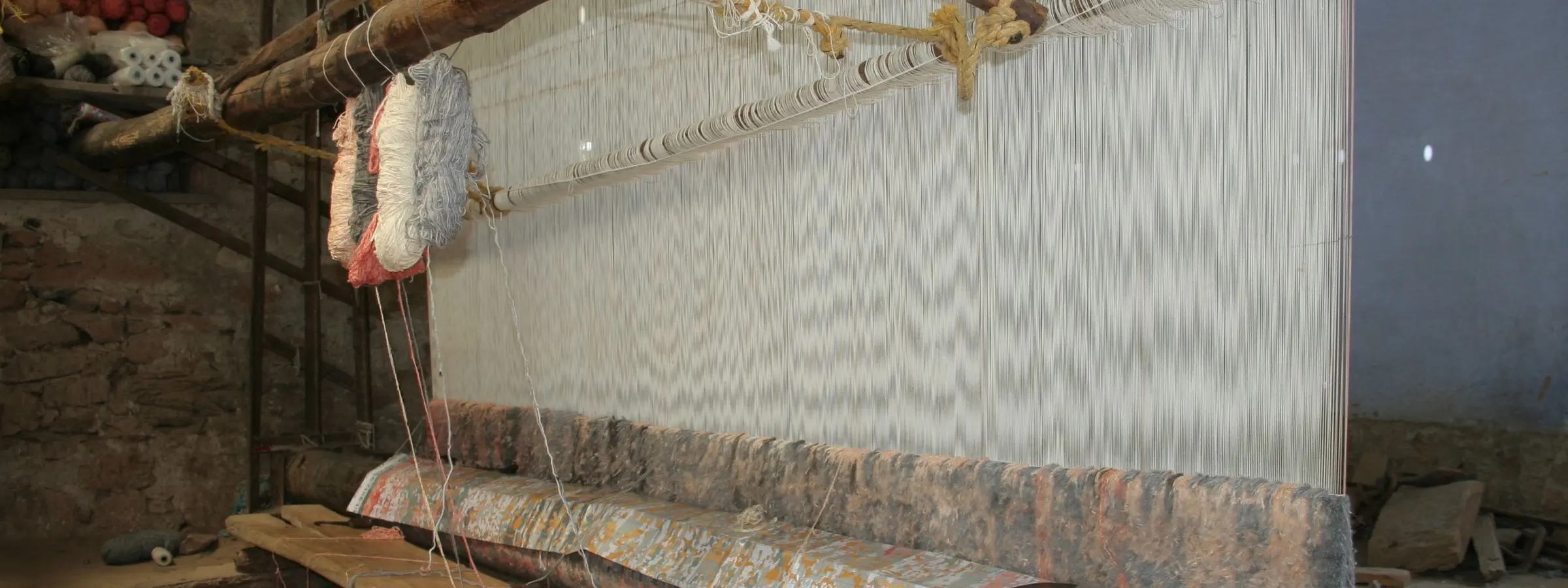
What a Bhadohi rug store must do
- Platforms
- Shopify or WooCommerce
- Sold from stock
- Rugs by size, colour and construction
- Made to order
- Request, approval, payment, then weaving
- Buyers served
- Homes, interior designers, furnishing shops
- Payment
- Prepaid first; deposits for custom rugs
- Built from
- Gandhi Nagar, New Delhi, without visits
In short
- Ecommerce website development in Bhadohi usually means a store that sells stocked rugs by size and takes made-to-order carpets with colour approvals.
- A made-to-order rug page should collect size, colours and design changes, then a deposit or full payment, and confirm the design before weaving starts.
- Trade buyers such as interior designers need their own route: an approved account, sample requests, project quotations and GST invoices carrying their GSTIN.
- Rug product pages need the construction, fibre, pile, exact size and a photograph of the back, because buyers cannot feel the pile through a screen.
- We build Bhadohi stores remotely from Gandhi Nagar, New Delhi; the store, domain and payment gateway stay registered to the maker’s business.
Ecommerce website development in Bhadohi means a store that sells rugs straight to Indian homes: stocked sizes for buyers who want one now, and made-to-order carpets for a particular room. We build both on Shopify or WooCommerce, from Gandhi Nagar, New Delhi.
Your business owns all of it: the store, the domain, the gateway account. Our part is building, connecting and looking after the store; rolling, packing and sending each rug stays with your staff or shipping partner. We run brands of our own as well.
Which Bhadohi makers need their own store?
A store earns its running costs when buyers come to you for something a marketplace cannot sell well. For a Bhadohi maker that usually means one of four things.
- Your own designs, with a look buyers search for by your name rather than by “wool rug”.
- Custom sizes and colours, woven to order for one room after the buyer approves the design.
- Trade buyers, such as interior designers, architects and furnishing shops, who want samples, price lists and invoices.
- Large or costly rugs, where a buyer wants to ask questions before paying and a marketplace return would cost too much.
If none of these describes your business yet, the marketplaces remain the cheaper place to sell, and we will say so before quoting. A store with no plan for visitors is a monthly cost, not a channel.
A store also gives a maker somewhere to show the full range its looms weave, including pieces no marketplace category fits well, such as runners in unusual lengths or rugs sold as matched pairs.
Rugs from stock: sizes, filters and galleries
For rugs held in stock, the store has to make one decision easy: which size of which rug fits this room. Every design is one product, its sizes are variants with their own price and stock, and filters follow how buyers think about rugs.
- Filters. Construction, fibre, size, shape, colour and room, so a buyer can narrow a range quickly.
- Galleries. The whole rug from above, the pile close, the back, the edge, and the rug in a room, on every product.
- A size guide. How to choose a size for a living room, a bedroom or a dining table, with a drawing for each.
- Video. A short clip of the rug being turned, which shows how pile changes colour with the angle.
On Shopify each size is a variant with its own stock; on WooCommerce the same is done with variable products. Either way, the store’s stock follows the same sheet as your marketplace panels, so a size sold online comes off everywhere.
Product pages for knotted, tufted and flat-woven rugs
A rug’s product page does the work a showroom floor does: it tells a buyer what the rug is made of, how it was made and how it will feel underfoot. Each fact sits in its own field, so page and filters agree.
- Construction, explained. A line on what hand-knotted, hand-tufted or flat-woven means, with the photograph of the back beside it.
- Knot count. Only where you have counted it, with how it was measured.
- Materials. Pile and foundation named separately: wool on cotton, viscose on cotton, jute.
- Feel and weight. Pile height, the weight of the rug, and whether it lies flat at once or needs a few days.
- Care. Vacuuming, spot cleaning, professional washing, turning the rug now and then, and the shedding a new wool rug does.
- Underlay. Whether one is advised, and whether you sell it.
Packaged rugs carry Legal Metrology declarations on the pack, and the product page shows the same declarations apart from the month and year; your adviser confirms how each rug’s net quantity is declared.
Made-to-order rugs: approval before weaving
A custom rug is sold before it exists, so the store has to collect everything the loom needs and win the buyer’s approval before any weaving starts. The flow below is the one we build, adjusted to how your workshop works.
- The request. Size, shape, colours, design and the room, through a form that accepts a floor plan or a photograph.
- The quotation. A price and a delivery date for that rug, sent by email or message from the store.
- The approval. A design drawing, and yarn poms or a woven sample posted to the buyer, so colours are seen in daylight.
- The payment. A deposit or full payment through the gateway once the design is approved, with any balance before dispatch.
- Before dispatch. Photographs of the finished rug sent for the buyer’s approval.
WooCommerce handles this flow with quotation and deposit plugins on hosting you control; Shopify does it with apps and draft orders. Our page on WooCommerce development covers the plugin side.
Custom rugs are usually not returnable, which your store’s policy must state in words your adviser approves, beside the expected delivery date on every custom order.
Interior designers, architects and trade buyers
Trade buyers order differently from households: several rugs for one project, sizes from a drawing, and a GST invoice in their firm’s name. The store gives them a route of their own instead of the retail checkout.
- A trade account. An application form you approve, then prices of their own once logged in.
- Sample requests. Swatches, poms or small rugs sent on request, with the cost and the return terms stated.
- Project enquiries. A form for several rugs at once, answered with one quotation.
- Invoices. The buyer’s GSTIN captured at checkout and printed on the invoice, so a registered firm can claim input tax credit.
At the time of writing, Shopify’s B2B features run on its standard plans as well as Plus; WooCommerce does the same work through wholesale extensions. We recommend one after seeing how much of your business is trade.
Checkout and the cost of a refused rug
A refused rug travels back at your cost and may arrive creased or damp, so checkout leads buyers to pay before dispatch. UPI, cards and net banking come first; cash on delivery, if offered at all, comes with rules.

- A cap on cash orders by order value, so costly rugs are prepaid.
- Pincodes where cash on delivery is switched off, reviewed against your shipping partner’s refusal reports.
- A confirmation message before a cash order is released for packing.
- Shipping charges by size and zone, worked out from packed dimensions, so large rugs to far destinations do not lose money.
Our guide on how to reduce RTO, return to origin, covers the rest of what a store can do about orders that come back undelivered.
Shipping rugs to buyers across India
The store connects to the shipping app you already use, and packing stays with your staff. What the build adds is accuracy: every size carries its packed dimensions and weight, so shipping rates, delivery estimates and the app’s labels come out right.
- Rates by size and zone. Worked from packed dimensions, so a large rug to a distant pincode is not undercharged.
- Delivery estimates. Shown on the product page by pincode, from your shipping partner’s transit times.
- Tracking. Numbers passed back to the order and the buyer automatically.
- Declared value. Costly rugs sent with the declared value or cover your shipping partner offers.
GST invoices from a Bhadohi store
A store registered in Uttar Pradesh charges CGST and SGST on orders delivered within the state and IGST on orders to other states. Each rug carries the HSN code and rate your accountant confirms, which can differ with construction and fibre.
Trade invoices carry the buyer’s GSTIN so a registered firm can claim input tax credit, and returns and cancellations produce credit notes. Before launch, three test orders prove the settings: one inside Uttar Pradesh, one to another state, one from a trade account.
Search, product data and the GI name
Buyers find rug stores through search when product pages carry the words they type and the facts they filter on. Each page gets a clean address, a title and description written for search, product structured data, and a sitemap submitted to Google Search Console.
- Buyers’ words. Hand-knotted wool rug, cotton dhurrie, runner for a hallway, with kaleen and dari mapped in the store’s own search.
- Facts as data. Construction, fibre, size and pile height as product attributes, not only as text.
- The GI name. Used only on carpets entitled to the Bhadohi handmade carpet registration, never as a keyword elsewhere.
Product data comes from the same records as your marketplace listings, rewritten for the store, where there is room for the weaving story without a marketplace template. Organic search builds slowly; ads bring the first visitors.
Building the store without a visit
We work inside the platform’s admin and a staging copy of the store, settling decisions on calls as they come up. The finish date rests on what you send more than on the build: photographs, product records, policy wording and the gateway’s paperwork.
- Scope. Stock only, or stock and custom orders; retail only, or trade as well; platform, pages and integrations.
- Build. On staging, with custom-order and trade flows tested on real examples.
- Test. Retail, custom and trade orders through every payment method, refunds included.
- Launch and upkeep. Outside your busiest weeks before Diwali, followed by monthly upkeep and a short report.
Rug photography in daylight takes time, so it starts first. When the colour of a rug on screen is in doubt, have your photographer compare it with the rug in daylight; agree any physical sample review with us before sending one.
Our D2C storefronts page describes the service in full, and our page on marketplace account management in Bhadohi covers the panels the store shares stock with.
Our Bhadohi page covers the rest of our work for the city’s makers. When you know how your rugs are bought, send us your range and how buyers order it.
Stores for Bhadohi rug makers
Shopify rug stores
Size and colour variants, room-setting galleries and filters by construction, fibre and shape.
WooCommerce with custom orders
Request forms, quotations, deposits and approval steps on WordPress, with hosting and updates looked after.
Trade buyers and designers
Trade accounts, sample requests and project quotations, with GST invoices carrying the buyer’s GSTIN.
Rug product data
Construction, fibre, pile, size and care written once for the store and every marketplace listing.
Marketplace stock in step
One stock count across your store and seller panels, so a sold rug comes off everywhere.
Questions Bhadohi makers ask about stores
How much does ecommerce website development cost in Bhadohi?
Can customers order a custom-size rug from my website?
Shopify or WooCommerce for a carpet business?
How do I show the colours of a rug accurately online?
Can interior designers get trade prices on my website?
Should my rug store offer cash on delivery?
Will my website show up when people search for Bhadohi carpets?
Will someone from your side come to Bhadohi for the build?
Tell us how your rugs are bought.
Say whether you sell from stock, to order or both, and who buys from you. We reply with the questions that decide the platform, then a written scope.