Ecommerce websites for Kolkata labels
Our ecommerce website development in Kolkata builds Shopify and WooCommerce stores for handloom, kantha, hosiery and leather goods labels, and for wholesalers taking trade orders online. We build and maintain them remotely from Gandhi Nagar, New Delhi.
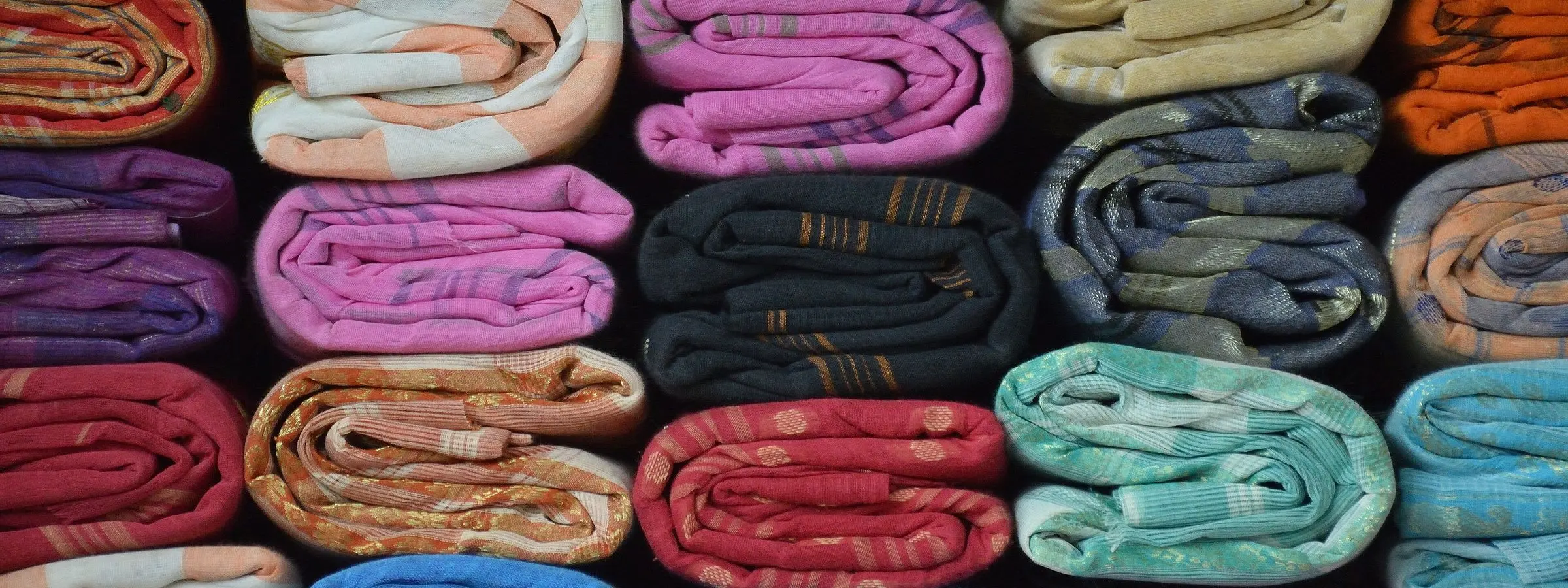
What a Kolkata store is asked to do
- Platforms
- Shopify or WooCommerce
- Buyers served
- Retail shoppers and trade customers
- Product pages
- Weave, place, yarn and care
- Language to add
- Bengali pages beside English
- Change freeze
- Mahalaya to Bijoya Dashami
- GST on invoices
- CGST and SGST in-state, IGST beyond
In short
- Ecommerce website development in Kolkata often means one store serving two kinds of buyer: shoppers paying retail and trade customers buying by the dozen.
- At the time of writing, Shopify’s B2B features, including company accounts, trade catalogues and quantity rules, run on its standard plans as well as Plus.
- Handloom product pages should name the weave and where it was woven, show the reverse of the cloth and explain handloom’s small irregularities.
- A store selling for the Puja season needs gift messages, delivery to another address and order-by dates, with changes frozen from Mahalaya to Bijoya Dashami.
- We build Kolkata stores remotely from Gandhi Nagar, New Delhi; packing and shipping stay with the brand’s own team or shipping partner.
Ecommerce website development in Kolkata starts with a question pure retail brands never ask: can one store take a retail order for a saree and a trade order for ten dozen vests? We build Shopify and WooCommerce stores that can, from Gandhi Nagar, New Delhi.
Your business owns the store, the domain and the gateway account. We build, connect and maintain the store; your own team or shipping partner packs every order, retail or trade.
Which Kolkata businesses need their own store?
Four kinds of Kolkata business tend to gain most from a store of their own, each for a different reason.
- Handloom and kantha labels, whose buyers want the story of the weave and the weaver, which a marketplace template leaves little room for.
- Hosiery brands with repeat buyers, who reorder the same pack in the same size and can be brought back without paying a marketplace each time.
- Leather goods makers, whose range of bags, belts and wallets runs wider than any listing shows; our luggage and travel page covers how that category sells.
- Wholesalers from the city’s trading districts, who want shops in Bihar, Odisha or Assam to reorder online instead of by phone.
The last group changes the build most, since a trade customer needs different prices, quantities and invoices from a shopper. If none of the four describes you, a marketplace is usually the cheaper channel for now, and we will say so before any quote.
One store for retail and trade buyers
A single store can serve both, provided trade customers log in to prices of their own. For a Kolkata wholesaler that is the heart of the build, and the platform choice tends to follow from it.
- Trade price lists by customer group, with prices per dozen or per pack and breaks by quantity.
- Minimum quantities and set sizes, so a trade order arrives in the ratios you pack.
- GSTIN at checkout for trade buyers, printed on the invoice so they can claim input tax credit.
- Payment terms for trusted accounts, alongside payment upfront for new ones.
- A sign-up form through which a retailer applies for a trade account that you approve.
At the time of writing, Shopify’s B2B features run on its standard plans as well as Plus, with price lists assigned to individual companies kept for Shopify Plus. On WooCommerce the same work is done with wholesale pricing extensions, on hosting you control.
For retailers across the east who reorder the same styles each season, a trade login with last season’s order ready to repeat saves both sides a round of calls.
Trade and retail draw on one stock, so the trade price list is never a separate pool: a dozen sold to a shop in Ranchi leaves the same shelf as a pack sold to Salt Lake.
Where marketplaces share that shelf too, our marketplace account management in Kolkata keeps every count in step.
Product pages for tant, jamdani and kantha
A handloom page has to carry what a hand learns at a counter: the weight of the cloth, the crispness of tant, the density of a jamdani motif, the stitching in kantha. A store of your own has room for all of it.
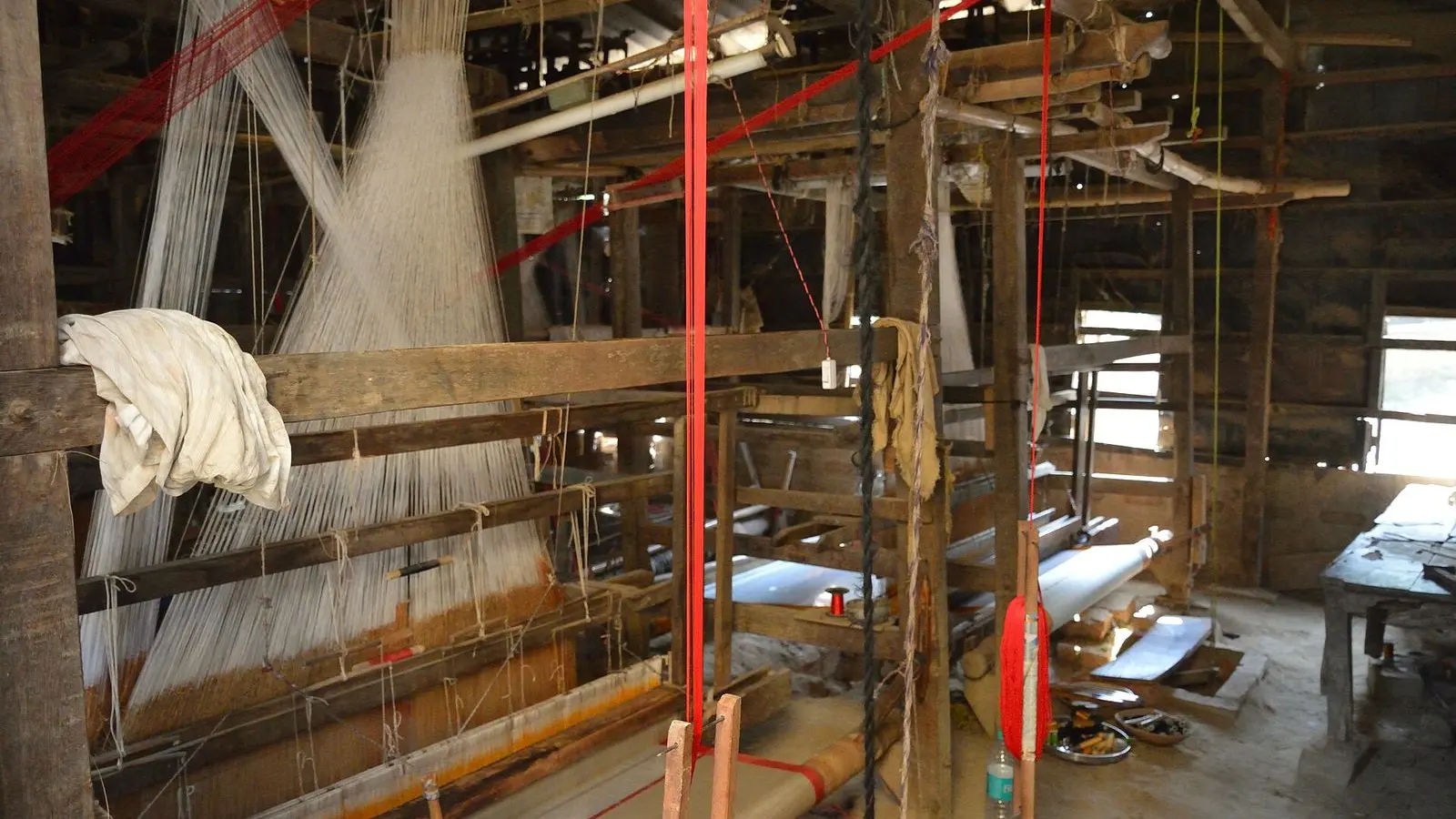
- Weave and place named together, with a regional name used only for sarees woven in that region.
- The reverse of the cloth, photographed, because hand-work shows on the back.
- Yarn, count and feel: crispness, drape, and what washing does to tant.
- Irregularities explained as part of handloom, so they arrive as expected rather than as faults.
- Filters by weave and district, so a buyer can browse Phulia tant or Bishnupur Baluchari as collections.
Collection pages by weaving district let a label say where its cloth comes from without inventing a story.
Every piece is photographed in daylight against the same background, so colour reads the same from one saree to the next; under tube light, a red border can turn orange on screen.
Kantha quilts, throws and cushion covers get collections of their own, with sizes and fillings stated; our home textiles page covers how that category sells.
Bengali on the store, and in its search
Add Bengali to the pages that carry the occasion: the home page, the Puja and Poila Baisakh collections, the care guides and the size guide. Product details can stay in English at first, beside the Bengali names buyers already know.
Script fonts can be heavy, so the Bengali font is chosen for how quickly it loads on a phone as much as for how it looks, and it loads only on the pages that use it.
Search is where Bengali words earn their keep. Buyers type panjabi for a men’s kurta, along with dhuti, gamchha, tant and dhakai, in English letters, so the store’s search maps each word to the right collection instead of returning nothing.
Poila Baisakh and the Puja collections are natural moments to publish Bengali pages, since the occasions are Bengali and buyers arrive looking for them by name.
Bringing hosiery buyers back to reorder
Innerwear buyers reorder the size that fits, and a store of your own lets them do it without a marketplace taking commission on every repeat. The build makes the second order as easy as the first.
- Buy again from the order history, with the last size and pack count already chosen.
- A free-shipping line set above a single pack, so a reorder grows into a bigger basket.
- Reminders by email or WhatsApp, sent only to buyers who agreed to receive them.
- Pack builders that let a buyer mix colours within a size, counted against single-piece stock.
Thermal sets, which Kolkata’s own short winter barely needs, get a collection of their own from November for buyers in colder states.
Subscriptions are possible on both platforms through apps, but on Shopify they do not combine with the B2B features, so a store selling to trade and retail has to decide where repeat orders live.
Gifting features for the Puja season
Families give one another clothes through the Puja season, so a Kolkata store often sells to someone who is not the wearer. Checkout is built for that.
- Delivery to another address, with a gift message and a packing slip that shows no prices.
- Order-by dates on product pages, set from your shipping partner’s transit times, so a buyer knows what will arrive before Shashthi.
- Gift collections for Bijoya, Jamai Shashthi and Poila Baisakh, each live a few weeks ahead.
- Exchanges for size on kidswear and panjabis, since a gift chosen by age often needs another size.
For Jamai Shashthi, when panjabis and dhutis are common gifts, the collection lists sizes by chest measurement, because the buyer is guessing someone else’s size.
Store changes are frozen from Mahalaya to Bijoya Dashami. New apps, theme edits and migrations wait until after the Pujas, because a checkout that breaks in Puja week costs the season’s busiest orders.
Payments and COD for buyers across the east
Prepaid orders protect margin on long routes, so checkout makes UPI the easiest path and treats cash on delivery as a privilege with rules. Buyers in the hills and the North-East wait longer for parcels, and more cash orders come back unclaimed there.

- COD caps by order value, set lower for regions where refusals run high in your shipping reports.
- Pin codes where cash on delivery is switched off, reviewed every month.
- A confirmation message before a cash order is released for packing.
- A prepaid incentive, such as free gift wrap, if the margin allows one.
Trade orders follow different rules: payment upfront or on agreed terms, never cash on delivery. Our guide on how to reduce RTO covers the rest of what a store can do about orders that come back.
GST invoices for retail and trade orders
A business registered in West Bengal charges CGST and SGST on orders delivered within the state and IGST on orders to anywhere else. Trade invoices also carry the buyer’s GSTIN, so a retailer in Bhubaneswar or Guwahati can claim the credit.
The garment rates, at the time of writing 5% up to ₹ 2,500 a piece and 18% above, may not apply to handloom and silk sarees, which can be classed as fabric. Kantha quilts and leather bags have codes of their own.
So products sit in tax classes, each with the HSN code and rate your accountant confirms, and the settings follow the selling price. Before launch we test an order to a Kolkata address, one to another state and a trade order with a GSTIN.
How a Kolkata build runs from Delhi
The work runs in the platform admin, a staging copy and shared documents, with a call at each decision, and nobody travels. The inputs decide the date: product data, photographs, policy text from you or your adviser, and the gateway’s documents.
- Scope: retail only, or retail and trade; platform, pages, tax classes and integrations.
- Build: on staging, with trade accounts and price lists tested against real customer groups.
- Test: retail, trade and gift orders through every payment method, refunds included.
- Launch: outside the Puja fortnight, followed by monthly upkeep and a short report.
The trade side also needs your customer list: shop names, GSTINs and the price group each belongs to. It is imported once before launch and kept up to date by you afterwards.
Handloom photography in daylight takes time, so it starts early. If a colour on screen and the cloth in hand disagree, a sample posted to Gandhi Nagar settles the question.
Our D2C storefronts page describes the service in full, and our Kolkata page covers the rest of our work in the city. When you know what the store must do, tell us who buys from you.
Stores that sell retail and trade
WooCommerce with trade pricing
WordPress stores with wholesale price lists, minimum quantities and GSTIN capture for trade buyers, looked after month to month.
Shopify stores and B2B
Shopify builds for craft and hosiery labels, with company accounts and trade catalogues where wholesale matters.
Weave-by-weave product data
Tant, jamdani, Baluchari and kantha records written once and used on the store and every marketplace.
Marketplace stock in step
Store and marketplace stock kept in one count, so Puja orders never land on pieces already sold.
Traffic for Puja and after
Budgets and targets for the new store planned around the Pujas and reported region by region.
Questions Kolkata labels ask about stores
How much does ecommerce website development cost in Kolkata?
Can one website sell both retail and wholesale?
Shopify or WooCommerce for a handloom label?
Can my store be in Bengali?
Should I offer cash on delivery to buyers in the North-East?
Can customers send Puja gifts to another address from my store?
Do you build stores for leather bag makers?
Will my store be ready before Durga Puja?
More of our work in this city
Tell us who buys from you, and how.
Say whether you sell retail, trade or both, and where you sell now. We reply with the questions that decide the platform, then a written scope.