Google Ads management in Delhi NCR
We provide Google Ads management in Delhi NCR from Gandhi Nagar, alongside Meta campaigns on Facebook and Instagram and sponsored ads on the marketplaces. Each account is set up for the region’s commuters, its Hinglish searches and its festive weeks.
How we set up NCR accounts
- Location setting
- Presence, for offers limited to the NCR
- Areas read separately
- Delhi, Gurugram, Noida, Ghaziabad, Faridabad
- Keyword languages
- English, Hindi in Roman script, Hinglish
- Retail negatives
- Wholesale market names, unless you sell wholesale
- Festive accounts ready
- Before Karva Chauth and Diwali
- Access
- User access to your accounts, never passwords
In short
- Google Ads management in Delhi NCR covers search, Shopping and Performance Max campaigns set up for a region spread across three states and their commuters.
- For offers limited to the NCR, the Presence setting reaches people in or regularly in the region, not people only searching about it.
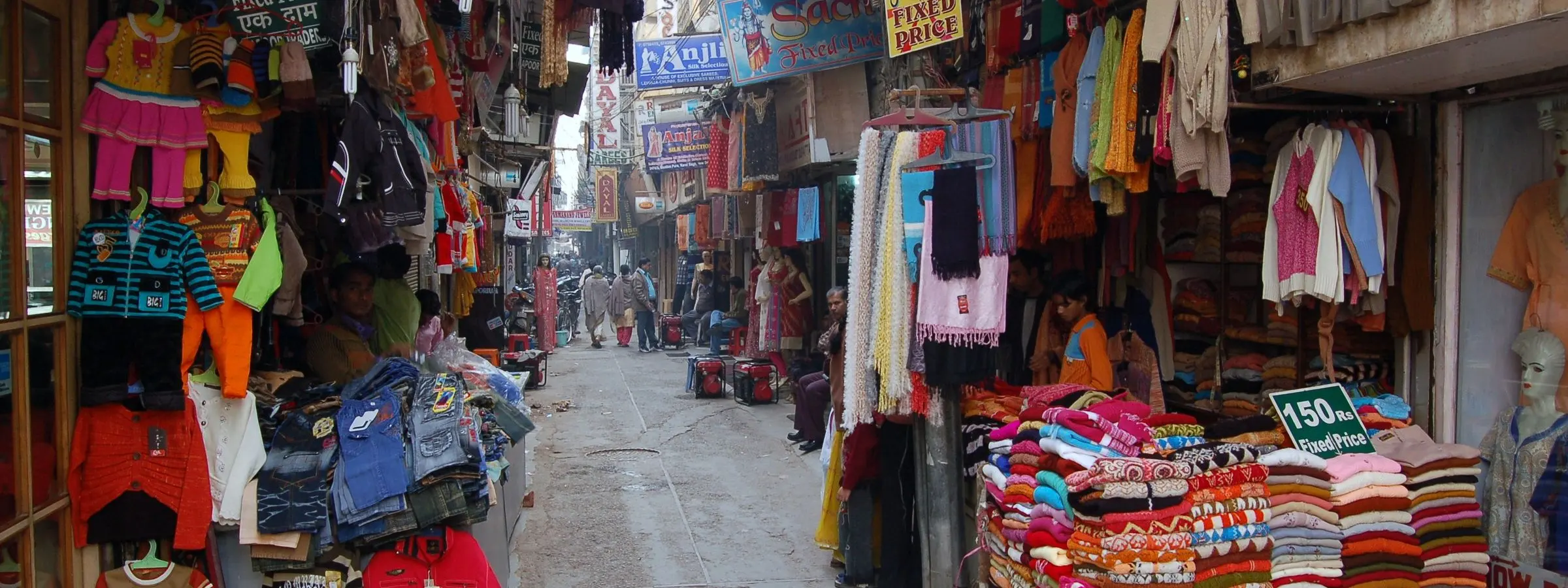
- Searches naming wholesale markets such as Gandhi Nagar, Sadar Bazaar or Tank Road usually come from resellers, so retail brands exclude them as negative keywords.
- NCR shoppers often search in Hindi typed in Roman script, so keyword lists, feed titles and search terms reviews include those words and their spellings.
- Kavita Enterprises runs NCR ad accounts from Gandhi Nagar inside each client’s own Google, Meta and marketplace accounts; the platforms bill media spend directly.
Google Ads management in Delhi NCR deals with a market that sits in three states, commutes between them daily and searches in two scripts. We run Google and Meta campaigns for NCR brands from Gandhi Nagar, inside your own accounts.
Brands here can come to Gandhi Nagar to go through the account history with us before anything changes. After that the work is weekly and written: search terms, feeds, creative and bids, each change logged with its reason.
We run brands of our own as well, so we plan the Karva Chauth and Diwali weeks, when clicks cost most, from the seller’s side.
Which location settings suit NCR campaigns?
For an offer limited to the NCR, target the region’s areas with the Presence setting, which reaches people in or regularly in those places. The default also reaches people elsewhere who have only shown interest in Delhi, and they rarely buy from a local offer.
Google explains the difference in its help page on advanced location options. For a brand that delivers across India, location matters less than delivery: the whole country is targeted, and budgets follow the areas that keep their orders.
Commuters are why Presence suits the NCR. A buyer who lives in Ghaziabad and works in Noida, or lives in Delhi and works in Gurugram, is regularly in both places, so an NCR-wide campaign reaches them wherever they search from.
A shop that wants footfall needs a radius instead: a few kilometres around the market, with the ad schedule matched to opening hours. The weekly running of both kinds of campaign is set out on our Google Ads management services page.
We read results by delivery pincode, grouped into Delhi, Gurugram, Noida, Ghaziabad and Faridabad. Clicks follow where people sit during the day; orders kept follow where they live, and only the second decides where budget goes.
Which searches should NCR retail brands exclude?
Searches for the wholesale markets. A search naming Gandhi Nagar, Sadar Bazaar or Tank Road, or adding wholesale to a product, usually comes from a shopkeeper or reseller looking for a market, and a retail brand pays for that click without a sale.

We add those words as negative keywords at the start, then read the search terms report every week for new ones, since broad match and Performance Max find their own way to the market names.
Wholesalers want the reverse. A Gandhi Nagar trader selling by the lot keeps those searches and excludes the retail ones instead: single-piece sizes, gift wrapping and cash on delivery. One account cannot serve both buyers well, so we split them.
Searches naming a market as a place to visit, such as a lehenga shop in Chandni Chowk, need their own decision. If you have a shop there, they are your buyers; if you sell only online, they want a lane, not a website.
How do Hinglish searches change the keyword list?
They widen it. Many NCR shoppers type Hindi in Roman script, razai for a quilt or suit salwar for a suit, often spelt three ways, so keyword lists and feed titles have to carry the words buyers use as well as the catalogue’s English.
Shopping and Performance Max read the product feed, not the keyword list. A quilt titled only in English can miss the buyer who types razai, so we add the Hindi word to the title, as our page on Google Shopping ads management describes.
Some NCR buyers search in Devanagari, usually on phones with a Hindi keyboard. Google matches Search ads to the language they are written in, so those searches need ads written in Hindi, in their own ad group once the search terms report shows enough.
Quilts, blankets and razais are a winter search above all, and our page on how to sell home textiles online covers the listings behind those ads.
How are wedding-season search campaigns built?
Around the occasion, not only the garment. NCR buyers search for a lehenga for a sangeet, a sherwani for the groom or a suit for a reception, so ad groups follow the occasions and land on a collection for each, not a general ethnic page.
Searches for occasion wear climb before the first auspicious wedding dates of the season and dip between them. We raise budgets in steps ahead of those dates, and read results over weeks rather than days, because a wedding outfit is chosen slowly.
Landing pages carry what a wedding buyer checks first: the fabric and the work up close, the weight, alteration options and the date by which an order arrives. Ads that promise a delivery date the page does not confirm send buyers away.
How should Meta creative speak to NCR buyers?
In the language each product’s buyers answer to, which only a test settles. For NCR brands we run English and Hinglish primary text side by side on the same Reels and images, and keep whichever version wins on orders kept after returns.

Language targeting stays open. Meta reads the language a person has set in the app, and many Hindi readers in the NCR use Facebook and Instagram in English, so narrowing by language cuts out the people the Hinglish ad was written for.
Text on the image follows the same rule as the copy: Hindi in Devanagari for a festive line, Hinglish in Roman script for an offer, English for sizes and prices. Short lines only, because a busy image reads as an advertisement before anyone reads it.
Winter ranges run as catalogue ads, showing the jacket or shawl a person viewed in the sizes still in stock. Our guide to Meta ads for D2C brands covers the rest of the platform.
What changes in the accounts before Diwali?
Everything that would otherwise be edited in a hurry. We prepare the accounts in September so the Karva Chauth and Diwali weeks run on settings already approved, and the only changes during them are bids and budgets.
- Karva Chauth. A campaign of its own, with an end date set by the last day an order can still arrive.
- Feeds. Sale prices scheduled in Merchant Center, and a festive label on gifting lines so they can be bid separately.
- Ads. Promotion assets and festive creative approved in advance, since the platforms review each ad before it can run.
- Winter. A winter label on jackets, quilts and blankets from late October, so bids rise with the cold and fall with it.
- Afterwards. Sale prices, labels and budgets reverted from a checklist in the week after Diwali.
What extra does an NCR shop need?
Two things: a way to show the shop and a way to count the buyers it brings. A brand with a counter in Karol Bagh, Lajpat Nagar or Chandni Chowk can show its address beside the ad through location assets, from its Google Business Profile.
Counting is harder, because the sale happens at the counter. We give each campaign a code or a WhatsApp number of its own, so the shop can record which ad brought a buyer in, and those sales are added to the weekly report by hand.
How do marketplace ads work for Delhi sellers?
The same way as search, with tighter arithmetic. A Gandhi Nagar range on Meesho or Flipkart leaves little per piece after commission and freight, so bids are set per style from what that style keeps, and capped daily.
Automatic campaigns find the terms buyers use, including the Hinglish ones they type into marketplace search; manual campaigns then bid on the terms that sold, and the rest become negatives. Styles with gaps in their size run come out of ads until restocked.
During the festive sale events, bids rise only on styles with deep stock and a deal price above your floor. Our guide to ROAS, ACoS and TACoS explains how we read the results.
What goes wrong in NCR ad accounts?
The same few settings, left at their defaults by whoever set the account up in a hurry. Each costs money every week and takes minutes to fix once it is found.
- Location left on the default, so a Karol Bagh shop’s campaign also reaches people in other cities who once searched for Delhi.
- No negative keywords for the wholesale markets, so retail budgets pay for resellers’ searches.
- Shop campaigns running on the market’s weekly closing day, when nobody can visit; Delhi’s markets each close on a fixed weekday of their own.
- One campaign for winter and summer lines, so quilts and cotton kurtas share a target their margins cannot both meet.
- Festive sale prices left in the feed after Diwali, until Merchant Center flags a price mismatch.
- Meta language targeting set to Hindi, which cuts out the Hindi readers who use the app in English.
How are NCR accounts run from Gandhi Nagar?
Inside your own accounts, through user access you can remove. The Google Ads, Merchant Center, Meta and marketplace accounts stay in your business’s name, and each week’s changes appear in your report with the reason for each one.
Targets, budgets and stop rules come from the plan agreed under performance marketing services in Delhi NCR. The campaigns follow it; they do not set it.
The fee follows the service level chosen after the audit, with GST at 18% as CGST and SGST for a Delhi business or IGST for one in Haryana or Uttar Pradesh. The platforms bill media spend to you, and none of it passes through us.
The service in full is on our Google Ads and Meta Ads management page, and the region’s wider picture on our page for ecommerce services in Delhi NCR. To start, send your account names.
Campaigns run inside your accounts
Google Ads, read weekly
Search and Performance Max campaigns with search terms reviewed every week and wholesale-market searches kept out.
Shopping feeds that match searches
Feed titles carrying the English and Hinglish words NCR buyers type, with winter and festive labels for bidding.
Facebook and Instagram campaigns
Reels, Stories and catalogue ads for NCR brands, with Hinglish and English creative run side by side.
Marketplace sponsored ads
Amazon, Flipkart and Myntra ads bid against the margin left after commission, through the festive sale events.
Targets set before spend
Break-even and target figures, budget ranges and stop rules agreed in the plan the campaigns follow.
Tracking behind every bid
GA4, Tag Manager, Meta Pixel and Conversions API checked first, so bidding learns from real purchases.
Questions NCR brands ask about ads
How much does Google Ads management cost in Delhi NCR?
Should my Google Ads target all of Delhi NCR or only Delhi?
Why are my Google Ads getting clicks from wholesale buyers?
Do Hindi keywords work in Google Ads?
Can you run Instagram ads for my Karol Bagh shop?
Can you run Karva Chauth ads on Facebook and Instagram?
Who owns the Google Ads account if I hire someone in Delhi?
Do you run Flipkart and Amazon ads for Delhi sellers?
More of our work in this city
Share your ad accounts, then visit us.
Send your Google Ads and Meta account names and a line on what you sell. We read the history and talk you through what we would keep, fix and stop, in Gandhi Nagar or on a call.