Wholesale garments for Kolkata retailers
We are a wholesale garments supplier for Kolkata retailers, sourcing readymade garments in Gandhi Nagar, New Delhi, against samples you approve. Lots are quoted by the piece, with GST and freight on their own lines, and handed to the transporter you name.
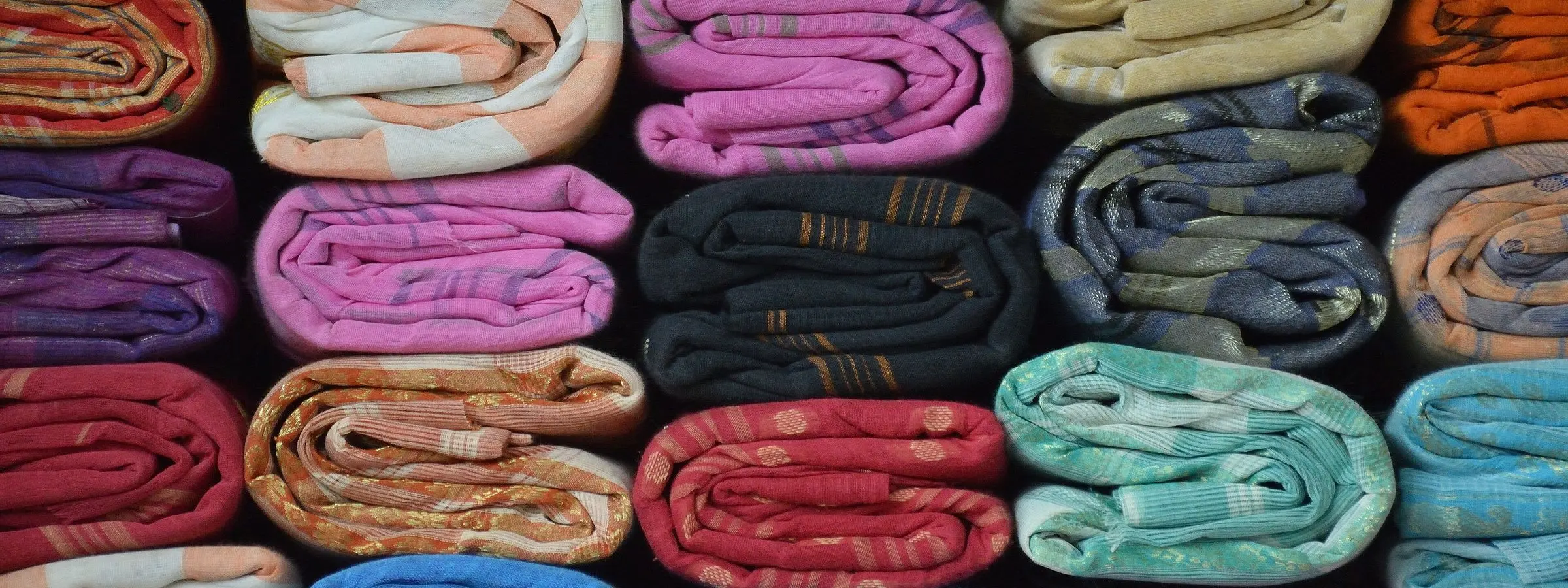
How a Delhi lot reaches a Kolkata shop
- Sourced in
- Gandhi Nagar, New Delhi
- Model
- Sourced and supplied, by the lot
- Priced
- By the piece, GST on its own line
- Freight
- Quoted separately
- Date to plan for
- Goods in Kolkata before Mahalaya
- Our GSTIN
- 07CBUPK4786Q1ZD
In short
- Delhi lots suit Kolkata retailers for lines their own markets do not carry in depth, or as a second source to compare against.
- Puja stock from Delhi has to be briefed early enough for sampling, approval, assembly and transit to finish before Mahalaya.
- Winter lines for a Kolkata shop need a lighter fabric weight than stock made for colder northern winters, so GSM belongs in the brief.
- Lots travelling east in the monsoon months need packing instructions for wet roads, agreed with the transporter before the goods move.
- At the time of writing, GST on readymade garments is 5% up to ₹ 2,500 a piece and 18% above, confirmed on each quotation.
As a wholesale garments supplier for Kolkata retailers, we source readymade garments in Gandhi Nagar, New Delhi, and supply them by the lot to shops and resellers in the city. The work is planned backwards from Mahalaya, when a Bengal shop needs its stock.
We source from manufacturers and supply at wholesale; private label runs through partner units. We do not own a factory, and we do not pretend a Delhi lot is the answer to every line a Kolkata shop sells.
What Delhi lots add for Kolkata retailers
A Delhi lot earns its freight when it brings a Kolkata shop something its usual sources do not: styles they do not make in depth, a second source that keeps prices honest, or stock for a season when local supply runs short.
Kolkata’s own trade is strong in hosiery, and in kidswear and menswear from tailoring clusters such as Metiabruz, sold through Burrabazar and the haats across the river in Howrah. For everyday hosiery basics the closer source usually wins on freight, and we will say so.
Delhi helps with the lines you want to compare or widen: men’s shirts and T-shirts, denim and trousers, women’s kurtis and sets, and kidswear in styles your local suppliers do not hold. Each starts with a sample, so you compare like with like before committing.
The test is simple. If the per-piece rate, plus freight to Kolkata, plus the time the lot spends on the road still beats the local price for the same specification, the Delhi lot makes sense. If it does not, buy nearer home.
Illustration: a shirt quoted at ₹ 300 a piece, with freight at ₹ 15 a piece, lands at ₹ 315 before GST. If the same shirt costs ₹ 330 locally, Delhi is cheaper; at ₹ 310, it is not. Round numbers, not our prices.
Working back from Mahalaya for Puja stock
Start from the day the goods must be on your shelves, before Mahalaya, and count backwards through every stage. Each stage has an owner, and most delays come from a decision that waited.
| Stage | What happens | Who sets the pace |
|---|---|---|
| Brief | Category, reference, quantity per style and colour, size ratio, and the date goods must reach Kolkata | You |
| Sampling | A sample or matched set, with photographs and a measurement sheet | The market, and how quickly comments come back |
| Quotation and approval | Rate by the piece, GST on its own line, freight to be confirmed; your written approval | You |
| Assembly and checks | The lot made up in your ratio and checked against the approved sample | The source’s stock, or the partner unit’s schedule |
| Packing and handover | Packed to your instructions and handed to your transporter with the tax invoice and packing list | Your transporter’s pickup |
| Transit | Delhi to Kolkata | Your transporter |
Gandhi Nagar is busier in the weeks before festivals, and a brief that arrives in July meets shorter queues than one sent in September. Clear comments on a sample, sent together rather than one at a time, save a whole round.
After the Pujas, the next Delhi lot worth planning is for Poila Baisakh in mid-April, briefed in winter while the Chaitra sale clears last season’s stock.
Dates come on the quotation, with what each one depends on. If a date moves, you hear as soon as we do, not on the day the transporter was due.
Size ratios and assortments for a Bengal shop
Write the size ratio from your own Puja sales, not from a Delhi habit or another buyer’s lot. A shop that sells through its middle sizes first by Saptami should weight the ratio towards them.
- Kidswear by age band, with garment measurements for each band, since parents buy for the Pujas by age and bring back what does not fit.
- Menswear in sets where you sell them as sets, such as a kurta with pyjama, with each piece sized and counted.
- Colours by festival: deeper shares of the red, white and festive shades your Puja customers ask for, and lighter shares of the rest.
- Single-piece packing for lines that leave your shop as gifts through the season, so you can hand one over without breaking a bundle.
Say whether the Puja lines should come in solid or assorted packs. In the rush, a shop that shelves straight from the bale usually wants assorted ratio sets; a shop with a store room may prefer one size and colour per pack.
Specifying winter lines for a mild winter
Kolkata’s winter is short and mild, so winter lines for a Kolkata shop need a lighter weight than stock made for colder northern winters. Put the fabric weight, the GSM, in the brief, and approve it on the sample.
- For the city: light sweatshirts, thin jackets and layering pieces, in shallow depth, since the season is short.
- For the hills and the North-East: heavier lines specified separately if you also supply shops further north, each with its own size ratio.
- For Christmas and the new year: light woollens and partywear, timed to reach you in early December.
A heavy jacket that suits a Delhi January sits unsold in a Kolkata January. Writing the weight down costs less than finding that out.
Packing a lot for the road east
Lots are packed in Gandhi Nagar to your instructions and handed to your transporter with the tax invoice and the packing list. For Kolkata, three instructions matter more than usual.
- Monsoon packing. From June to September, rain and waterlogging can meet the goods at the Kolkata end, so ask for polythene-lined bales or cartons and waterproof outer wrapping, and agree insurance with your transporter.
- Onward marking. If part of the lot goes on to shops in Bihar, Odisha or Assam, say so before packing; we pack by destination and mark each bale to match the packing list.
- Counting at your end. The packing list shows style, colour, size and count per bale, so your staff can check a bale without opening every bundle.
Before any of it is packed, pieces are counted, ratio-checked and measured against the approved sample, and anything that fails is pulled out. If that leaves the lot short, you hear before it moves, with the count and the reason.
Buying for onward sale across eastern India
Some Kolkata buyers are wholesalers themselves, supplying smaller shops in Bihar, Jharkhand, Odisha, Assam and the North-East. A Delhi lot bought for onward sale is specified differently from one bought for your own shelves.
- Assorted ratio sets sized for a small shop’s order, so you can sell a set on without breaking bundles.
- Labels as supplied, unless we have agreed your own label for the lot.
- One tax invoice to your GSTIN, with the onward invoices and any onward e-way bills raised by you.
Reorders for onward sale need the same garment each time. We keep the approved sample and the specification for each style, so the next lot is briefed against them rather than against memory.
GST, the invoice and checking our registration
Every lot carries a tax invoice showing our GSTIN, 07CBUPK4786Q1ZD, your GSTIN if you are registered, the HSN codes, quantities, rates, and GST on its own line. A registered Kolkata retailer uses it to claim input tax credit.
At the time of writing, GST on readymade garments is 5% where the sale value is up to ₹ 2,500 a piece and 18% above it; your quotation confirms the rate for each line.
Goods going from Delhi to West Bengal generally move as an inter-state supply, so the invoice may show IGST rather than CGST and SGST; confirm the treatment with your adviser.
Before paying any new supplier, check its registration: the GST portal’s taxpayer search shows the registered name and status for any GSTIN, ours included. An e-way bill travels with the goods where the consignment value requires one.
Our note on GST on readymade garments explains how the ₹ 2,500 threshold is read on a lot that mixes lines on both sides of it.
Delhi lots for Kolkata’s online sellers
If the lot is going onto Meesho, Flipkart or your own store, it has to support a listing as well as a shelf: consistent sizes, a size chart taken from the approved sample, and labels that carry the declarations a marketplace asks for.
Online buyers choose by the size label and the chart, so a lot whose sizes run small comes back as returns. Measure several pieces per size before the chart is published.
Shoot the listing photographs on pieces pulled from the delivered lot; a sample sewn weeks earlier may not match the batch shade. Once the stock lands, our marketplace account management in Kolkata can run the listings.
How a first order from Kolkata works
Send a brief: the category, a reference photograph or a garment you sell, quantities per style and colour, the size ratio, your price band, the date goods must reach Kolkata and your transporter, if you have one. We reply with questions or a sample plan.
You approve samples and the quotation in writing, and nothing is bought or made before that. Samples, photographs and measurement sheets come to you for approval, so no trip to Delhi is needed, though you are welcome to see the goods in Gandhi Nagar.
For a whole season under your own name, private label through partner units is the route, and indicative per-piece rates are on the rate card.
The method in full is on our wholesale garments page, and our Kolkata page covers the rest of our work in the city.
When the brief is ready, the contact page has every way to reach us.
Lines Kolkata shops buy from Delhi
Shirts and T-shirts
Men’s shirts and T-shirts sourced in Delhi to your reference, sampled before the lot is assembled.
Kidswear for the Pujas
Kidswear lots by age band and size ratio, timed to reach Kolkata before Mahalaya.
Denim and bottoms
Jeans and trousers in a waist and length ratio, with the fabric weight agreed on the sample.
Women’s ethnic wear
Kurtis and sets in your colours and sizes, matched to a reference you already sell.
Your own label
Private label through partner units, with your woven label and hangtag on every piece.
Selling the lot online
Marketplace accounts run for Kolkata sellers, so Delhi stock lists with the right sizes and declarations.
Questions Kolkata retailers ask about Delhi lots
What is the minimum order for a buyer in Kolkata?
How early should I order Puja stock from Delhi?
Is GST charged as IGST on lots sent to West Bengal?
Can I check your GST registration before I pay?
Who pays for transport to Kolkata?
Can you pack lots so I can send them on to shops in Bihar or Assam?
Should I buy hosiery from Delhi or from Kolkata?
Can I approve samples without travelling to Delhi?
More of our work in this city
The same service in other cities
Send your Puja brief while there is time.
Tell us the categories, quantities, size ratios and the date the goods must reach Kolkata. We reply with questions or a sample plan, then a quotation by the piece.