Private label clothing for Ahmedabad brands
We are a private label clothing supplier for Ahmedabad brands, from design-led labels to Navratri ranges: garments developed in Delhi and made by partner units under your name. Samples come from Gandhi Nagar in East Delhi, not Gujarat’s Gandhinagar, and the lot travels with your transporter.
Private label for an Ahmedabad label
- Who it suits
- Design-led labels and Navratri ranges
- Names to respect
- Ajrakh, bandhani, Patola: claims of origin
- Peak to plan
- Navratri, then the Diwali pause
- Samples come from
- Gandhi Nagar, East Delhi, not Gandhinagar
- Made by
- Partner units we brief and check
- Tax line
- IGST on the tax invoice
In short
- An Ahmedabad label can keep design and fabric decisions at home while partner units, briefed from Delhi, make its clothing under its own name.
- A print made to look like Ajrakh or bandhani should be named by its technique, because the regional names are claims of origin.
- Navratri private label lots should be in Ahmedabad and listed before the marketplace festive sales, which usually fall around the nine nights.
- Many Gujarati businesses pause from Diwali to Labh Pancham, so wedding-season approvals should be signed before Diwali.
- Clothing supplied from Delhi to Gujarat generally carries IGST on its own line, which a registered Ahmedabad brand can claim as input tax credit.
As a private label clothing supplier for Ahmedabad brands, we take your styles from brief to finished lot in Delhi, where partner units make kediyus and kurtas for Navratri, printed cotton for summer and denim. You approve from Ahmedabad; your transporter brings the lot.
Ahmedabad is a cloth city, and its labels tend to know fabric well. What they ask of a private label supplier is the making: to a written specification, by units that already make the garment, with the craft words used correctly.
What Ahmedabad brands make through private label
Ahmedabad brands use private label for the garments around their signature pieces: kurtas and kediyus for Navratri, printed cotton kurtis and co-ords for summer, men’s shirts, denim and kidswear sets. Heavily worked chaniya cholis often stay with local makers who specialise in them.
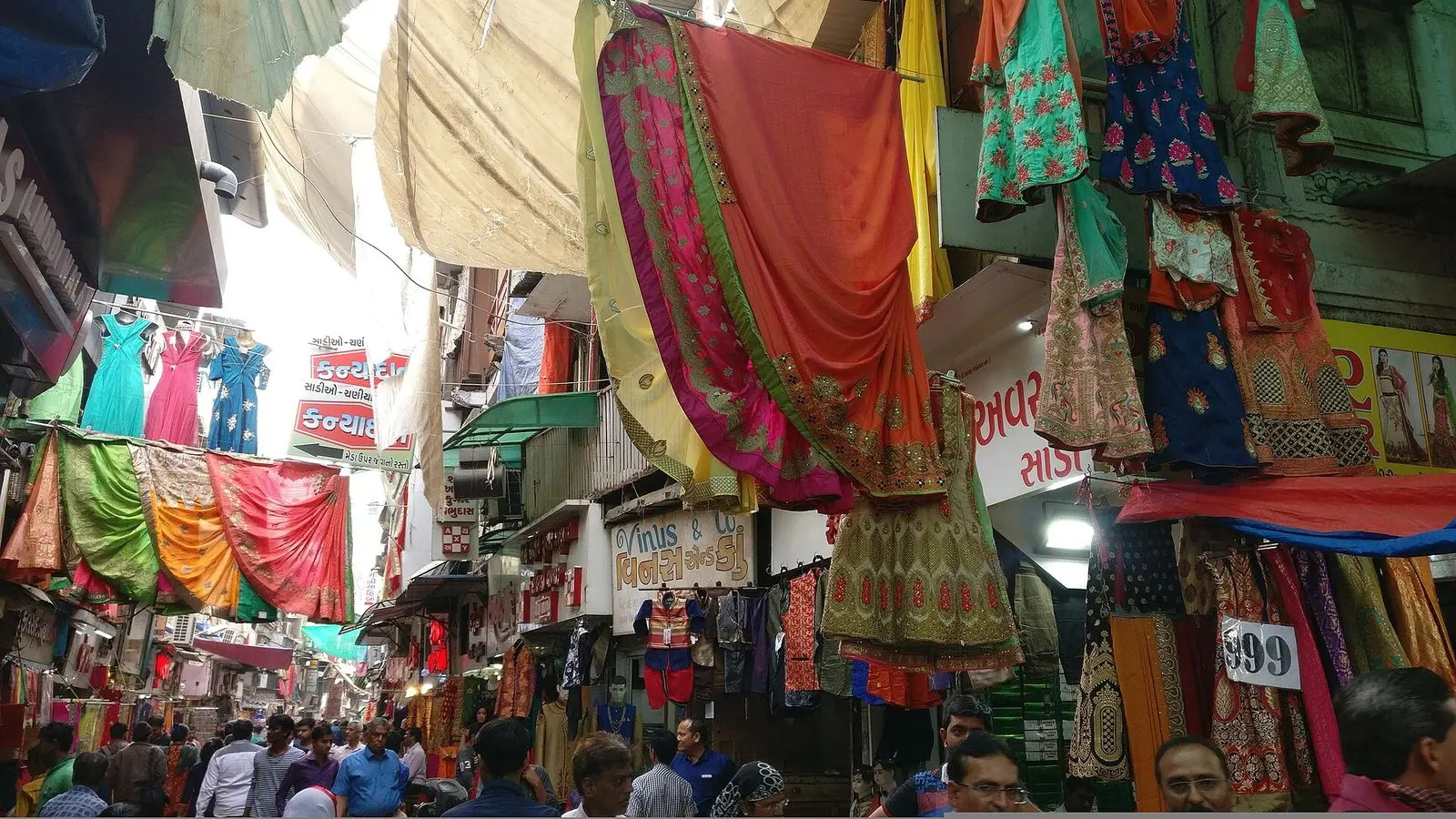
Design-led labels, some started by graduates of the city’s design and architecture schools, add a second reason: a collection that mixes craft pieces made in Gujarat with everyday pieces that need volume and a repeatable fit. Private label carries the everyday part.
Each style is placed with a partner unit that already makes its construction, from a kediyu’s frill to a five-pocket jean. Where none suits a style, we say so before sampling, and the style may be better kept in Ahmedabad.
Can a partner unit use fabric from Ahmedabad?
Sometimes. Whether a partner unit makes up fabric you buy in Ahmedabad is settled per style and per unit, and the quotation says which; when it does not, your swatch becomes the reference our sampling and sourcing work matches in Delhi.
If you plan to send Ahmedabad fabric, ask before you buy it. The unit needs the width, the shrinkage behaviour and enough extra length for cutting and samples, and a roll short by a few metres can hold up a whole lot.
Mill-printed cotton and denim are Ahmedabad’s own strengths, so a label’s fabric story often starts there. Record the mill’s composition, GSM and finish on the specification either way, because the reorder is matched to the record, not to memory.
A swatch card from the mill, with the composition and GSM printed beside each shade, is a clearer reference than an unlabelled cut piece, and it lets the Delhi match be checked line by line.
When a unit only makes up fabric you supply, the GST treatment of that work can differ from a sale of finished garments, so settle it with your advisor before the quotation is confirmed.
Naming prints and crafts honestly
Name a print by how it was made. A screen or digital print in an Ajrakh-like pattern is an Ajrakh-inspired print, not Ajrakh from Kutch; a printed dot pattern is a bandhani print, not bandhani; and no print should borrow the Patola name.
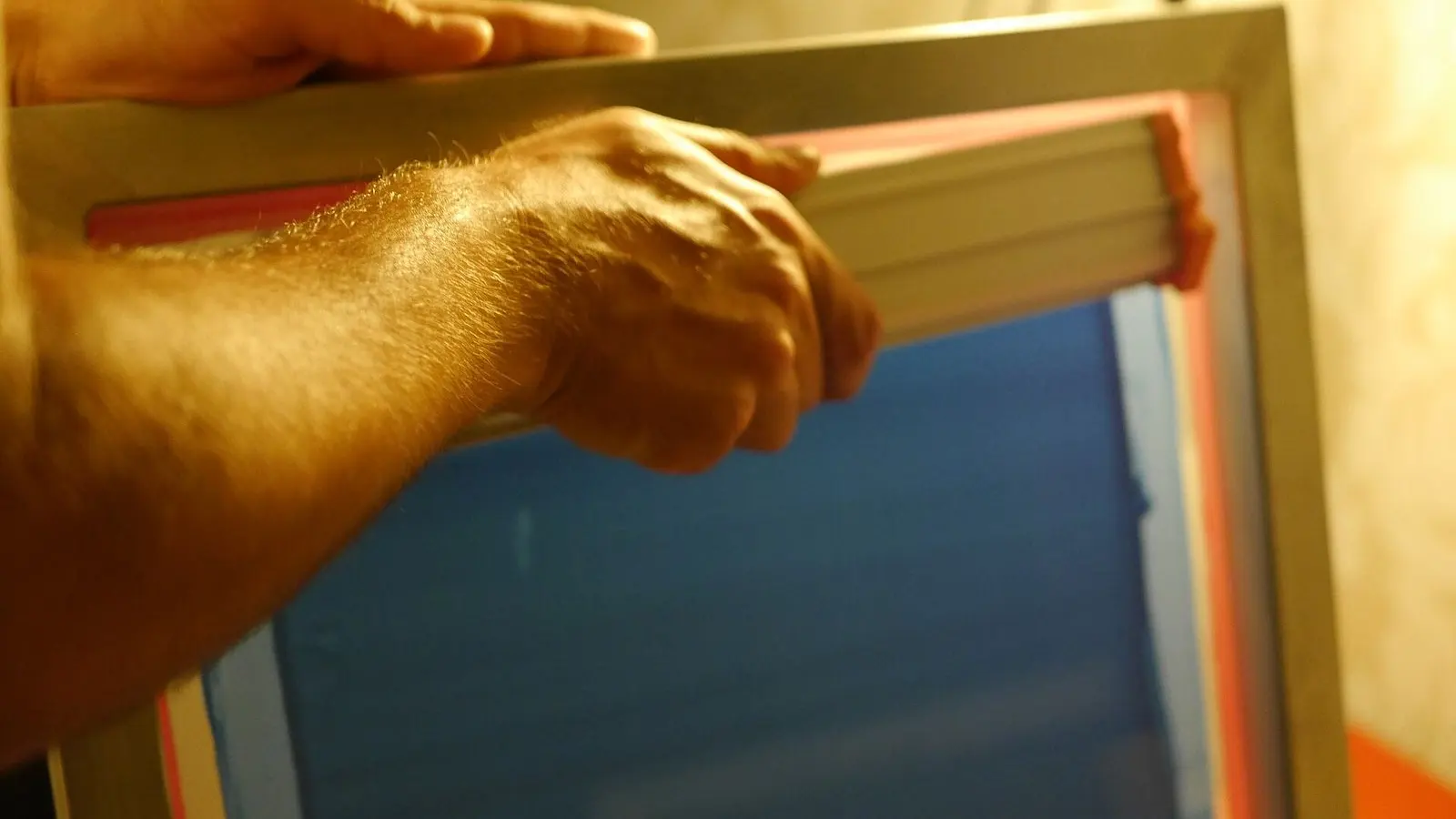
- Technique on the label and listing. Hand block, screen, digital or tie-dye, as the piece was actually made.
- Origin only where true. Kutch or Jamnagar on bandhani made there, and nowhere else.
- Registered names checked. Patan Patola and Kutch embroidery are registered geographical indications.
- A strike-off first. Approved on the base fabric, so the print’s scale and colour match the listing photograph.
Ahmedabad’s shoppers know these crafts, and so do the city’s other labels; a misnamed print draws complaints from both. Our catalogue and listing work writes the technique into titles and attributes.
Navratri lots and the festive sales
Navratri is the deadline that shapes an Ahmedabad label’s year: kediyus, kurtas, children’s sets and festive co-ords have to be in the city, photographed and listed before the marketplace festive sales that usually fall around the nine nights.
Many dancers change outfits across the nine nights, so a Navratri private label range sells on variety more than depth. Several colourways of one approved fit, each on its own lab dip, give that variety without a new development for each.
A kediyu, the men’s short, frilled kurta worn with a dhoti, needs its flare and frill measured on the specification rather than described. Build the chart around chest, length and frill depth, and approve a size set, because frills grade badly by eye.
Children’s Navratri sets are sized by age band, with every piece named; our kidswear page covers how. Most outfits are bought in the weeks before the first night, so a lot that lands during Navratri has missed much of its season.
Owning versus renting for the nine nights
Many Ahmedabad families rent their heaviest Garba outfits, so a label’s own Navratri pieces have to earn their place by being worth owning: lighter, washable, and wearable to a wedding or a family function after the festival.
That changes the specification. Choose work that survives a wash, linings that do not shrink differently from the shell, and colours tested for fastness, and say on the listing how the piece should be cared for after the nine nights.
Navratri lots also travel in the last weeks of Gujarat’s monsoon, which runs from late June to September. Put polybags in the packing instructions, and settle transit time and cover with your transporter before the lot is handed over in Delhi.
The Diwali pause and the wedding months
Plan approvals around the trade pause. Many Gujarati traders close from Diwali until Labh Pancham, the fifth day of the new year, and a sample that arrives in that week waits; wedding-season lots should have every approval signed before Diwali.
Tell us the dates your approvers are away, and samples and label proofs are timed to reach them before the break or after Labh Pancham, so the units making your lot are not left waiting on a signature.
The wedding months follow, from the end of Diwali into February, with gharchola and panetar for brides and kurta sets for everyone else. Kurta sets for wedding guests are a natural private label line, specified in festive fabrics and approved before the break.
Labh Pancham is also a sensible day to brief the summer range: the trade has reopened, the wedding lots are out, and the summer cottons have the winter to be sampled.
Summer cotton for Ahmedabad’s heat
Ahmedabad’s summer heat arrives from March, so printed cotton kurtis, co-ords and shirts for it are developed in the winter, once the wedding lots are out. Uttarayan, on 14 and 15 January, is a holiday on the rooftops; nothing gets approved then.
Specify summer cottons for the heat: the GSM written down, shrinkage measured on a washed sample, and colours that stand up to hard sun and frequent washing. A kurti that fades by May draws reviews before the monsoon arrives.
Deep shades fade fastest in hard sun, so ask for a light-fastness check on any dark colour you plan to sell through an Ahmedabad May, or keep the summer range to lighter grounds.
Denim under an Ahmedabad label
Denim is one of Ahmedabad’s specialities, and a label that sells jeans under its own name can develop them through private label alongside its range. Fit is measured from finished, washed pairs, and the wash approved on a washed sample, not raw fabric.
For an Ahmedabad label’s jeans, waist, hip, rise, thigh, inseam and leg opening go on the chart with tolerances, size by size. Our page on denim and bottoms covers how jeans are specified and checked.
Approvals, IGST and the right address
Every sample, lab dip, strike-off and label proof travels to Ahmedabad with photographs and measurements, and your written approval is what moves the lot forward.
Our only office is in Gandhi Nagar, East Delhi, not Gandhinagar, Gujarat’s capital, so use the full Delhi address for anything you send us.
For a lot travelling from Delhi to Gujarat, GST is levied as IGST, the tax on inter-state supplies, on a line of its own; an Ahmedabad label with a GSTIN can claim it as input tax credit, subject to its advisor’s view.
A design-led piece sold above ₹ 2,500 crosses into the higher rate. At the time of writing, the GST rates on readymade garments, from 22 Sep 2025, are 5% up to that sale value per piece and 18% beyond; the quotation names each style’s rate.
Before it leaves Delhi, the lot is measured, shade-checked and inspected against the sample you signed, packed as you instructed and handed to your transporter with the tax invoice and packing list; freight is quoted apart.
Style names your buyers search for
Name each private label style the way Ahmedabad’s buyers search for it, in Gujarati words typed in English letters: kediyu rather than frilled kurta, bandhani print rather than tie-dye print. The style name on the hangtag should match the listing title.
Keep a style code separate from the name, one for each style and colour, on the hangtag and the specification alike, so a reorder can be briefed without anyone guessing which kediyu was meant.
Labels and declarations for Ahmedabad labels
Your labels and hangtags follow your artwork, and a proof of each is approved before bulk production. A hangtag that names a craft or a place should name it accurately, for the reasons above.
On an Ahmedabad label’s packs, Legal Metrology asks for the MRP, net quantity, the maker’s or packer’s name and address, the month and year and a consumer-care contact; on a marketplace listing, the same details apart from the month and year.
How an Ahmedabad label starts
Start with one style and its fabric story: a reference garment or sketch, the fabric or swatch, quantities by size, label artwork and the date you are aiming at. Our note on a first private label order lists what to settle first.
When your Ahmedabad brief is ready, our contact page takes it; the rate card is there if you want indicative rates before you write it.
Marketplace accounts and Gujarati ad tests are covered on our page for ecommerce services in Ahmedabad, and the whole private label clothing service on its own page.
Private label work for Ahmedabad brands
Your label, made to spec
Specification, partner unit, samples, labels and the final check, for clothing sold under an Ahmedabad brand’s name.
Prints proved on strike-offs
Block-look, Ajrakh-inspired or mill-style prints tested on the actual base fabric before any length is printed.
Kurtis and kurta sets
Printed cotton kurtis and kurta sets for Ahmedabad’s summer and festive ranges, developed to your fit and size set.
Denim under your label
Jeans developed with your tops in one conversation, measured from finished pairs and approved on a washed sample.
Listings that name it right
Titles and attributes that describe technique honestly, with regional craft names kept for pieces made there.
Questions Ahmedabad labels ask about private label
Can my Ahmedabad label get clothing made under its own brand?
Can I send my own fabric from Ahmedabad for private label?
Can I call a printed kurta Ajrakh?
When should I order Navratri stock for my label?
Is IGST charged on clothing from Delhi to Gujarat?
Are you in Gandhinagar, Gujarat?
How do I keep sample approvals moving over Diwali?
Can you make kediyus under my label?
More of our work in this city
Tell us the style and its fabric story.
Send a reference, the fabric or swatch, quantities by size and the Navratri or wedding date you are aiming at. We reply with questions, then a sample plan and a quotation by the piece.